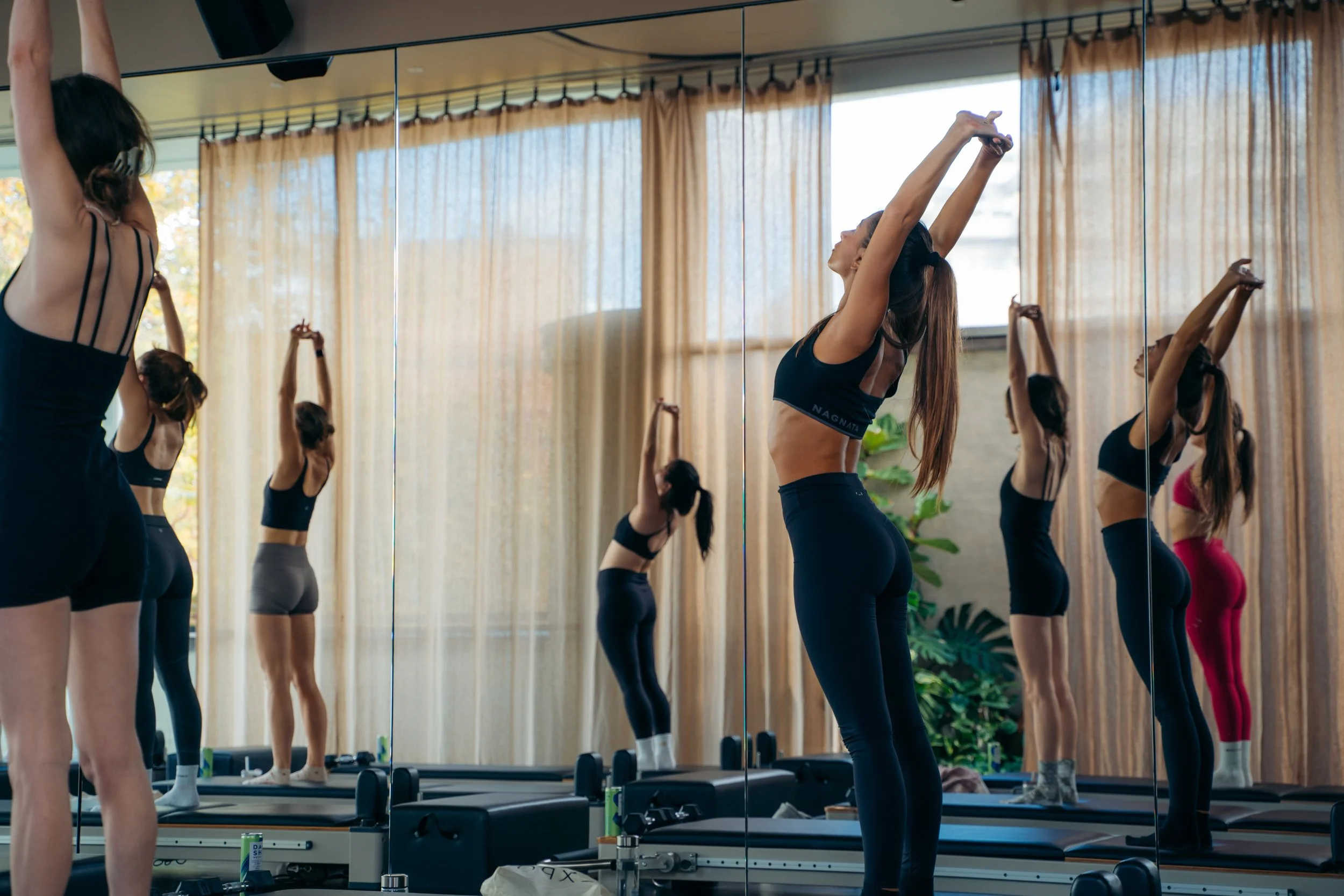
Saturation. Competition. A new studio on every corner. At The Pilates Journal Expo in Miami, the hallway talk was full of worry. My advice is simple: ignore the noise, be excellent at what you do, and start planning your exit long before you need one.
It was 8am on a Saturday in Miami, and I was sitting on a stage at the Loews next to Sarah Luna of Pilates Addiction. Down the line were Ken Endelman of Balanced Body, Jim Heidenreich of Merrithew and Mohammed Iqbal of SweatWorks and ABC Fitness, with Jenna Zaffino moderating. The panel was called "Pilates at Scale." I'll be honest. I was intimidated.
I spend most of my days alone at a desk, looking at other people's P&Ls. So two days in a room full of teachers, owners and the people who build the equipment we all stand on was good for my soul. Here's what I took home.
Ignore the Noise
New studios are opening on every corner. Teachers are leaving to start their own. The word I heard most in the hallways was "saturation," and you could hear the fear behind it.
I understand it. But I've seen this before. In the 2010s, CorePower Yoga blew up, and then its teachers left to open hot yoga studios. All of a sudden there were hot yoga studios everywhere, and plenty of owners were sure the sky was falling. The ones still thriving today are the ones that stayed most committed to the practice, with the best teachers, the best customer service and the most comfortable spaces. I think the same will be true for Pilates. Even CorePower is still growing, with more than 220 studios and plans to open more than 20 new ones a year.
Markets move. Trends come and go. You can't control any of that, so don't spend your energy worrying about it.
Be Good at What You Do
In more than 75 deals, I've seen the same thing: the studios that last are committed to excellence in teaching and excellence in customer service. That means real teacher training, not a weekend certificate, and a front desk that remembers your name.
Competing on price is rarely what keeps a studio open. Competing on teaching and service is. Commit yourself to excellence and you'll be fine, whatever the market does.
What I Saw in Miami
For all the talk about competition, the room felt like people learning from each other. I met owners on their second and third locations, and teachers who had become the anchor of their neighborhoods. Many started with one room, a handful of reformers and a lot of nerve. That deserves to be celebrated, loudly.
Plan Before You're Ready
Most of the owners I met aren't thinking about selling. That's exactly why I want them to start planning now.
Here is the number nobody talks about: according to the Exit Planning Institute, only 20 to 30 percent of businesses that go to market actually sell. When a studio doesn't, the community it spent years building disappears with it. The teachers lose their home. That's the part I care about most.
A studio sells for its earnings, specifically its Seller's Discretionary Earnings, times a multiple. For a single location, that multiple usually lands between 2x and 3x. Every $50,000 you add to your earnings at a 3x multiple adds $150,000 to your sale price. And the things that move the multiple are the same things that keep a studio alive: a strong team, clean books, a solid lease and members who stay.
So even if you never sell, start here:
Take yourself off the schedule, one class at a time. Every class you teach is a class a buyer worries about losing. Develop a lead teacher or a manager who can run the studio without you.
Know what you owe your members. Every unredeemed class pack is a liability a buyer will want credited at closing. Pull that report from your booking software this month, and move clients toward monthly memberships where you can.
Plant seeds with the people already in the room. Your best future buyer may already be teaching your 6am class. A simple "I think you'd be a great person to carry this on someday" is enough for now.
Why This Matters
Selling isn't a betrayal of your mission. It's stewardship. A studio that can be handed on keeps its members, keeps its teachers employed and keeps its neighborhood a little healthier.
I left Miami more optimistic than I arrived. Like yoga, Pilates has an enduring legacy. I believe it will become a foundational practice that more people grow up with, and a bigger part of all our lives. So tune out the noise. Be excellent at what you do. Build the kind of studio that lasts, and the exit takes care of itself, whether that's in two years or ten.
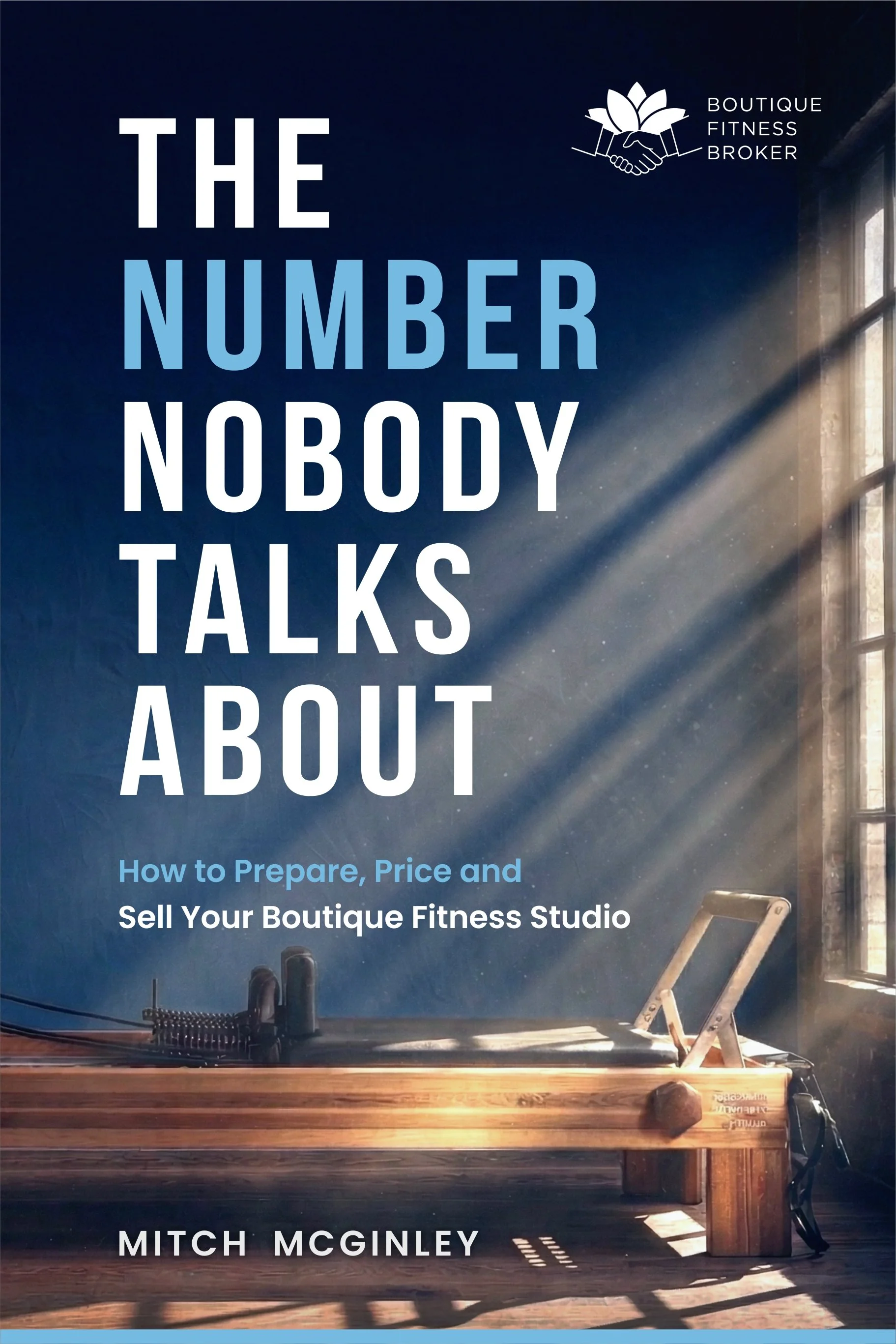
The Number Nobody Talks About: How to Prepare, Price, and Sell Your Boutique Fitness Studio
“Studio owners pour their hearts and souls into building communities of real value. Many don't think they'll ever sell, and most have no clear picture of when or how they'll ultimately exit. That conversation - what exit planning looks like, what it takes to prepare, and what the business can actually return - often starts too late, or never at all. I am hoping to change that. Every seller deserves their ideal buyer, at the right time, on the best terms. This book covers the full arc of how to make it happen: exit planning from day one, the preparation that creates value, and properly executing the sale process,” said Mitch McGinley.
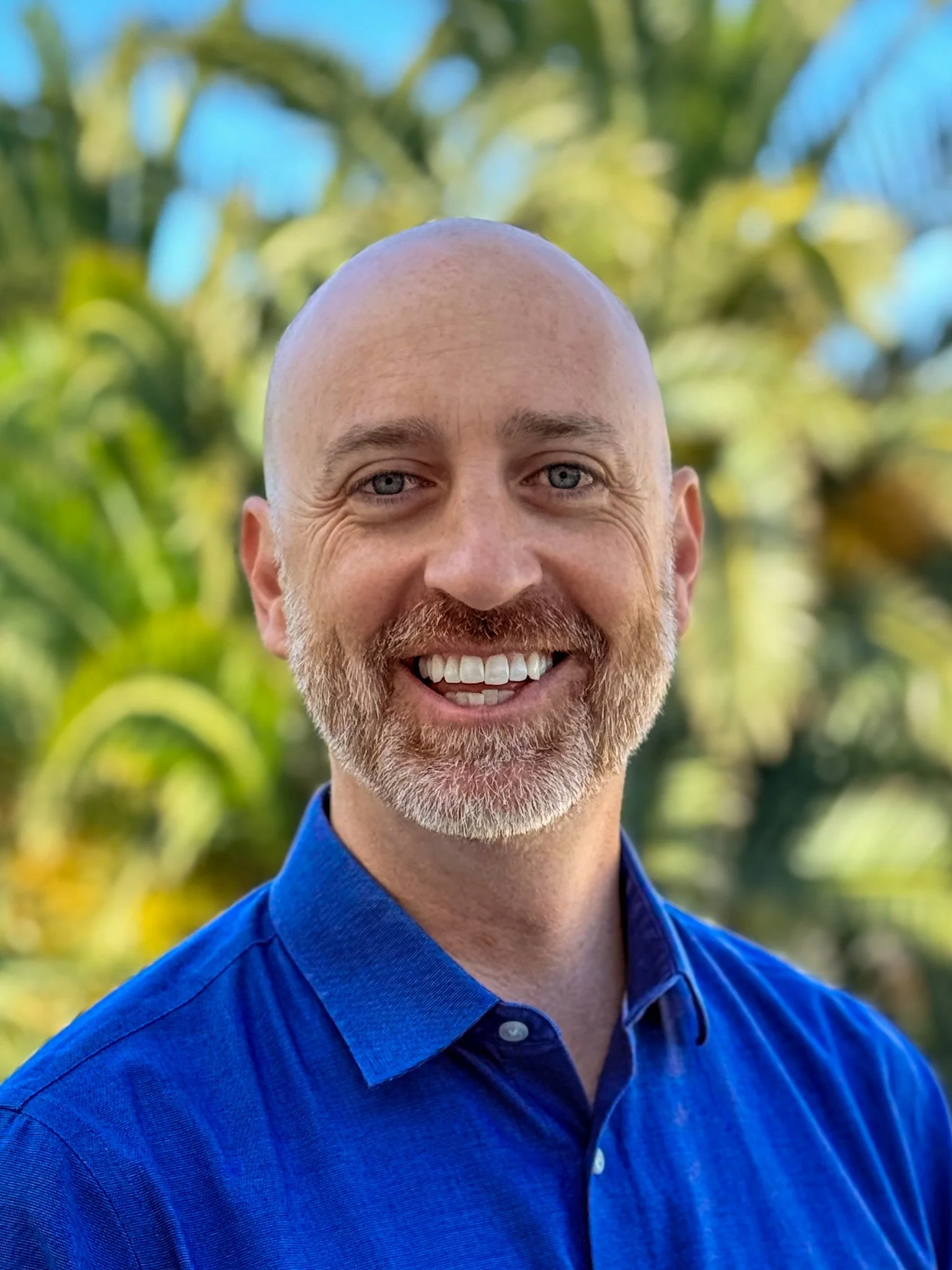
Mitch McGinley is the founder of Boutique Fitness Broker and the author of The Number Nobody Talks About: How to Prepare, Price and Sell Your Boutique Fitness Studio. A former yoga studio owner, he and his business partner Kristin Abel have completed more than 75 transactions. boutiquefitnessbroker.com