
“I Thought I Was Strong... Until I Wasn’t”
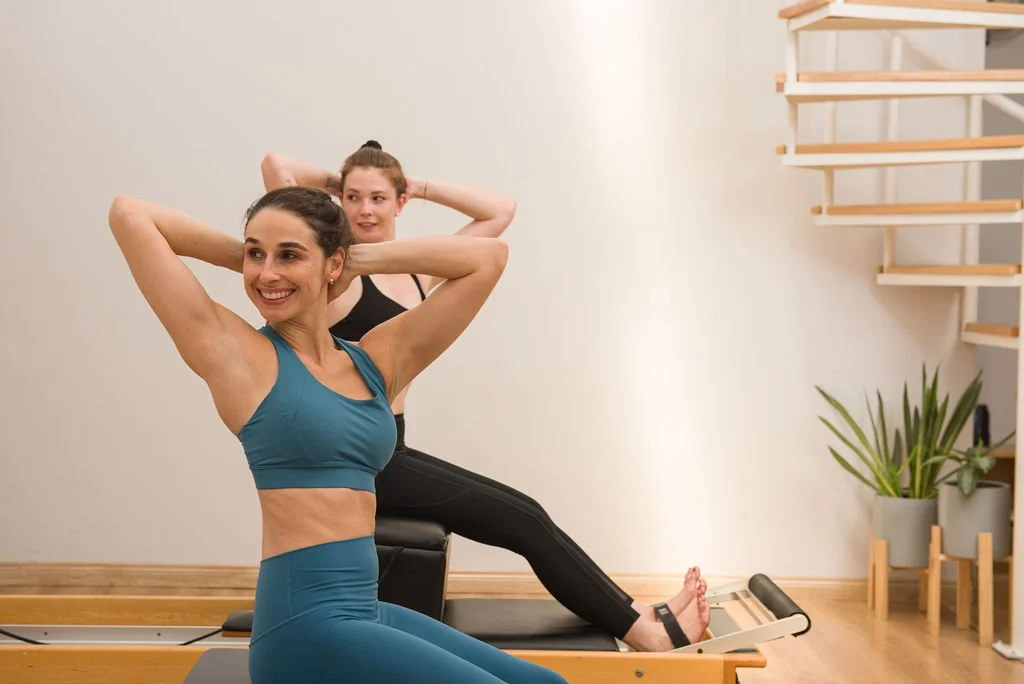
I used to think I was strong. I had been doing Pilates five times a week for about 10 years, swimming regularly, and teaching movement for a living. But one hike changed everything.
I went for a demanding hike with a couple of girlfriends—both with desk jobs—and I could barely keep up. My legs were tired. I was so far behind them. And I remember looking at their legs and thinking, “Why do they look so solid? Why do they move so powerfully… and I don’t?” Spoiler alert: they both strength trained in a gym 2 - 3 times a week.
I thought Pilates was enough. But that day made something painfully clear: it wasn’t giving me strength. The kind of strength that lets you carry your body + a heavy backpack up a giant mountain with ease, or toss your own luggage into the overhead bin without hesitation.
That hike was the turning point. The week after I joined a gym and started weight training. And within months, everything started changing.
For the first time ever, I had visible muscle in my legs. I could hike comfortably. I can now do 12 full chest-to-floor push ups—something that used to feel laughably out of reach. Even my back pain changed. What used to sometimes spiral into a 2-week shutdown now barely lasts a day, and doesn’t stop me from living my life.
After all this, I studied Clinical Pilates and learned about the physiology of getting stronger. I learned about exercise science, what happens inside the muscles when they get stronger, and how to tweak the way I teach Pilates to elicit this response in my clients.
I started applying these principles with my clients—especially those dealing with pain, injury recovery, or post-surgical rehab—and they got stronger too. Not just “feeling better,” but genuinely capable. They reached goals they had struggled with for years.
So I started asking:
Why aren’t we being taught this in our Pilates Teacher Training programs?
If Pilates is a form of exercise… why aren’t we taught about exercise science when we become certified?
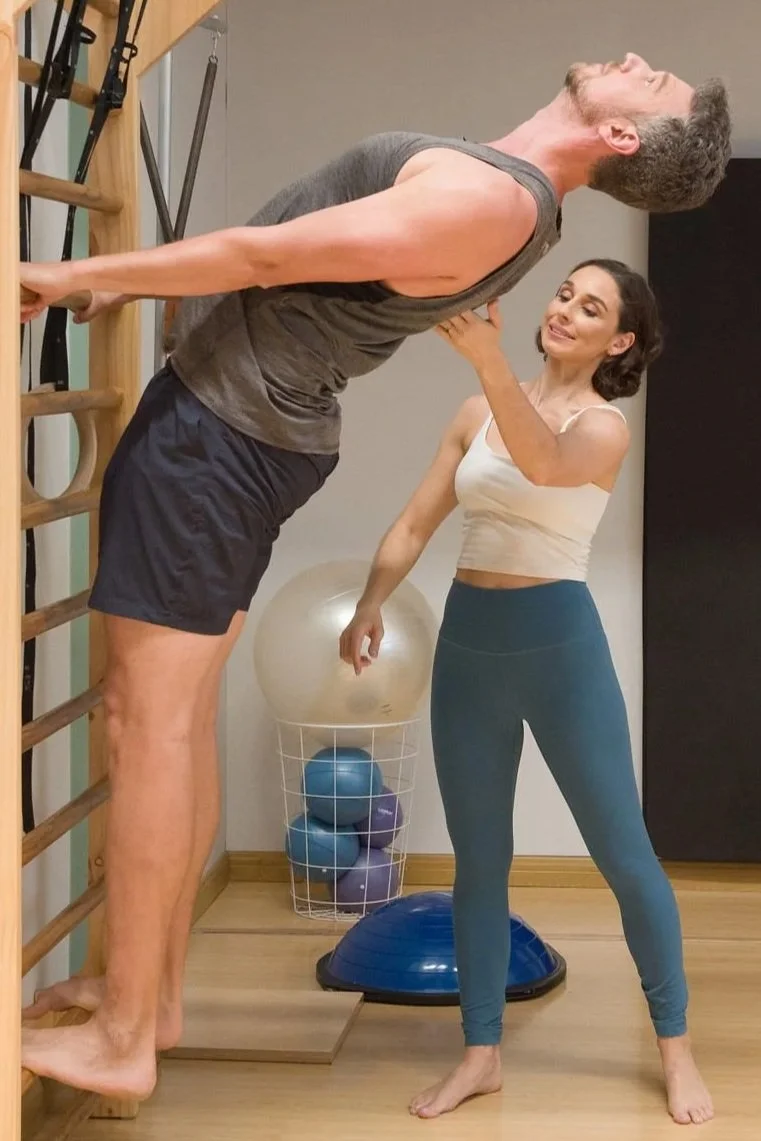
I’ve come to believe that every Pilates instructor should understand the basics of strength training. Not to become a personal trainer—but to be better at what we already do.
Because strength training isn’t just about weights. It’s about principles. And many of these can be applied within the Pilates studio—if you know what you’re doing.
A few key strength training principles every Pilates teacher should know:
1. Progressive Overload
Muscles get stronger by gradually increasing challenge over time. If your client is doing footwork on 3 springs for 15 reps and never changes anything, their strength gains will stall. You have to increase resistance (add a spring)—or change the exercise (like switching to single-leg footwork)—once they are able to do 15 reps.
Progressive overload = keep making the work slightly harder over time. Always.
2. Muscle Failure
To build strength, we need to challenge the muscle close to the point where it physically can’t do another solid rep. That point is called muscle failure—and getting close to it is what tells the body, “Hey, we need to adapt and get stronger.”
In Pilates, we usually stop well before that point. We might program 5 roll-ups in a class because that’s what the manual says. But if Jane can actually do 20 roll-ups before her abs even start to fatigue, those 5 reps aren’t doing anything for her strength.
To help Jane actually get stronger, we need to make the roll-up harder so that she can’t do more than 15 reps. Maybe that means lifting her legs into a Teaser. If she can only do 10 good Teasers? Perfect—that's her working range.
Once Jane gets stronger and starts breezing through 15 Teasers, we need to up the challenge again—maybe by holding a weight overhead, or adding spring resistance with a push-through bar sprung from below.
The good news? Pilates teachers are already great at this. We do it all the time—we just call it progression. When we want to bias strength, we simply need to keep progressing the exercise until it’s hard enough that our client is working close to failure in 15 reps or fewer.
That’s how the body knows it’s time to get stronger.
Caveat here: We don't need to arrive exactly at failure each time. We can stop a few reps before. And how can we know if we are a few reps before failure? The movement will start to involuntarily slow down. Form and technique will start to degrade. When you see that happening, you will know you are close to muscle failure.
3. Volume
Current strength guidelines recommend that beginners work every major muscle group with around 3–5 challenging sets per week. These sets should be close to muscle failure (see point above). Intermediate and advanced people will need more sets per week in order to keep getting stronger.
This doesn’t all have to happen in one session. You can spread the volume across multiple workouts in the week. But as teachers, we need to think beyond just whether our clients are “moving.” We need to ask: Are they getting enough stimulus to actually build strength?
That means ensuring our clients are working all the major muscle groups. We can make sure most muscles are targeted by including:
A leg exercise (like footwork, squats, or lunges),
A push (like chest press, overhead press, or push-up variations), and
A pull (like rows, pulling straps, or arm springs).
If we only see a client once a week and the client isn’t getting strength training anywhere else, we may not hit that target unless we’re very intentional. So the key takeaway here is: don’t just plan sessions—plan weekly strength volume.
And this matters most for clients who aren’t doing any strength training outside of Pilates—because if Pilates is the only form of resistance work they’re doing, we need to make it count. In these cases, we’re their only shot at hitting the physical activity guidelines for muscle strength.
4. The Best Exercises For Strength Are The Simplest Ones
To build strength, the exercise shouldn’t demand a huge range of motion or tons of skill. Simpler movements like squats, rows, or push-ups (done well, with effort) are better strength builders than complex choreography.
Strength lives in the simple, not the fancy.
5. Muscle Endurance ≠ Muscle Strength
Pilates is great for muscle endurance. Most Pilates exercises are submaximal—that means they don’t take us anywhere near muscle failure. If we mistake the “burn” (caused by hydrogen ions from repeated contractions) for strength gains, we’ll miss the mark.
Burn is not the same as strength. Burn isn’t the goal—adaptation is (which is caused by getting close to failure)
And yes—strength training literally helps us live longer.
The World Health Organization and the American College of Sports Medicine both recommend:
2–3 full-body strength sessions per week
150+ minutes of moderate cardio per week
Meeting these minimums reduces all-cause mortality by 50%. Let that sink in. Strength training can literally make our clients half as likely to die for any reason in the next 10 years.
It improves physical function, blood sugar, bone density, heart health, and even mental health. And results can start to appear with just one session per week.
So if we, as Pilates teachers, want to help our clients feel stronger, move better, and age resiliently—we can’t ignore this.
We don’t have to abandon Pilates.
But we do need to upgrade it.
Let’s teach with intent. Let’s stop being afraid of strength. Let’s use the science that already exists—and combine it with the beautiful method we already love.
That’s how we help people thrive.
Amy Sasso is a Clinical Pilates teacher and mentor with a passion for helping people with persistent pain return to the activities that matter most to them. After discovering Pilates in 2009 while recovering from debilitating low back pain, she transitioned from a career in software engineering to teaching Pilates full-time.
Amy trained extensively, including under Lolita San Miguel, one of only two people ever certified by Joseph Pilates. For five years, she ran Lolita’s Legacy Teacher Training Program in Costa Rica, guiding and certifying new Pilates instructors.
Today, Amy runs her own mentorship program - the Pilates Teachers Community - where she helps Pilates instructors build confidence, refine their cueing, deepen their understanding of pain and injuries, and embrace evidence-based practice.
Her qualifications include a Clinical Pilates Diploma from Breathe Education, the Lolita San Miguel Pilates Master Mentor Program, Power Pilates Comprehensive, and Polestar Pilates Mat.
Amy blends science, strength, and a no-nonsense approach to create impactful, empowering movement experiences for both clients and teachers.