
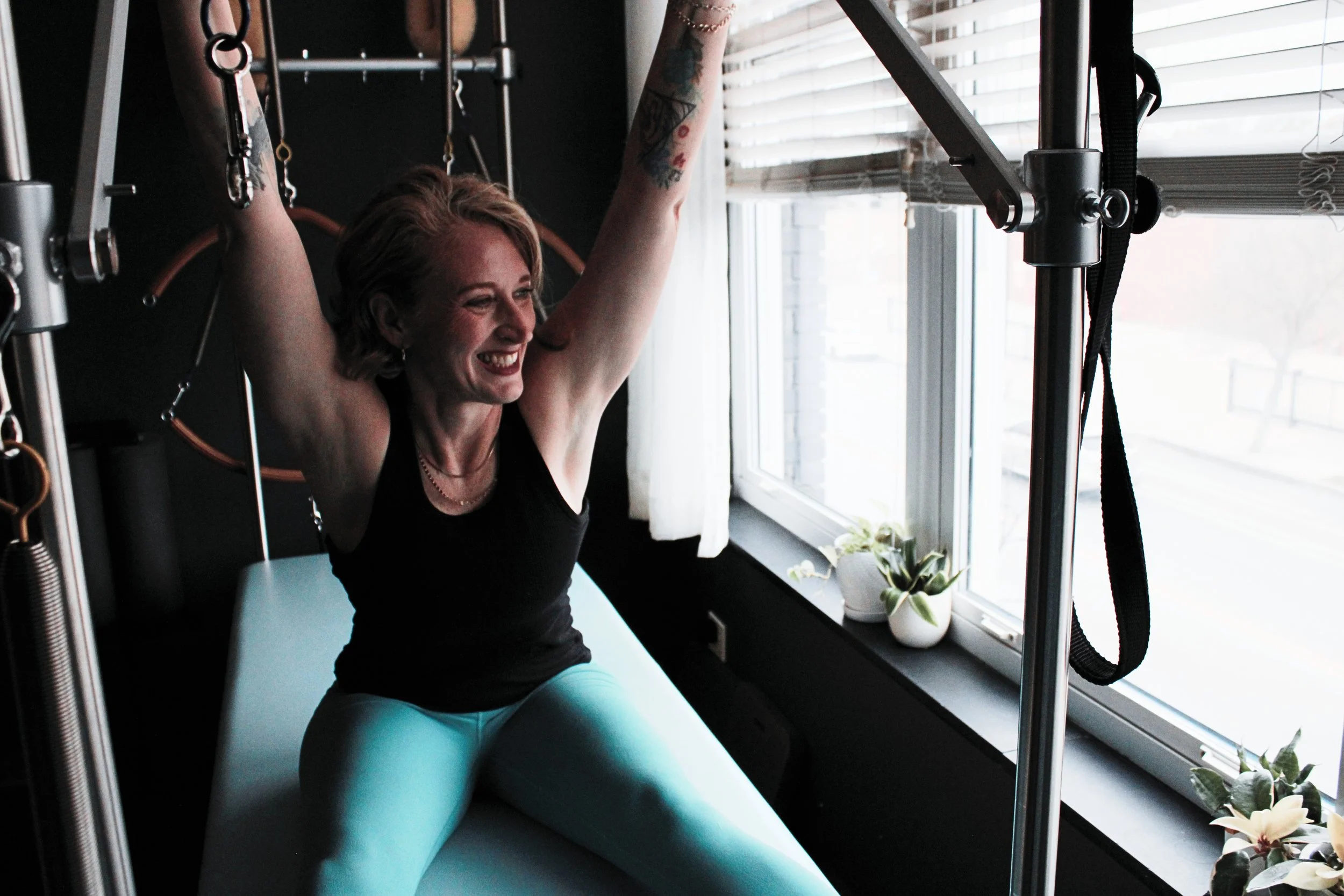
As teachers, we spend our careers obsessed with improving the skillset of sharing the Pilates method with others. But lately I’ve been wondering:
In this passionate, rapidly expanding, yet minimally regulated industry, who’s checking the power dynamics in the “movement classroom?”
This might be the first time you’re hearing about power dynamics within the Pilates universe. After all, we usually reserve the word “power” for the support that comes from our centers. But beneath each movement cue lies a hidden architecture of authority. One that can either help a client find empowerment, or worse, mirror a top-down, potentially abusive structure that leaves students feeling like their own autonomy can only be accessed when their teacher is in the room with them.
To begin this conversation, it helps to explore how pedagogy and biology can intersect to create the perfect environment for either a power struggle or a collaborative partnership. Learning how you can keep your own authority in check as a teacher and recognizing the warning signs of distorted power dynamics can help you redirect when things begin to drift off track.
First, we’ve got to look at the question that many teachers are asking today:
“How do I cultivate an environment of body autonomy while teaching a method that is inherently… defined?”
To be clear, this is not a debate about the merits of Classical vs Contemporary Pilates exercises - not even close.
This is a question of what comes first: the method? Or the student? When we’re talking about positive power dynamics in the Pilates classroom, the focus on teaching, i.e. the student, takes the lead every time.
Teaching centers on the learner's long-term growth, critical inquiry, and understanding of a subject over time. It’s the process of instructing rather than instruction itself - In short, the how vs the what.
Many Pilates professionals rely on an instruction-first model of sharing the method rather than a teaching approach. In a system as specific, progressive, and structured as Pilates, using a step-by-step process to tell someone where to put a body part generally gets the job done - at least on the surface.
However, a true teaching approach to Pilates involves being flexible with the method, interactive with the learner, and wide open to questioning. One might say that it’s the job of an instructor to have all of the answers and that of a teacher to have none, but be really excited to go on the journey of questions to find them with their learner.
With anatomy factoids, condition-specific protocols and a slurry of movement sequences downloaded to the hard drive of their brains, it’s true that the Pilates professional serves as a living reference for the method. But add in a dash of unfettered personal ambition, along with an altruistic, method-specific-mission that looks beyond the “body in front of them,” and for some, the pull of power can be side-tracked towards Guru-ism.
Netflix documentaries taught us that gurus do quite well at drawing crowds - at least for a time. In fact, sociologist Max Weber called it charismatic authority: a dynamic where legitimacy rests on devotion to a single leader rather than on transparent, repeatable principles.
In Pilates, however, the guru model operates with a clever shield and thankfully less documented, large-scale abuse (no documentaries yet.) The guru sits behind the curtain of the method, claiming they are “just upholding Joe’s original work” or on the other end of the tropey spectrum, there to help people. Regardless of the mission statement, the worst case power-dynamic scenarios involve claiming no personal authority while exerting total control.
It’s true that there are power dynamics in every learning relationship. To become effective teachers, it helps us to identify where it lies, how it can be used to help the process and when it becomes harmful. In order to understand how our own unchecked power can halt the learning process, it’s helpful to go back to the man himself: Joseph Hubertus Pilates.
The following story is meant to exemplify an ineffective motor learning process as told on more than one occasion by master teacher Ron Fletcher about Joseph and Clara Pilates.
First-generation teacher Ron Fletcher often recounted that Joseph would become frustrated while teaching movement that was not executed to his liking on the first or second attempts. It was not uncommon for Joe to throw his hands up in the air, exclaim “ACHCK!” And walk away without another word when something didn’t go right.
Luckily, Clara was there to pick up the pieces and fill in the blanks. Ron recalled often how she would come over to the Cadillac or reformer and gently say “Here, I show you,” to clarify the lesson or exercise and help the student understand what Joe wanted. Ron was famous for saying “Joe was the genius, but Clara was the true teacher.”
Not every studio has a Clara to turn a passive-aggressive teaching experience into one that helps us learn - nor should this be the norm - but the larger issue remains: when a successful movement experience depends entirely on the teacher’s approval, learning halts.
Educational theorist Paulo Freire called this the “banking model of education.” The concept views students (clients) as empty vaults that are waiting to be deposited into by the teacher’s infinite wisdom. Instead of the learner having an active role in their experience - sensing their own body’s signals, asking questions, trying different strategies without the fear of judgment - they move for the approval of the teacher.
Don’t get me wrong - there are times when the vocabulary is new and the need for instruction and encouragement is high that the teacher will be in the driver’s seat for far longer than the student. But in the lifespan of a client/teacher relationship, this dynamic should not be the norm for optimal motor learning.
When the power is held from the top down the dynamic can go one of two ways:
Loss of Agency: The learner loses (or never gains) their ability to interocept (sense/feel) when they are becoming more proficient at Pilates. They depend on external validation from others for success, which can trickle over into body image issues and self-confidence.
Codependency: The teacher becomes the key to Pilates first and then to everything else: socialization, friendship, therapy, restaurant recommendations and even belief systems.
The assumption that you could never play the guru is often the biggest mistake a teacher can make. Tiny pedestals are the most dangerous because unchecked environments allow destructive dynamics to quietly thrive. Look around our industry and you will spot them instantly:
The owner who has been the only game in town for twenty years, whose methodology is "my way or the highway."
The teacher training program that preaches body awareness, but demands you eclipse critical thinking to teach “real Pilates.”
The instructor who leverages client trust to sell supplements and demands personal loyalty under the guise of "community."
This has been a hard article to write, knowing I'm speaking directly to my colleagues, many of whom are, in the words of Erykah Badu, “sensitive about their sh*t.” But friends, we’ve been at this game of Pilates for a while now. It’s not enough to point fingers and say “bad.” We have to find the courage to examine our own classrooms and check where we might be building mini-pedestals of our own. That is how we leave this industry better than we found it.
When you correct a client without asking for their input, if you feel threatened when a client asks why an exercise is done a certain way, and when you take credit for a client's physical breakthrough but neglect to uplift their own effort, you lay another brick in a top-down structure.
Take A 24-Hour Studio Audit
I challenge you to run a simple, courageous, uncomfortable audit during your next teaching shift:
Count your open vs. closed cues: How many times in an hour do you tell a client what they should feel versus asking them what they actually notice?
Try the 3:1 Listener Ratio: At the end of a session, ask your client where they see today’s movement showing up in their daily life. Let them talk for 75% of the time. Use your 25% strictly to validate, reflect, and ask clarifying questions rather than steering the conversation back toward your own agenda.
Notice where the power sits in your room. Hold it autonomy-side up.
If you read this piece and found yourself sitting with a realization that you’ve been a subject of negative power dynamics, know that you’re definitely not alone. The good news is, you can change teachers. Your journey does not hinge on one person’s approval and seeking alternate voices (especially your own) is the healthiest next step you can take.
If you read this and felt defensive or angry, I gently invite you to reflect on what that discomfort is trying to tell you. Our biggest growth points often bring the most heat when we face them head-on (Snake and Twist, anyone?).
Change is entirely possible no matter how long you’ve been teaching. Inviting partnership will lift the heavy, guru-laden weight off your shoulders and let you show up as a human within a community again. Teaching is a life source that taps back into why we all arrived here in the first place: not to be unquestioning disciples, but to help people move well in their own bodies through a beautiful movement method.
Note the order of that last sentence, and you’ve already taken the first step.
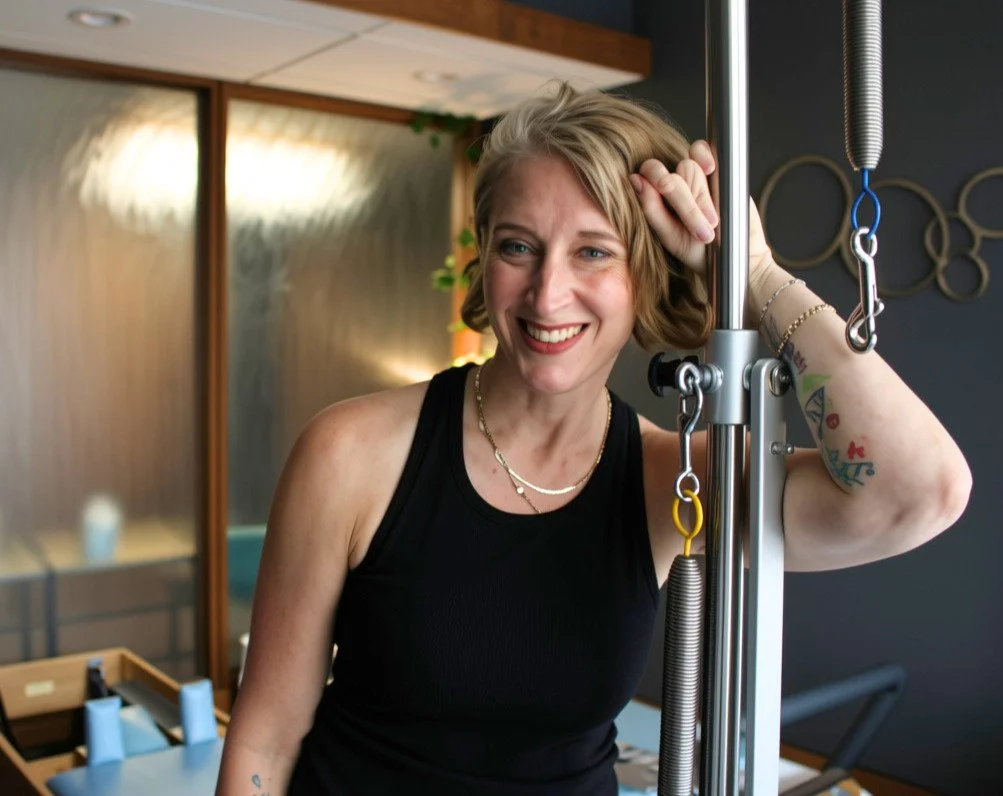
With over two decades of experience in movement instruction, Jenna Zaffino is a powerhouse entrepreneur, movement educator, speaker, and coach based in Chicago. She specialises in breaking down complex movement science into easily accessible forms and has helped thousands of clients shift their mindsets, increase their physical resilience, and find their own individual wellness practices. You can find Jenna @jennazaffino