
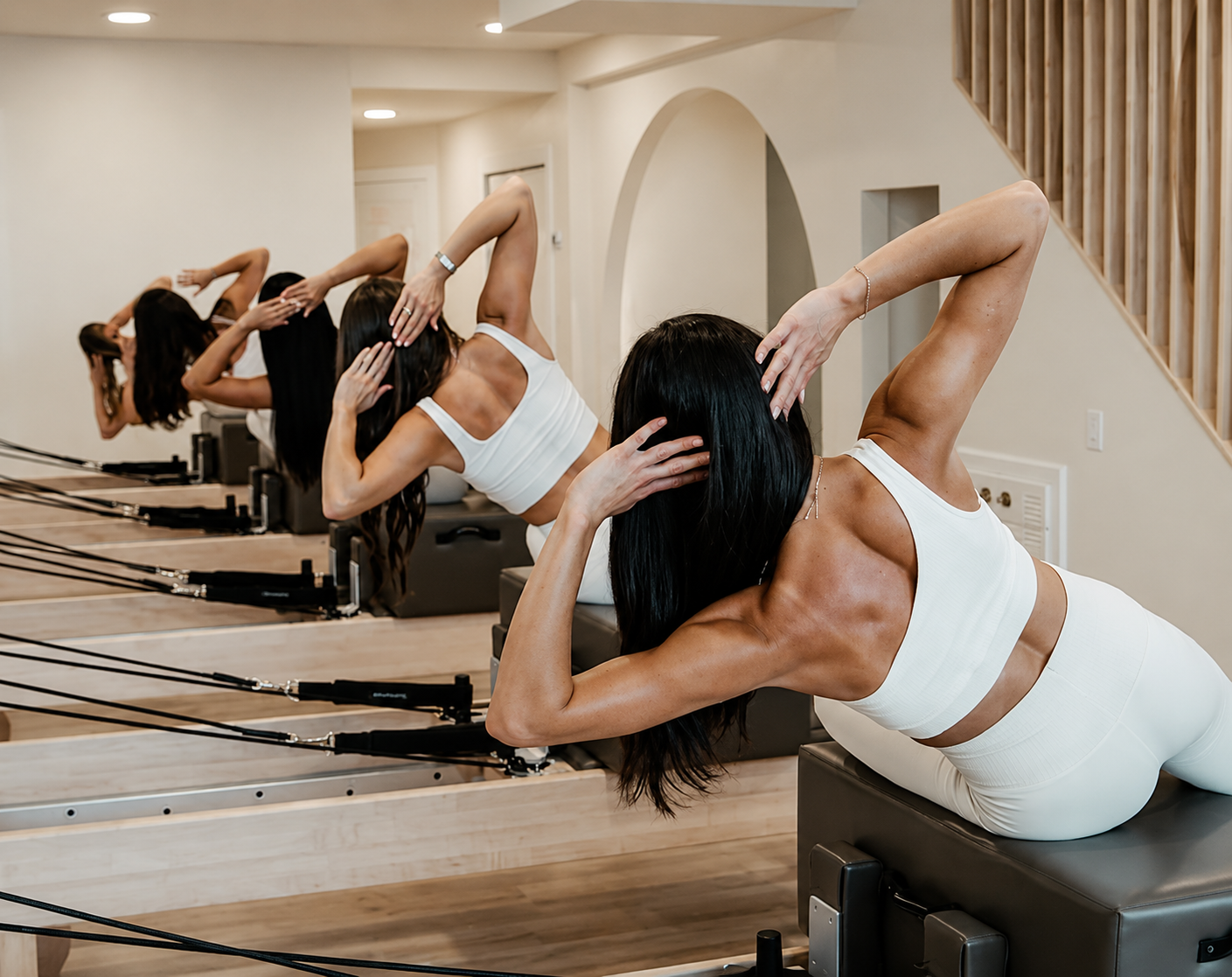
Photography @calliespilates
New data from the Sports & Fitness Industry Association shows U.S. Pilates participation has grown by almost 40% since 2020, with younger women driving particularly strong participation - and millions combining Pilates with strength training, running, yoga and other forms of fitness.
Pilates participation in the United States has reached 13.8 million people, according to newly released data from the Sports & Fitness Industry Association (SFIA).
The 2026 SFIA Single Sport Report, based on participation during the 2025 calendar year, shows Pilates continuing a strong upward trajectory.
Participation increased 6.8% in 2025 alone, from 12.9 million to 13.8 million.
Look further back and the growth is even more significant. In 2020, 9.9 million Americans participated in Pilates. That means the number of participants has increased by approximately 39% in five years.
Growth has accelerated more recently, with SFIA reporting an average annual growth rate of 10.2% between 2022 and 2025.
More people are doing Pilates — and more are doing it regularly
Perhaps one of the most significant findings for the industry is that growth isn't limited to people trying Pilates occasionally.
SFIA separates participants into "casual" participants, who take part between one and 49 times a year, and "core" participants, who participate 50 or more times annually.
There were 3.38 million core Pilates participants in the U.S. in 2025, up from 3.1 million the previous year.
That represents annual growth of 7.6% - slightly higher than the 6.8% increase in overall participation.
For studios and the wider industry, that's an important distinction.
Growing awareness can bring people through the door once. Growth in frequent participation suggests a significant number are making Pilates part of their ongoing movement routine.
Almost one in ten young women participates in Pilates
Women remain the dominant Pilates consumer, accounting for 70% of all U.S. participants.
But age reveals an even more interesting picture.
Among women aged 18–24, 10.3% participate in Pilates. For women aged 25–34, the figure is 9.9%.
In other words, Pilates now reaches approximately one in ten U.S. women aged 18–34.
Participation remains strong among women aged 35–44 at 7.6%, before declining progressively across older age groups.
Across men and women combined, 18–24-year-olds have the highest Pilates participation rate at 7.9%, followed closely by 25–34-year-olds at 7.4%.
The numbers provide some context for the increasingly youthful face of Pilates.
While Pilates has long served people across the lifespan, a significant part of its current expansion is being driven by younger adults - particularly younger women.
But the most committed Pilates consumer looks different
There is another interesting shift when we look beyond participation and examine who is practising most frequently.
Among the 3.38 million people SFIA classifies as core Pilates participants, 85.7% are women.
The age profile is also more evenly distributed.
While 25–34-year-olds make up 19.7% of core participants, 35–44-year-olds account for 17.7%, 45–54-year-olds 17%, 55–64-year-olds 14.5%, and people aged 65+ another 15.8%.
It suggests that younger adults may be particularly important in driving Pilates' reach, while frequent participation extends much further across age groups.
The Pilates consumer isn't only doing Pilates
One of the most revealing parts of the SFIA report is what Pilates participants do when they're not doing Pilates.
Nearly half (46.7%) also walk for fitness, while 46% use a treadmill and 42.9% participate in yoga.
Strength training is also prominent.
39.4% of Pilates participants use dumbbells or hand weights, 22.7% use barbells, 21.3% use weight or resistance machines and 17.2% use kettlebells.
Meanwhile, 24% participate in high-impact or high-intensity training, 24.1% run or jog and 32.3% hike.
The overlap with strength training is particularly relevant given the broader conversation about whether consumers are moving away from certain forms of fitness in favour of strength.
The SFIA data suggests that, for many Pilates participants, this isn't an either/or decision.
Pilates participants are more than twice as likely as the general population to use dumbbells, more than three times as likely to use kettlebells, and more than three-and-a-half times as likely to participate in high-intensity training. They are also more than three times as likely to practise yoga.
Rather than replacing other forms of exercise, Pilates appears to be sitting within an increasingly varied approach to fitness.
Pilates still skews towards higher-income consumers
The report also highlights an important consideration for an industry experiencing rapid expansion.
Pilates participation increases with household income.
Among people living in households earning $100,000 or more, 5.1% participate in Pilates, compared with 3.8% of those in households earning less than $25,000.
Overall, 39% of Pilates participants come from households earning $100,000 or more. Among core participants, that increases to 44.7%.
Education shows a similar pattern. College graduates and those with postgraduate education are disproportionately represented among Pilates participants, and the difference becomes even more pronounced among people practising 50 or more times a year.
As Pilates continues to grow, accessibility may therefore become an increasingly important part of the industry's next chapter.
From trend to established fitness behaviour?
There has been no shortage of discussion about the current Pilates boom.
What's useful about the SFIA data is that it gives us a clearer picture of what is happening underneath the visibility.
The U.S. Pilates population has grown from 9.9 million to 13.8 million in five years. Core participation is growing. Around one in ten young adult women now participates. And the Pilates consumer is not abandoning strength, cardio or other forms of fitness to do it.
Instead, Pilates appears to be finding a place within a much broader movement routine.
For the Pilates industry, perhaps the most important number isn't 13.8 million.
It's what happens next: whether the millions of people currently discovering Pilates continue to make it part of how they move for years to come.
Source: Sports & Fitness Industry Association, 2026 SFIA Single Sport Report: Pilates Training. Participation data reflects the 2025 calendar year and U.S. population ages six and older.
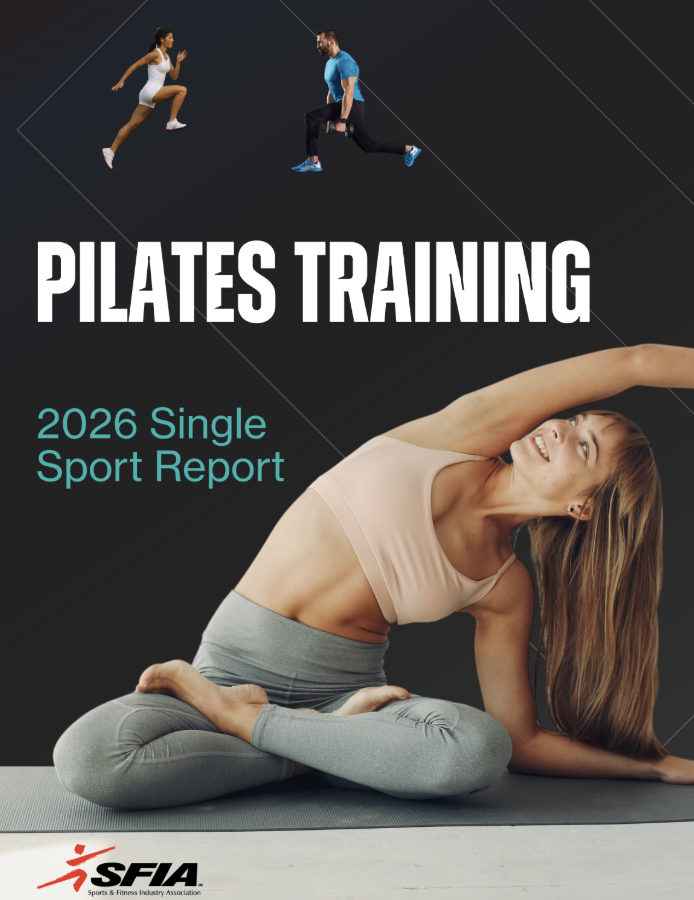
Sports and Fitness Industry Association
You can access the Full report here