
How Classical Pilates is Powering Circus Performance
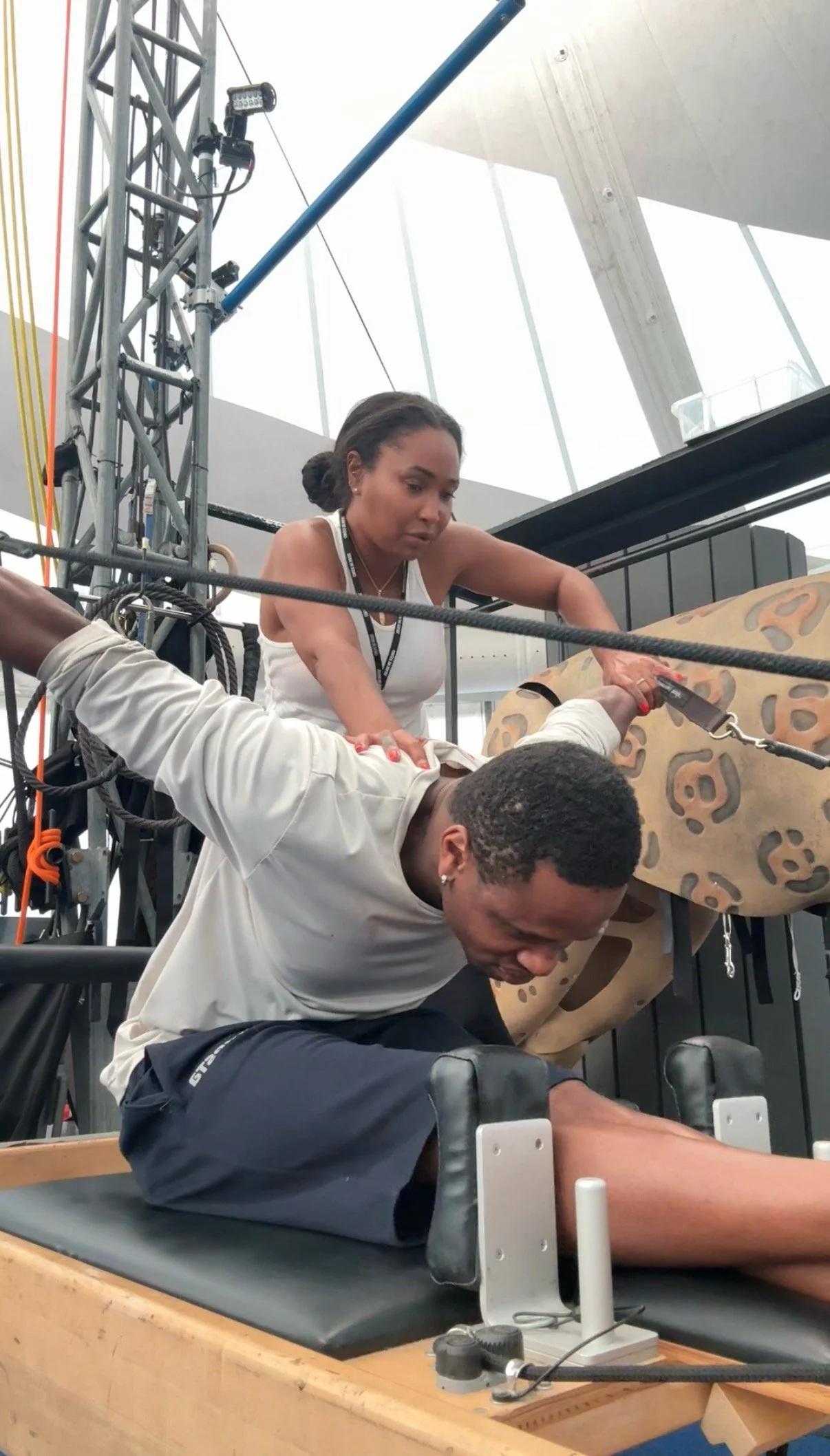
For many Pilates teachers, the studio is where the work happens. The familiar rhythm of reformers, mats, and dedicated clients provides a controlled environment to teach the method. But for classical Pilates teacher Teneice Bowie, from Miami Florida, one recent opportunity took her far beyond the walls of a traditional studio and into a world where bodies fly through the air, precision is non-negotiable, and performance is measured not just by aesthetics, but by safety.
Working as a Pilates instructor within a Miami circus residency training tent, Teneice found herself applying the classical Pilates method in one of the most demanding movement environments imaginable.
"I worked with the team in the afternoons for about two hours at a time," she explains. "Each day was different and varied greatly on the artists' needs and what their body may have been experiencing that day."
Under the big top, there was little of the calm and order often associated with Pilates.
"It's a circus in every sense of the word!" Teneice laughs. "Loud music, people walking around and tons of other distractions. Being under the tent really challenges the Pilates principle of concentration."
Yet it was precisely this environment that highlighted the enduring relevance of Joseph Pilates' original work.
A Method Built for Every Body
The artists Teneice worked with perform at an elite level night after night, placing extraordinary demands on their bodies. Despite their incredible strength and athleticism, common movement concerns emerged.
"There were lots of shoulder and hip mobility concerns," she says. "Whether they came from injury prevention or from recent aggravation."
For Teneice, the experience reinforced one of the greatest strengths of the classical method.
"The beautiful part of classical Pilates is that it is designed to support the body regardless of the athletic needs of the individual," she says. "It's then up to me as their teacher to prescribe the correct exercise that already exists in the repertoire to address focused needs of the specific artist for that night."
Rather than inventing new exercises or chasing novelty, Teneice relied on the depth of the existing system.
"Knowing the work - the classical repertoire - is key. There is already a library of exercises that I can choose from. It's extremely important for teachers to know which exercises assist and which ones may be contraindicated for certain ailments or concerns."
Concentration in a Distracted World
Perhaps one of the most powerful lessons Teneice took away from the experience was a renewed appreciation for concentration, one of the six classical Pilates principles.
To stay prepared, she arrived with a clear plan.
"I had a game plan of the exercises I may have wanted to teach going into the start of my shift with them in the event that their bodies felt fine," she says. "I'd offer about ten exercises per session. Half went to teaching Pilates as I would for a regular client and the other half went to Pilates for performance and rehabilitation."
The performers themselves impressed her with their ability to focus amid chaos.
"They are excellent listeners and can pretty much tune out all of the distracted noise to hear cues," Teneice says. "They also do an amazing job at tuning out visual distractions."
The experience prompted a broader reflection on modern movement culture.
"It made me think how much of our day-to-day lives are operated through distraction, which has caused the general population to have a very short attention span," she says. "This shows up in Pilates studios as the need for loud music, unnecessary variety in classes and anything else to stop the client from being bored when instead, they should be learning focus and concentration."
Beyond Flexibility
Many circus artists possess extraordinary mobility and flexibility, but Teneice quickly learned that physical capability alone wasn't the goal.
"Asking an artist to do a full split is no big deal because they can," she explains. "But are they feeling the connection?"
For Teneice, this shifted her teaching focus toward helping performers deepen their internal awareness.
"Working with them pushed me to become more in tune with what I was seeing in their body and relying on verbal feedback to make sure that what I was cueing was connecting internally, which is the purpose."
That heightened body awareness also plays an important role in injury prevention.
"In this instance, Pilates teaches the artists how to be more aware of their bodies so they can immediately make adjustments to prevent possible injuries."
Precision Can Be Life-Saving
If there is one Pilates principle that took on an entirely new meaning under the circus tent, it was precision.
"As a combat veteran, I was already big on the principle of precision," Teneice says. "Doing things correctly was already deeply instilled in me."
But watching performers execute highly complex movements elevated her appreciation even further.
"These artists do the most amazing things with their bodies, with props and often in mid-air," she says. "Not being precise is a recipe for possible disaster."
For performers whose bodies are literally their instrument, precision isn't optional, it's essential.
Lessons for the Industry
So what can the wider Pilates profession learn from working with elite performers?
For Teneice, the answer is surprisingly simple.
"I think we can all learn to pay more attention to the direct feedback our bodies provide if we slow down enough to focus on the internal connection."
In an industry increasingly driven by trends, variety and entertainment, she believes the foundational principles remain as important as ever.
"A lot of the industry is trying to keep up with the demand for variety so that studios can remain competitive," she says. "But we lose the plot without concentration, control and repetition."
And perhaps that's the biggest takeaway from Pilates under the big top. Whether you're teaching a circus performer suspended high above the stage or a client in a local studio, the principles that Joseph Pilates built his method upon remain remarkably relevant.
Sometimes it takes stepping into the most extraordinary environment imaginable to remind us of the power of the fundamentals.
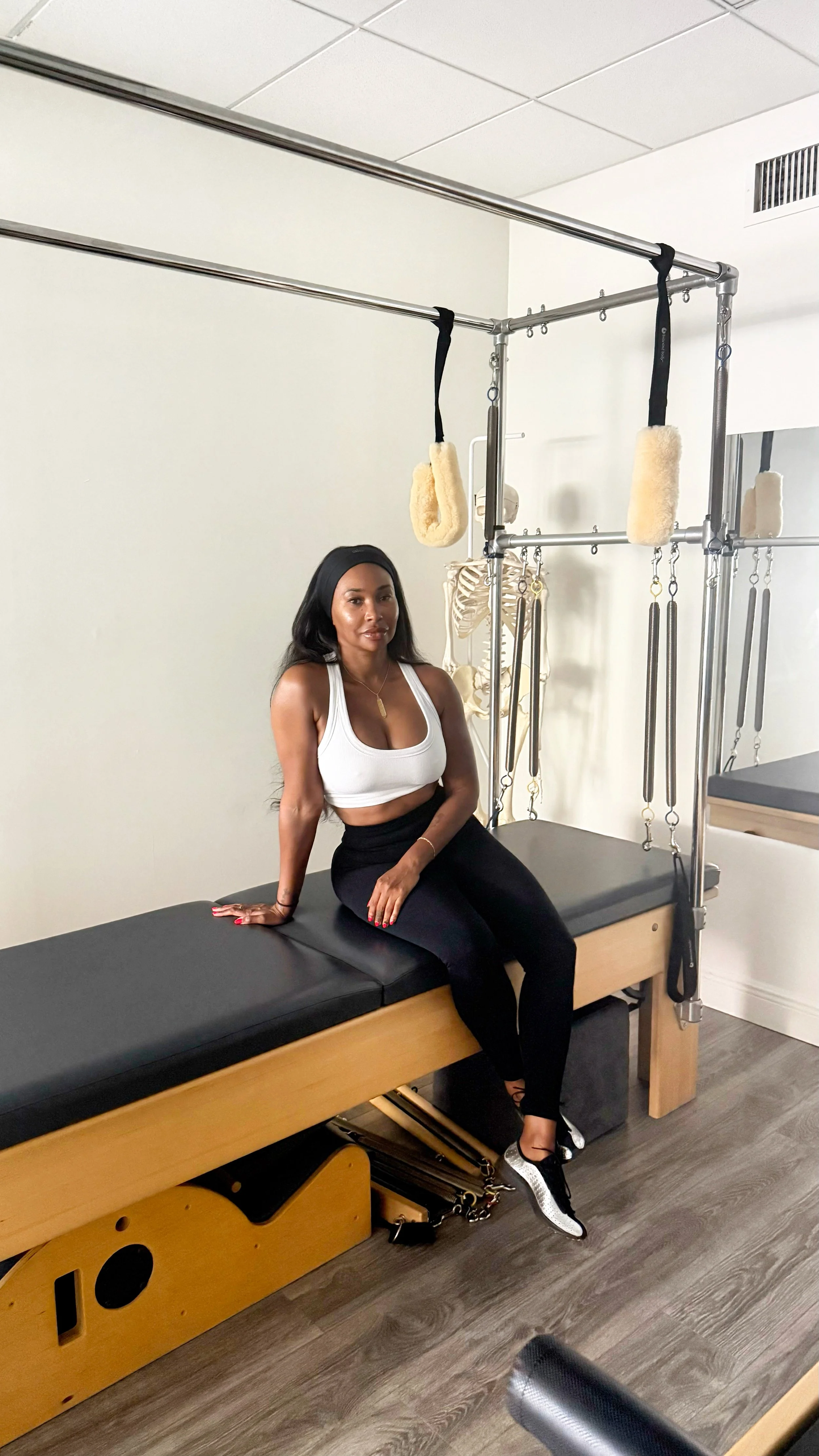
Teneice Bowie is a 4th Generation comprehensive classical Pilates instructor in the lineage of Romana Kryzanowska, certified through VIDA Pilates in Washington, D.C. A U.S. Air Force combat veteran and former U.S.intelligence professional, her work is defined by discipline, clarity, and an uncompromising commitment to the classical method.
She is the founder of Matte Pilates, her private instruction practice, and LISTED, a large-format class brand known for its precise, unapologetic return to the original work, delivered with a modern, fashion-forward edge. Across both platforms, Teneice develops strong, highly capable movers while shaping a new standard for how Pilates is taught, experienced, and scaled. She also mentors instructors and studio owners to refine their teaching, elevate their positioning, and build profitable, high-level careers within the industry.