
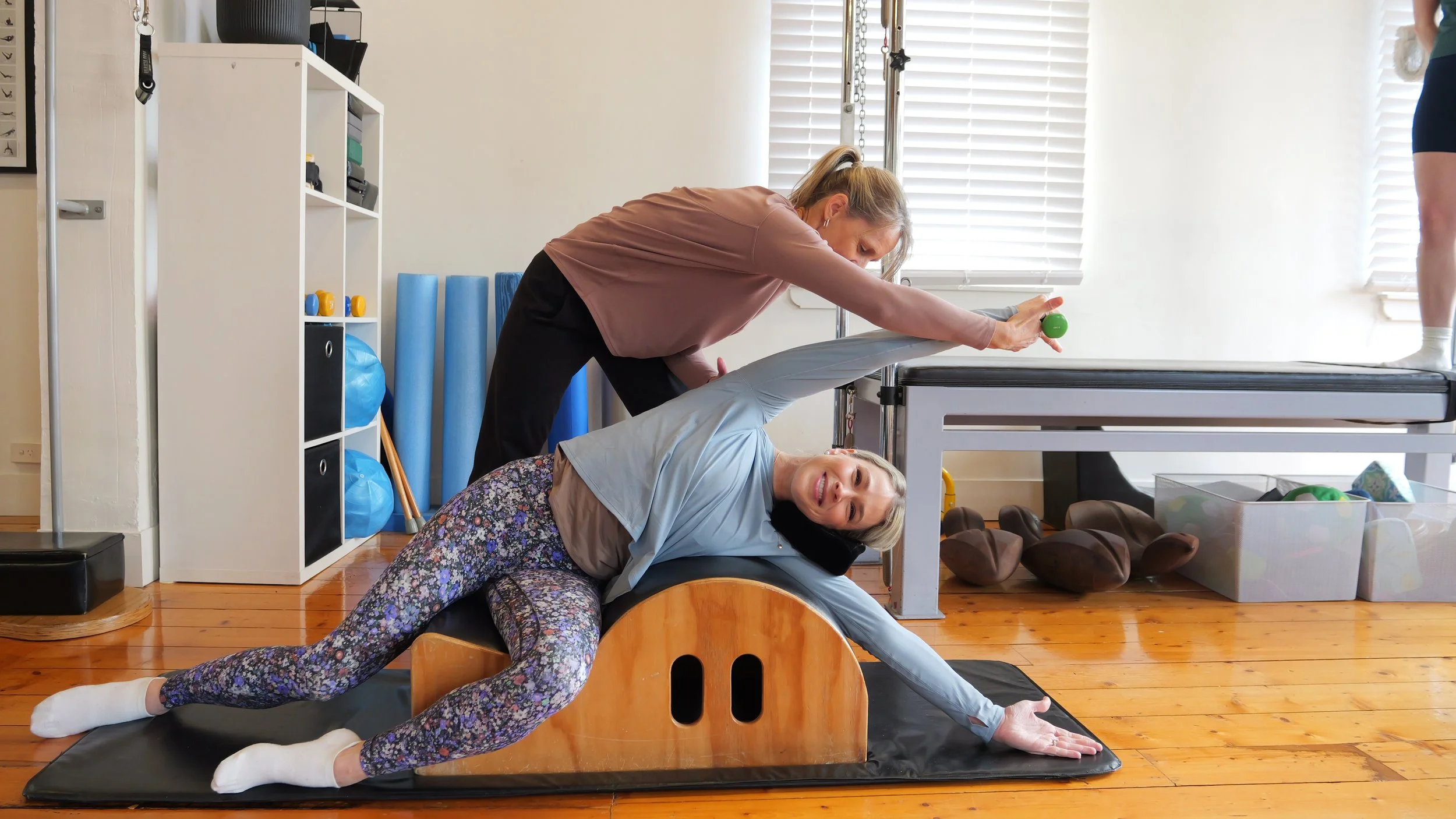
In Pilates, anatomy and physiology have always been part of the foundation. Most instructors have spent years learning muscle names, joint types, actions, and body systems. We’ve studied diagrams, memorised terminology, and tried to piece together how it all fits.
And that knowledge does matter. It builds confidence, supports professional conversations, and gives us a framework for understanding what we’re seeing in the studio.
But the real power of anatomy shows up in how we use it.
As instructors, we’re not there to deliver anatomy lectures. We’re there to help people move well, feel capable in their bodies, and build trust in what they can do. A deeper understanding should make our teaching clearer and more focused, not more complicated.
How anatomy shapes the way you teach
When you begin to understand anatomy in a practical way, the body in front of you starts to make more sense.
You notice patterns in how people load through their hips or spine. You recognise when someone is bracing, holding, shifting, or avoiding. You see why one client responds immediately to a cue while another needs a different approach.
That knowledge influences everyday decisions in the studio:
Selecting exercises with intention
Adjusting load, range, and tempo appropriately
Adapting for injuries, pain, or movement limitations
Recognising subtle shifts in movement quality
Over time, anatomy moves from being a set of rules to follow, to something that quietly supports a more responsive, adaptable style of teaching.
It also makes conversations with Allied Health professionals easier, because you’re working from a shared understanding of how the body functions.
When too much anatomy gets in the way
There’s a point where more information doesn’t improve the outcome.
It’s easy to assume that if we explain more, clients will understand more, and if they understand more, they’ll move better. In practice, too much detail often creates tension, confusion, or overthinking.
Most clients don’t need a breakdown of the rotator cuff or the layers of the abdominal wall. They need direction that makes sense in their body. They need to feel a change. They need to experience success.
When we overload people with information, movement becomes disconnected from experience. The session turns into a thinking exercise instead of a physical one.
Good anatomy knowledge helps you filter what matters. It allows you to keep the message simple while still being precise.
Learning to see the body in front of you
Anatomy becomes far more useful when it shifts from theory to observation.
Instead of thinking in isolated muscles, you start to look at how the whole body organises itself:
How the trunk stabilises
Where tension is being held
How load is transferred
How the spine, hips, and shoulders work together
You also begin to appreciate how different bodies are. Range, strength, control, and coordination all sit on a spectrum. No two people organise movement in the same way.
This is where anatomy truly supports better teaching. It helps you:
Identify where support or mobility is needed
Refine movement patterns through targeted adjustments
Build capacity gradually and appropriately
Encourage confidence through successful movement experiences
Cueing: where knowledge becomes skill
The most effective cues are rarely the most technical ones. They’re the ones that create a noticeable change.
When you understand anatomy and movement, your language naturally becomes more focused. You don’t feel the need to explain everything. You can identify the one thing that matters most and direct attention there.
You learn when to simplify, when to give less information, and when to let the movement do the teaching.
Sometimes a single, well-timed cue can change posture, improve control, or transform the feeling of an exercise. That comes from knowing the body well enough to choose what’s relevant and leave the rest out.
And sometimes, the best choice is to stay quiet and let the client explore.
Anatomy as a practical teaching tool
For Pilates professionals, anatomy isn’t just academic knowledge. It’s something you draw on every day, often without realising it.
It shapes how you observe movement, interpret what might be happening, modify exercises, work with different populations, and build progressive, individualised programs.
It gives context to the person in front of you. The older client wanting to stay independent. The new mum reconnecting with her body. The athlete refining control. The person managing pain and learning to trust movement again.
Anatomy provides the reasoning behind your choices. It helps you understand why an exercise works, when to change it, and how to progress safely and effectively.
As your understanding grows, so does your confidence. You notice more, adjust sooner, and cue with greater purpose. And your clients feel the difference.
What many instructors need isn’t more theory, but anatomy that informs practical decisions, such as:
Understanding how load travels through the body
Recognising when stability or mobility is the priority
Seeing how effort is distributed across regions
Noticing how posture and alignment influence efficiency
Connecting what you observe externally with what may be happening internally
This kind of learning sharpens observation and strengthens clinical reasoning in everyday teaching.
A more practical way to learn anatomy
Many anatomy courses go deep into detail. That has value, but it doesn’t always translate into better teaching.
What instructors often need is anatomy that is experienced, tested, and applied.
Rather than memorising structures in isolation, it’s about exploring questions such as:
What changes when I alter range, tempo, or resistance?
How does breath influence trunk organisation?
Where does compensation appear under fatigue?
How does this movement feel in my own body?
What shifts when I refine a cue?
This kind of learning starts with experience. It builds awareness in your own body, sharpens your eye in the studio, and closes the gap between theory and practice.
A practical place to start
If anatomy is going to truly support your teaching, it has to move beyond theory.
A practical place to start is with your own body.
Notice how you load through your hips when you lunge.
Feel what happens in your trunk when you change breath strategy.
Observe how your shoulders organise when you alter tempo, range, or resistance.
Anatomy becomes far more meaningful when you experience it, not just study it.
From there, bring that awareness into the studio. Watch how different bodies respond. Compare what you feel with what you see. Ask why something changes when load shifts or when a cue is refined. Let physiology inform your decisions around progression, fatigue, recovery, and adaptation.
Relevant learning isn’t about accumulating more information. It’s about choosing knowledge that strengthens what you do every day.
When anatomy and physiology are applied through self-practice, observation, and thoughtful programming, they stop being subjects to memorise and start becoming tools you use with confidence.
For any Pilates professional who wants to teach with greater clarity, precision, and purpose, continuing to deepen your practical understanding of anatomy is not an academic exercise. It’s part of evolving as a teacher.
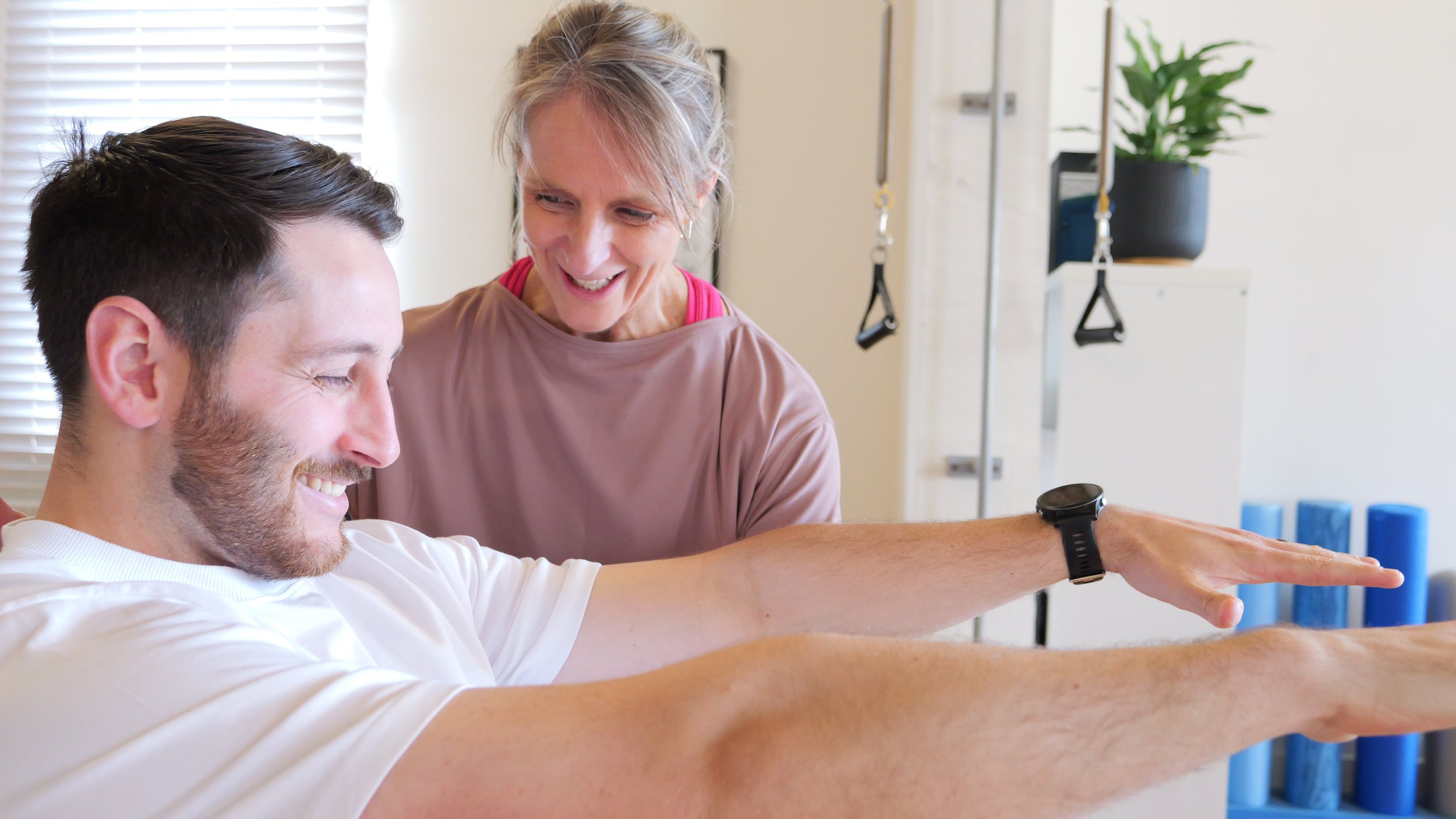
Kath Banks is a Senior Faculty Educator with National Pilates Training, where she teaches the Diploma of Professional Pilates Instruction(11332NAT), including the Clinical Stream, as well as the Advanced Diploma of the Pilates Method (11333NAT). She is also the Owner and Principal Instructor of Aligned for Life Pilates in Moonee Ponds, Melbourne, Australia.
With over 30 years of experience in the movement industry, Kath holds an Advanced Diploma of the Pilates Method and a Masters in Clinical Exercise Science and Rehabilitation. She is known for blending clinical insight with practical, studio-based teaching, empowering instructors and clients alike while enhancing movement potential at every stage of life.