
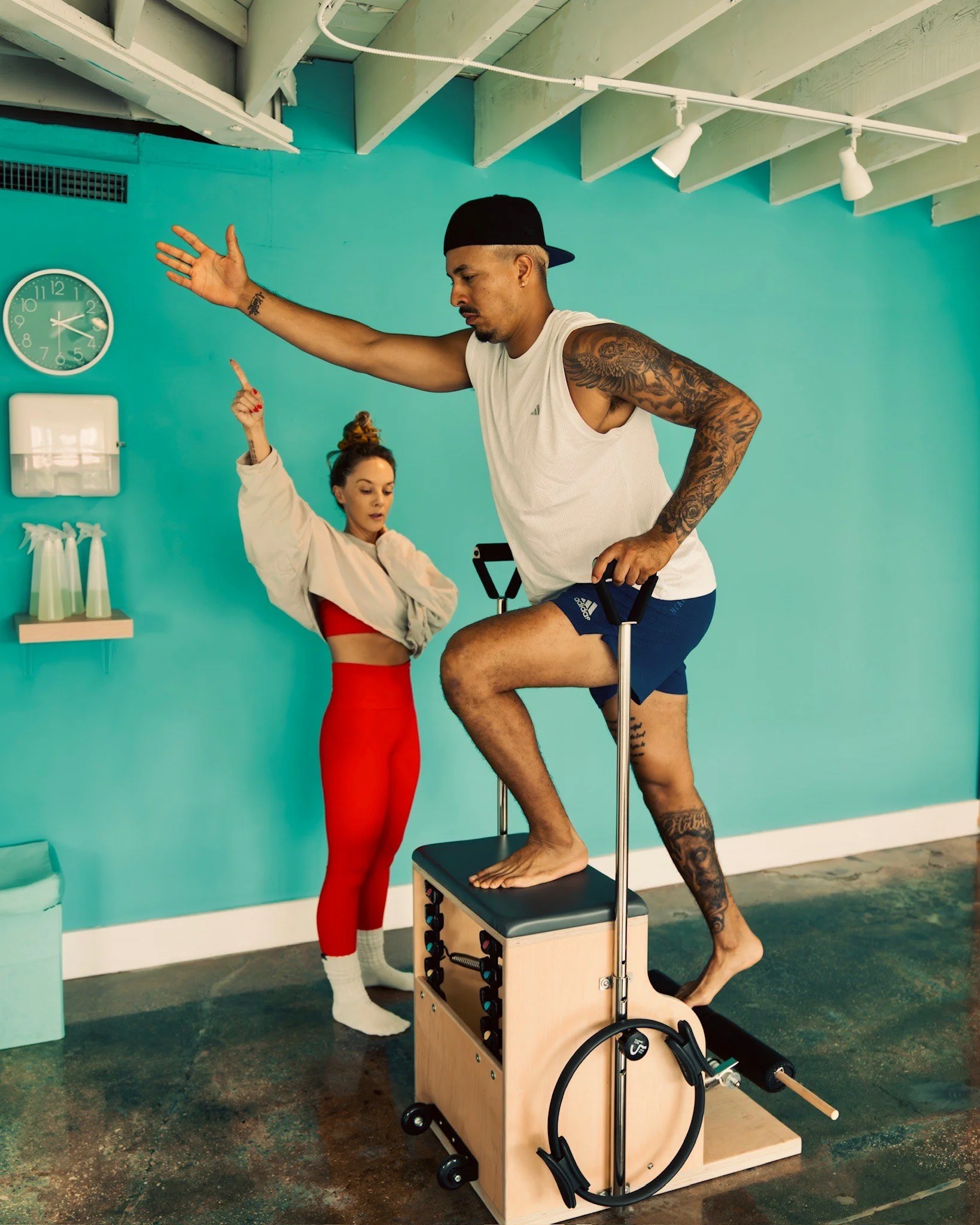
Photography Sosacinema and JHMP
I first found Pilates almost 20 years ago. It wasn’t trending on Instagram, and there wasn’t a studio on every corner. I was a college kid from Arkansas- a “gym girly” with an athletic streak, a love for sports, and a dance background. While getting my degree in Psychology at UCF, I came across a reformer for the very first time. The moment I got on it, I was hooked. Pilates blended everything I loved: strength training, stretching, precision, and control. I didn’t just feel my body working, I felt it working differently. Not long after that first session, I knew this was the path I wanted to follow. I wanted to help people feel what I had felt. I had no idea it would lead me to work with some of the most elite athletes in the world.
Shaping My Teaching Style
I got my comprehensive certification through Balanced Body, which I believe is one of the most thorough and detailed programs available. I completed that 500 hour certification feeling prepared to work with any client or situation. But the more bodies I taught, the more I wanted to know about the essence of Pilates. I wanted to understand why Joseph Pilates designed things a certain way, why some exercises were meant to remain pure but some could be modified. That led me to study with teachers from classical lineages and many second generation instructors.
Today, my approach blends both worlds: the contemporary adaptability of my Balanced Body training with the respect and integrity of the classical method. I’ll absolutely modify exercises for the body in front of me, but only if it preserves the principles of the work.
“I think the balance of contemporary and classical training is what keeps my teaching true and effective.”
In the Beginning
I can still remember how nervous I was when I first started working with professional athletes. I was 5’2”, in my early 20s, newly certified and I didn’t know anyone else who was working with athletes. I was so worried they wouldn’t feel challenged or listen to me. Remember most of these guys are almost 7ft and close to 300lbs! That nervousness quickly went away, I realized they were stepping into my world, and this form of movement was completely foreign to them.
They were shaking, sweating, and fighting to focus on their form and control instead of the explosive movements they were used too. Every week they kept coming back, and usually bringing friends. One thing I noticed was how what they had already done that day affected our sessions. If they did a lower body lift, if they had just come off their therapist table, if they were super dehydrated from a full morning of field work, all of these things came into play and affected how I could program and train them that day.
I would ask ‘what did your physical therapist say we should avoid today?’ Their answer was usually NOT what I needed to hear. Most days it was ‘I think we’re good’. So I asked them to connect me with their performance coaches and therapist to help streamline those conversations, so we could avoid making an injury worse. My emails and text fell on deaf ears for a while. At first, it was tough to get other professionals to believe Pilates could make a real difference. But the results started speaking for themselves. Athletes doing Pilates with me were getting hurt less, recovering faster, and moving more freely. That’s when doors started opening, and true collaboration became possible.
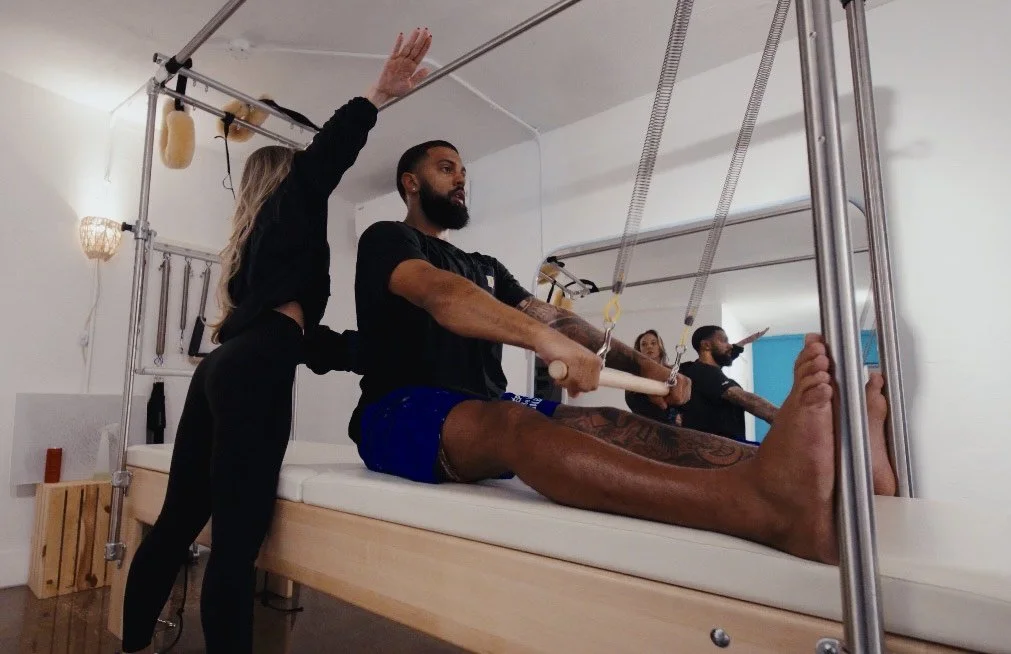
Collaboration That Transforms
I’ve had the privilege of working alongside physical therapists, performance coaches and position specific trainers. And
“if there’s one thing I’ve learned, it’s that Pilates is often the missing piece of an athlete’s training.”
For so long, the focus for athletes has been “bigger, faster, stronger.” Those qualities are crucial, of course but I think Pilates helps blend all of those modalities together.
When athletes do real Pilates, their lifts improve because their muscle groups are firing in the right order instead of relying solely on the big global muscles. Their sprints get faster because their core is finally coming into play. Their jumps get higher because their feet and ankles are working properly, reducing the risk of rolled ankles, dropped arches, or Achilles tears. Stronger feet and ankles mean fewer injuries. Those are things that keep athletes performing at their peak and keep them doing Pilates year after year. And those are the things that help secure my relationship with the rest of their team.
Pilates helps make their job easier. I work hand in hand with their trainers to find corrective exercises they can implement into their lifts, and their speed and position coaches have helped me understand what each position really needs to excel. What muscles do defensive backs use to back pedal and cut, what muscles can I help strengthen and elongate to help a receiver gain more rotation to catch a ball over their shoulder while running downfield, how can I help my switch hitter be equally as powerful when he bats left and right handed, how can we keep our 3rd baseman out of chronic low back pain? It truly takes a team and constant collaboration. And I’m honored to be a part of it.
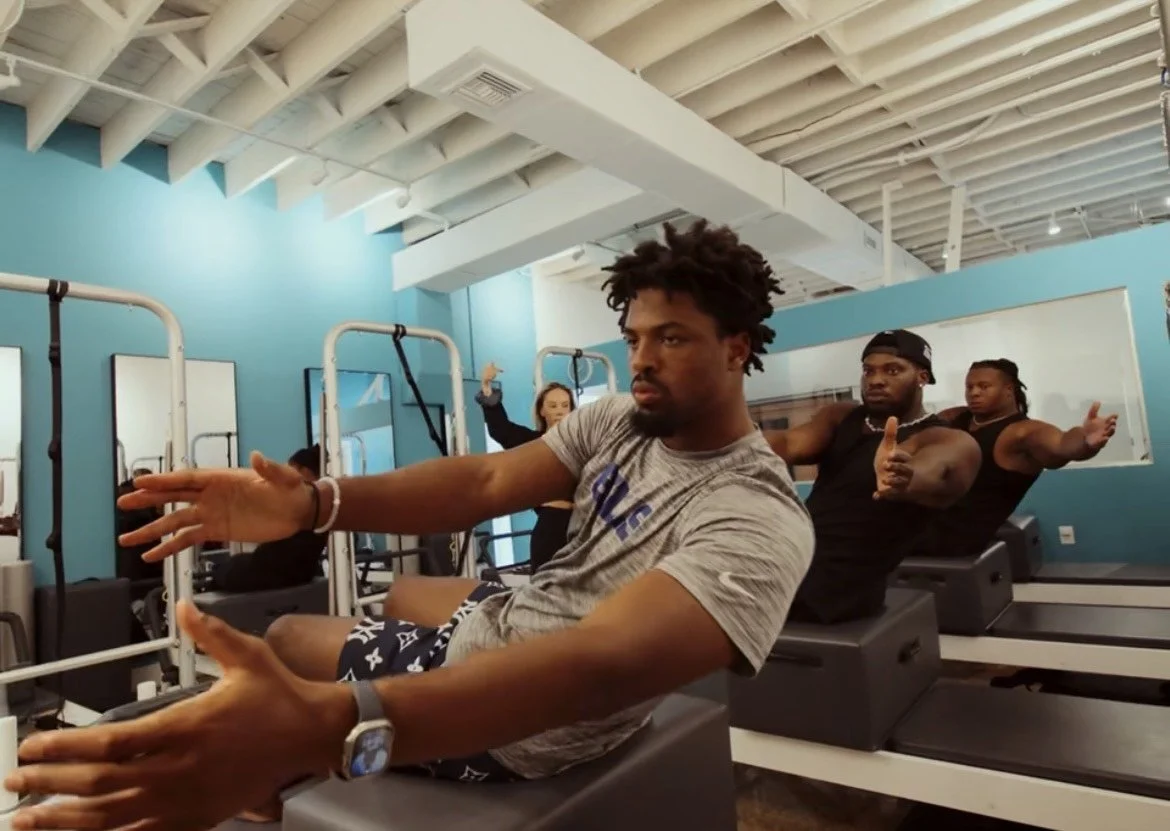
Building Trust
Trust is everything in this line of work- both with clients and with their teams. I push my clients hard, and we change the way their bodies move, but I also follow doctors orders. I follow their lead on the intensity I should demand from each client. Not all torn muscles or broken bones are equal. Each case is different and should be treated accordingly. I want everyone else working with this client to know I take their work just as seriously as I take mine.
Results are the number one reason my clients keep coming back. Pilates changes the way their bodies move, and they feel the difference, they feel better! Whether it’s hitting more home runs or rehabbing from an old injury, the results speak for themselves. But I also care about what’s happening in my clients lives outside of training. Did they make the playoffs? Are they coming off an injury? Are they planning a wedding this offseason? Did the new baby keep them up all night? Are they entering free agency? These things matter because they impact performance, recovery, and mindset. I don’t just see my clients a couple times a week, bark orders, and send them on their way. I get to know them. Some of them I’ve known their entire career. My clients are not just bodies on a reformer, they’re people I care about. Their success and helping keep them off the injured list is my top priority.
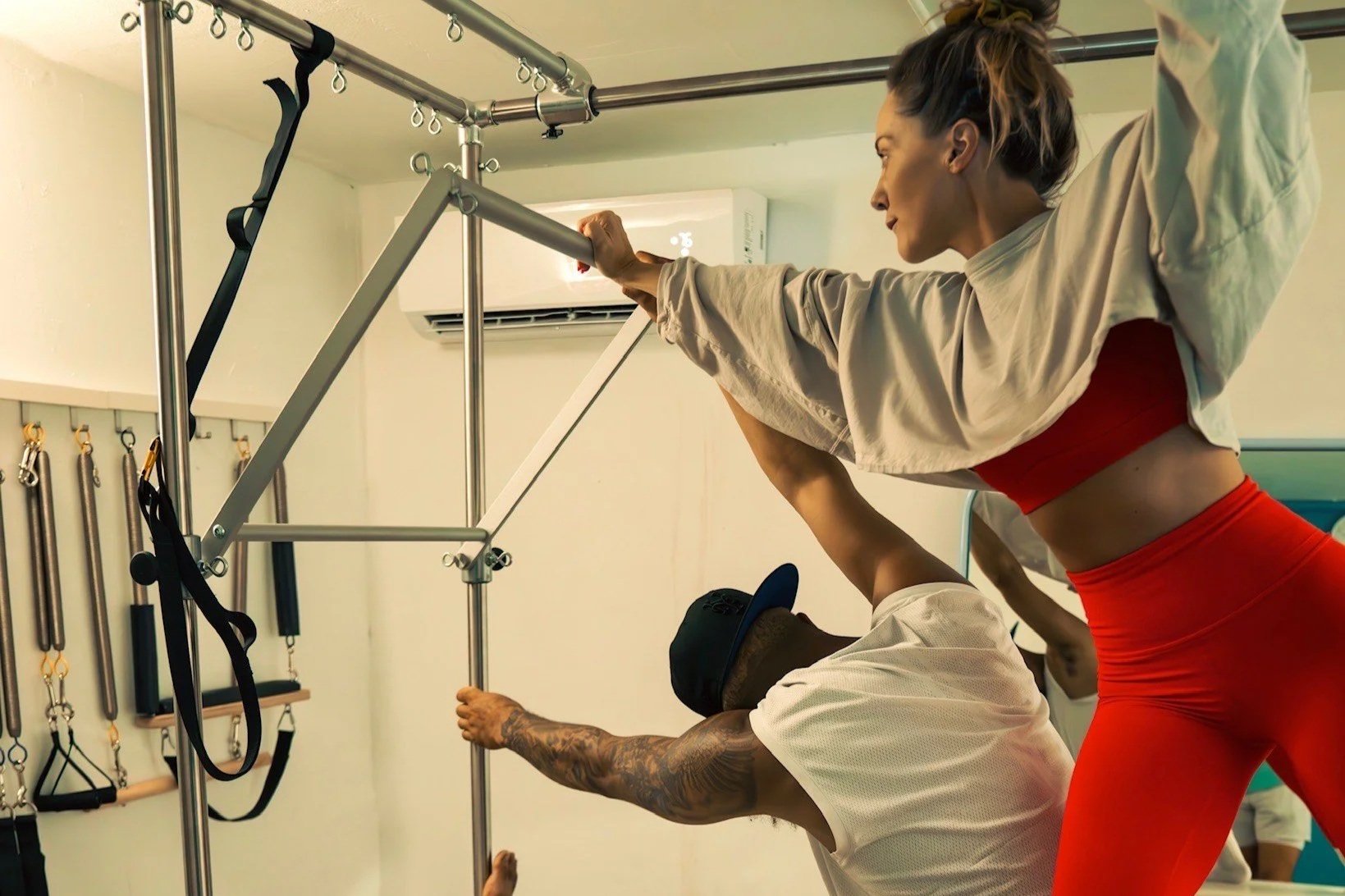
The Power of Teamwork
A lot of times as Pilates instructors I think we can get a little self-righteous and we think we can do it all. We think Pilates is the only way, and sometimes we can be a little set in our ways. Maybe it’s because we’ve had to fight so hard for our seat at the table? If I could say one thing to instructors - it’s ok to ask for help! We can’t do it all. We aren’t doctors or coaches, and we should stay in our scope of practice. We are a piece of the puzzle and when you can understand that and embrace the power of teamwork, that’s when your clients will really start to see and feel the difference.
I’ve learned that collaboration doesn’t compete with the clients loyalty, it strengthens it. Many of my clients are actually referred to me BY the coaches and therapist. Clients don’t have to remember to tell me what the terminology their physical therapist said, what they lifted that day, if they ran sprints or threw a bull pin before Pilates. Because I already know, and because I already know, we eliminate a lot of guessing and wasting time. Time is money. When athletes know their team is all on the same page, trust and confidence build naturally. It’s not about competing for their attention; it’s about working together to get them where they want to be with urgency. I will choose certain exercises and modifications based on what I know about their day and what their coaches and therapist tell me. Maybe they just had a cortisone shot or prp in their knee, so now extreme knee flexion is off the table for that session. You can imagine the number of exercises that takes out of the equation. But without that info- I could have absolutely made an already sensitive area worse.
Sure, there are still skeptics. Some people aren’t eager to embrace Pilates. But with social media showing so many top athletes incorporating it into their training, the resistance has lessened. Usually, my clients do the convincing for me. They preach about how Pilates has changed their game and about how they want to do it forever, they bring their teammates with them to Pilates and honestly, that’s the best business card I could ever ask for.
When I think back to that first day on the reformer, I couldn’t have imagined where this journey would lead. But one thing that hasn’t changed: I’m still hooked. And I still want to share this work with as many people as possible.
Kenlie Reed is a Pilates instructor with nearly 15 years of experience working with elite professional athletes as well as clients from ages 9 to 90. Comprehensively trained through Balanced Body and further educated in classical methods including Lolita and Fletcher work, she specialises in adapting Pilates to the unique demands of each athlete’s position. Kenliee is also a top-viewed instructor on the YourReformer app and has worked with notable names such as Bobby Flay and Bianca Jagger.