
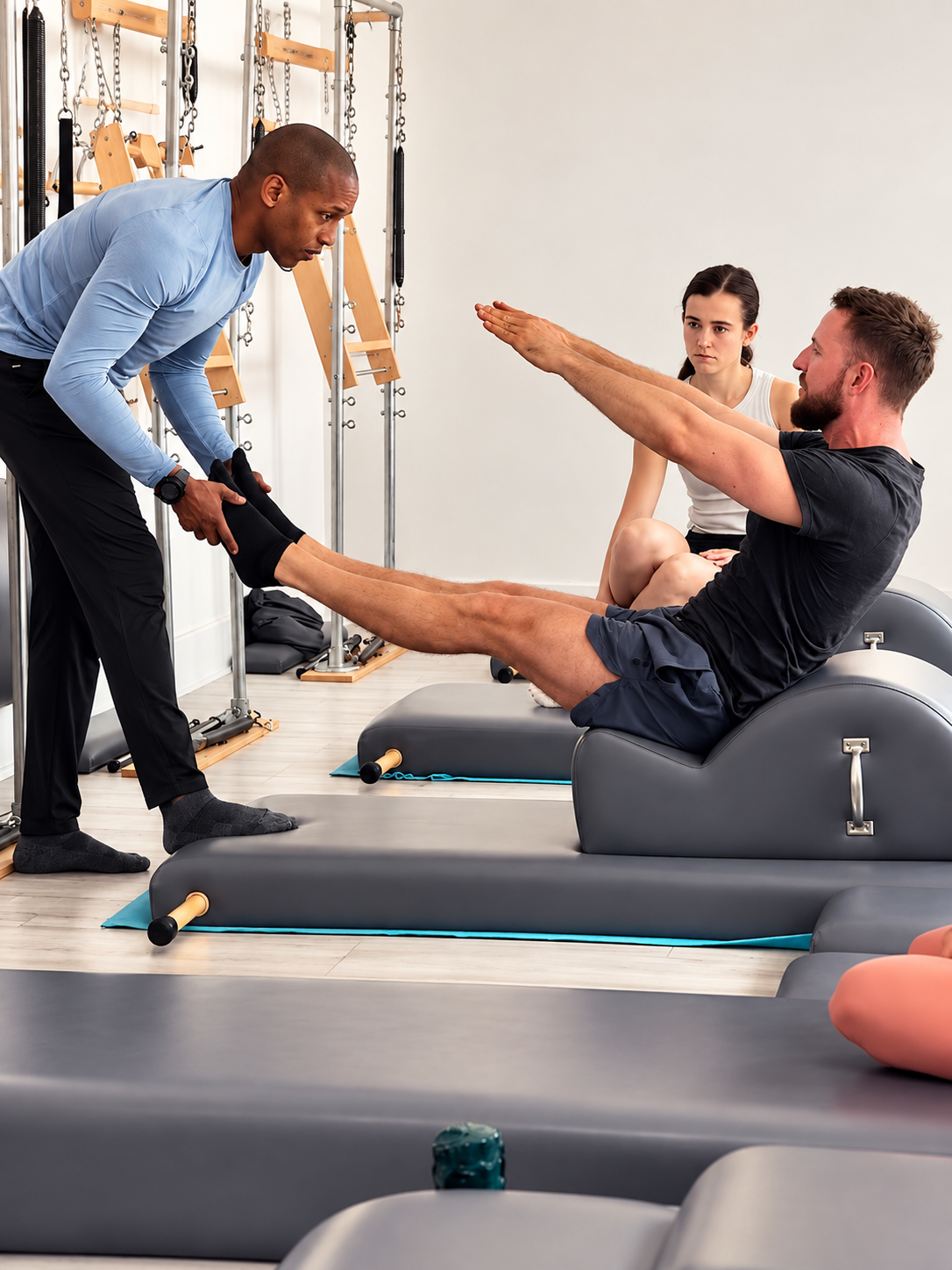
Joseph Pilates was a boxer, physical culturist and self-defence instructor. During the First World War, he developed his ideas while interned alongside thousands of men, teaching physical training and refining the system that would eventually become Contrology. Which raises a curious question.
How did a movement method with such distinctly male roots become something so many modern men assume isn't for them?
Pilates has achieved something extraordinary. What was once a relatively obscure movement system has become a global phenomenon, with beautiful studios appearing across our cities and the Reformer entering mainstream fitness culture.
Women have been instrumental in that success—as practitioners, teachers, educators and entrepreneurs. But alongside that remarkable growth sits an uncomfortable truth: men remain conspicuously absent. The precise size of the gender gap is difficult to quantify globally, but the direction is unmistakable. Even recent Pilates research continues to recruit overwhelmingly female populations. One 2025 study of Pilates participation, for example, comprised 86.8% women and just 13.1% men.
Perhaps, then, the interesting question isn't whether a gender gap exists. It's why.
The Invitation Problem
I don't believe men have rejected Pilates. I wonder whether many have simply never understood that it was meant for them. Consider the modern man in his forties. He may already train. Perhaps he lifts weights, runs, cycles or plays sport. Yet his working life can simultaneously involve long hours sitting at a desk, travelling and staring at screens. He begins noticing tight hips. Restricted shoulders. An aching back. Movements that once felt effortless become less so. His priorities start changing. Strength still matters, but so do mobility, posture, coordination, control and longevity. These are not peripheral concerns to Pilates. They are remarkably close to its central proposition. And yet tell that same man that what he needs is Pilates and there can still be hesitation. Why?
Part of the answer may lie not in the method, but in the culture we've built around it. Look at the imagery surrounding contemporary Pilates. Look at its social-media presence, fashion, language and advertising. None of these things are inherently problematic. In fact, they have helped introduce millions of people to movement. But collectively they can send an unintended message to men standing outside the studio: This isn't really for you. That presents the Pilates industry with an enormous opportunity. Not to masculinise Pilates. Not to make the springs heavier, turn the lights down and rename everything “Bro-lates”. And certainly not to undo the culture women have successfully built. The opportunity is much simpler. Don't change Pilates. Change the invitation.
Mobility as the Missing Piece
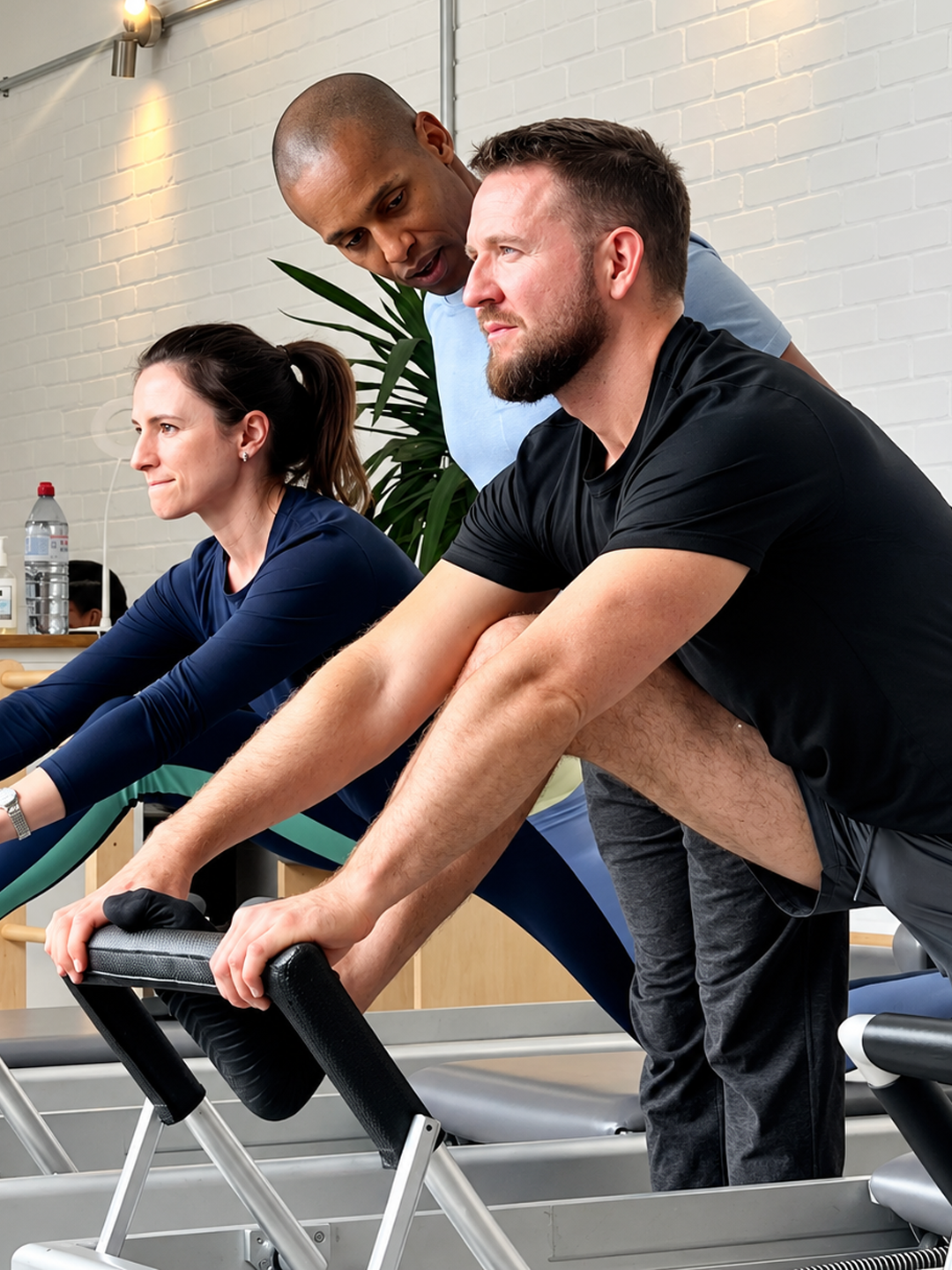
For decades, mainstream male fitness has excelled at communicating measurable outcomes: lift more weight, run faster, build more muscle, lose more fat. Mobility is harder to sell. Until, that is, you begin losing it. Suddenly the ability to comfortably reach the floor, rotate your spine, extend your hips or move freely through your shoulders feels less like an optional component of fitness and more like physical freedom. This is where Pilates has an extraordinary story to tell men. Joseph Pilates wasn't simply interested in creating strong abdominal muscles. Contrology was conceived as an integrated physical discipline. His original mat sequence demands strength, mobility, coordination, concentration and control—not separately, but simultaneously.
For men accustomed to measuring fitness primarily through force, speed or appearance, that can be revelatory. You can be strong and still move poorly. You can look fit and feel stiff. And you can train several times a week without ever really learning how your body moves. Perhaps what many men need isn't another workout. Perhaps they need a movement practice. Back to the Future? Perhaps the strongest argument for bringing men back to Pilates comes not from the latest research, but from Pilates himself.
An early promotional brochure for Joseph Pilates’ New York studio — reproduced alongside this article — makes for fascinating reading today. Its headline declares: “The World Needs Noble and Healthy, Attractive Men and Women.” Men feature prominently in its photographs and, throughout the brochure, Pilates addresses both sexes directly. Most strikingly, however, he ends with an invitation:
“JOIN THE ‘PILATES’ MOVEMENT.”
Almost a century later, those words feel remarkably contemporary. Somewhere between Pilates’ original vision and the modern boutique studio, the method acquired a gender. What began as a system intended to develop strength, mobility, control and vitality in men and women has evolved into an industry whose visual language, marketing and clientele are overwhelmingly female.
Women do not need to make space for men in Pilates. The industry needs to create more space for men alongside them. That distinction matters. Closing the gender gap therefore isn’t about making Pilates more masculine, nor inventing a watered-down version of the method to make men feel comfortable. It is about finding a new language and culture through which men can discover what was available to them all along: an extraordinarily intelligent system for building a capable body for life.
That may mean talking less about Pilates and more about mobility. Less about flexibility and more about longevity. Less about achieving an aesthetic and more about maintaining the physical freedom to run, lift, travel, play sport, work and move well decades from now.
The opportunity is bigger than getting more men into Pilates classes. It is to create a genuine mobility movement for men — one that gives a generation of increasingly sedentary, stiff and disconnected male bodies a practical reason to start moving differently.
And perhaps the most compelling thing about that idea is that it isn’t particularly new. Joseph Pilates was calling men and women to his movement generations ago. Maybe closing the gender gap isn’t about taking Pilates somewhere it has never been. Maybe it is about taking it back to where it started.
Back to the Beginning
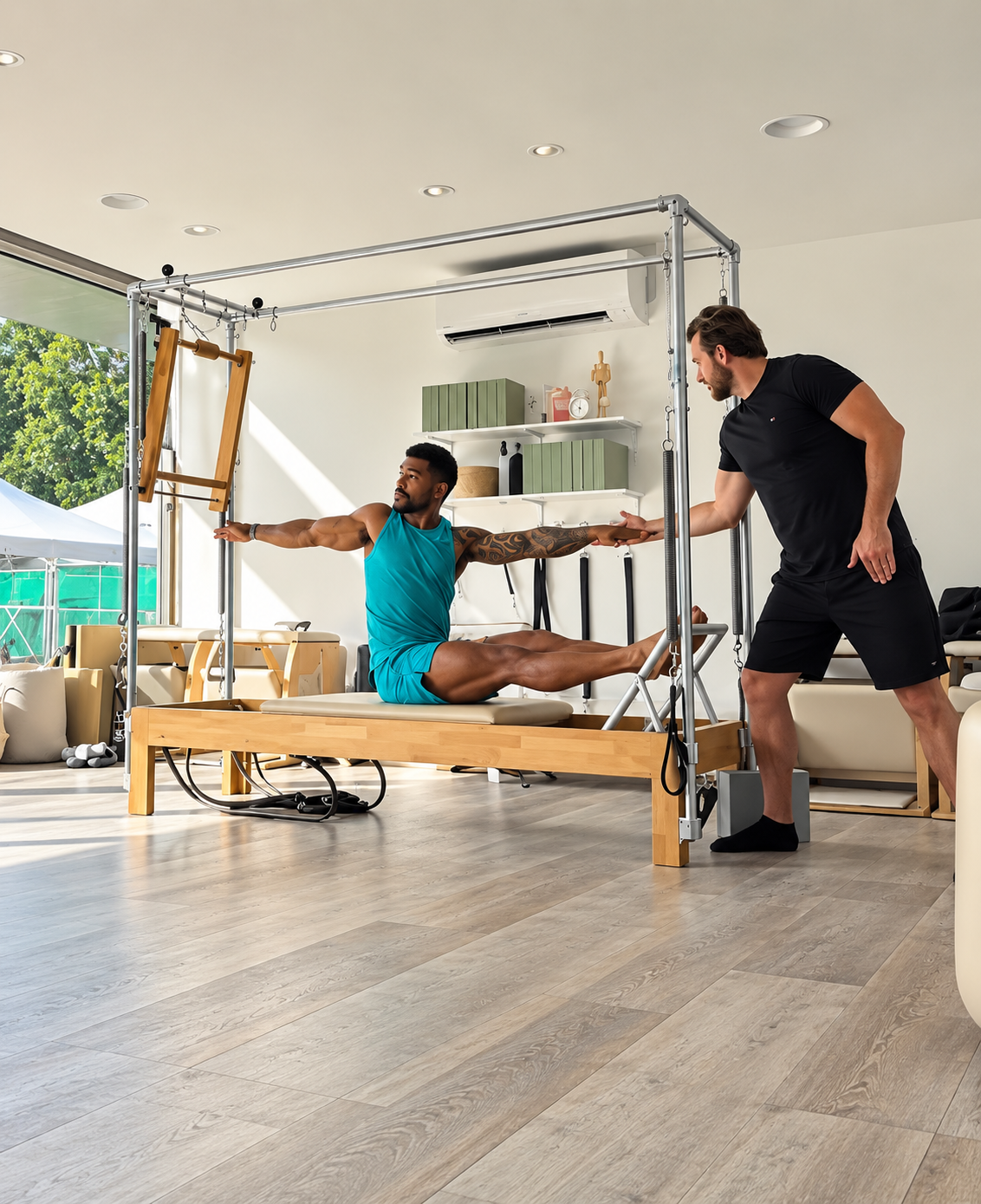
As a male Pilates teacher, I became increasingly fascinated by the men who weren't walking through our doors. That thinking became the starting point for PROLATES, a men's mobility concept I'm developing in London around Joseph Pilates' original mat work.
But the larger idea matters far more than one studio or brand. What happens if the Pilates industry collectively begins speaking to men differently? What if instead of assuming men aren't interested, we communicate Pilates through concepts they already understand—mobility, strength, control, physical capability and longevity?
What if male teachers become more visible? What if studios actively invite fathers, husbands, partners, runners, weightlifters and desk-bound professionals into the conversation? And what if we teach boys and young men that mobility deserves as much attention as muscle?
The goal isn't to reclaim Pilates from women. It's to extend the extraordinary success women have created and ensure that everybody feels invited into it. A shift of this scale might sound ambitious. But what if the solution were simpler than we
think? Imagine if every Pilates studio made a conscious effort to speak to men and women equally. More men represented in marketing campaigns. More inclusive imagery, language and even colour palettes. Small, inexpensive changes that could make a meaningful difference to who feels welcome through the door. And the opportunity isn't merely cultural. It's commercial.
More men discovering Pilates means more potential clients, greater demand and an expanded market. Could closing the gender gap help fuel the industry's next wave of growth—one built on broader participation rather than simply more studios?
Perhaps the most encouraging part is that no single studio needs to transform the industry. Each can make a difference simply by changing the invitation. A century after Contrology began taking shape among men, perhaps closing Pilates' gender gap isn't really about taking the method somewhere new. Perhaps it's about remembering who it was always for.
Every body.
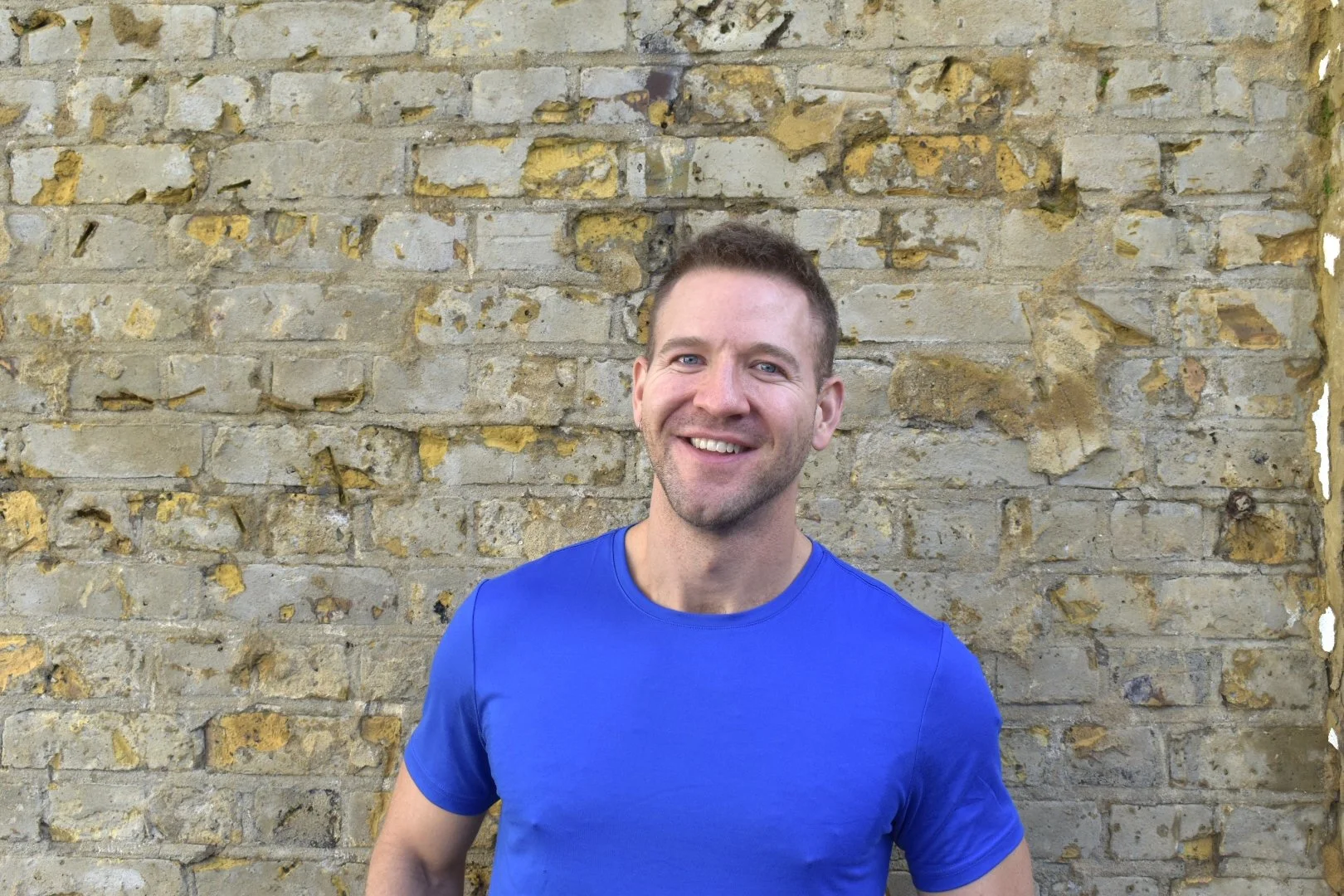
George Delius is a London-based Pilates instructor and journalist passionate about enhancing athletic performance through intelligent movement. He is the founder of PROLATES — a global mobility movement introducing more men to Joseph Pilates’ original 34 matwork exercises through an accessible approach tailored to the male physique. George also champions Contrology at Elevate Pilates , based at Lord’s, the iconic Home of Cricket . You can find George @georgedelius