
The Spinefitter by Sissel® in Practice
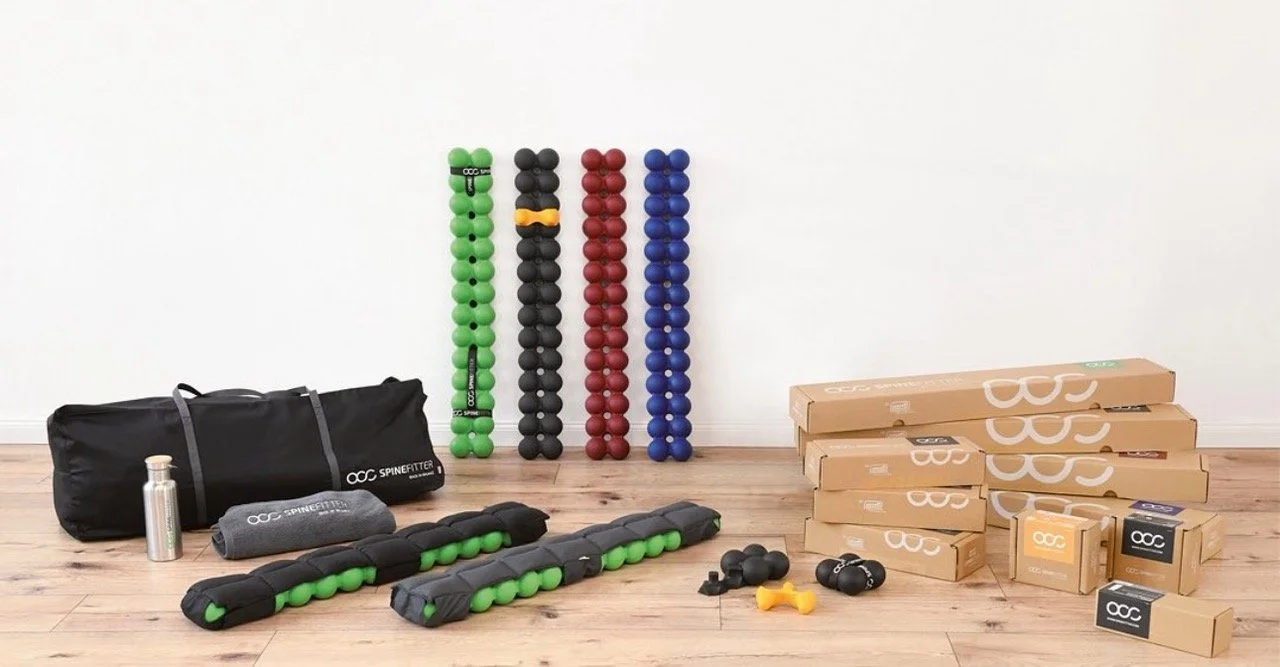
In recent years, the integration of neuroscience and sensory-based tools into Pilates training has gained attention. Among these innovations, the Spinefitter by SISSEL® has emerged as a unique bridge between classical Pilates and modern movement science. With its distinctive dual-ball structure, it provides tactile stimulation along the spine, offering profound effects on proprioception, breathwork, and movement precision.
Applications in Contemporary Pilates
1. Thoracic Spine Mobilization
Clients with postural stiffness or limited upper back mobility benefit greatly from the segmental stimulation of the Spinefitter. It promotes thoracic extension, releases fascial restrictions, and supports a more upright posture. As a result, spinal articulation becomes smoother and more accessible—particularly important for clients who struggle with flexion-based movement patterns.
2. Proprioception & Balance Training The uneven surface of the Spinefitter challenges the nervous system, enhancing proprioception, balance, and spatial awareness. It serves as a powerful tool for older adults, neurological clients, or individuals recovering from injury. Placing the body on an unfamiliar tactile base forces micro-adjustments, reactivating dormant stabilizers and increasing postural control.
3. Breathwork & Nervous System Regulation By stimulating reflex zones along the spine, the Spinefitter enhances vagal tone and parasympathetic activity. Clients often report a calming effect, deeper breathing, and increased body awareness. In somatic & restorative Pilates sessions, it provides a grounding experience that shifts focus inward and improves autonomic regulation—a key component for stress-related disorders or chronic pain clients.
4. Pre-Pilates Preparation for Equipment Work Used at the beginning of a session, the Spinefitter primes the neuromuscular system for complex movement patterns on the Reformer, Chair, or Cadillac. It improves alignment, reflex activation, and supports more efficient core and kinetic firing patterns. Clients transition into dynamic exercises with more clarity and control after this preparatory step.
Scientific Background: Why It Works
The effectiveness of the Spinefitter lies in its multifaceted stimulation. It combines fascial hydration, neuroplasticity, and proprioceptive feedback in a single tool. When lying supine on the device, the balls apply pressure along the erector spinae, stimulating mechanoreceptors that activate the spine’s intrinsic stabilizers. This touch stimulus travels through specific nerve pathways in the spinal cord to the brain. Over time, repeated use helps recalibrate dysfunctional movement patterns and supports more refined motor learning. Incorporating principles from fascia research and sensorimotor training, the tool helps reduce excessive muscular tension—especially in the neck and upper back. Many clients report a noticeable improvement in mental clarity, body awareness, and even emotional regulation after sessions.
Use Cases: Studio Practice & Client Response In my Pilates Classes and Personal Training in Bangkok, I use the Spinefitter with a wide variety of clients—from athletes seeking recovery, to elderly clients working on balance and mobility. Its applications are remarkably versatile: - In postnatal recovery, the device helps reconnect the deep core and reestablish breath control. - In senior training, it’s used to combat kyphosis and instability. - In performance coaching, it serves as a warm-up and recovery tool to manage fascial tightness. Client feedback has been consistently positive. Some describe the experience as a “massage for the spine,” while others report feeling “taller, lighter, and more aware” after.
Teaching Tips: Integration Into Group and Private Sessions - Start with breathwork: Have clients lie supine on the Spinefitter with knees bent and focus on diaphragmatic breathing for 2 minutes. This calms the nervous system and opens the thoracic area. - Add small movements: Incorporate gentle pelvic tilts, arm arcs, or head nods to explore segmental mobility. - Progress to active control: Transition into bridging, dead bug variations, or side kicks for neuromuscular reeducation. - Always cue slowly and clearly: Clients need time to process the sensory feedback and should never be rushed. In group settings, the Spinefitter can be introduced during warm-up or cool-down. In private sessions, it is an ideal diagnostic and corrective tool.
Final Thoughts: A Multitool for the Modern Pilates Professional The Spinefitter by SISSEL® is much more than a prop—it is a neurosensory bridge between mind and movement. In a time where clients seek not only strength and endurance but also regulation, embodiment, and relief from overactivation, this tool answers a real need. Whether used to decompress the spine, recalibrate movement patterns, or shift the body into a parasympathetic state, the Spinefitter adds depth and versatility to the modern Pilates toolkit. It invites us as instructors to think beyond choreography and technique—to explore what happens when structure meets sensation.
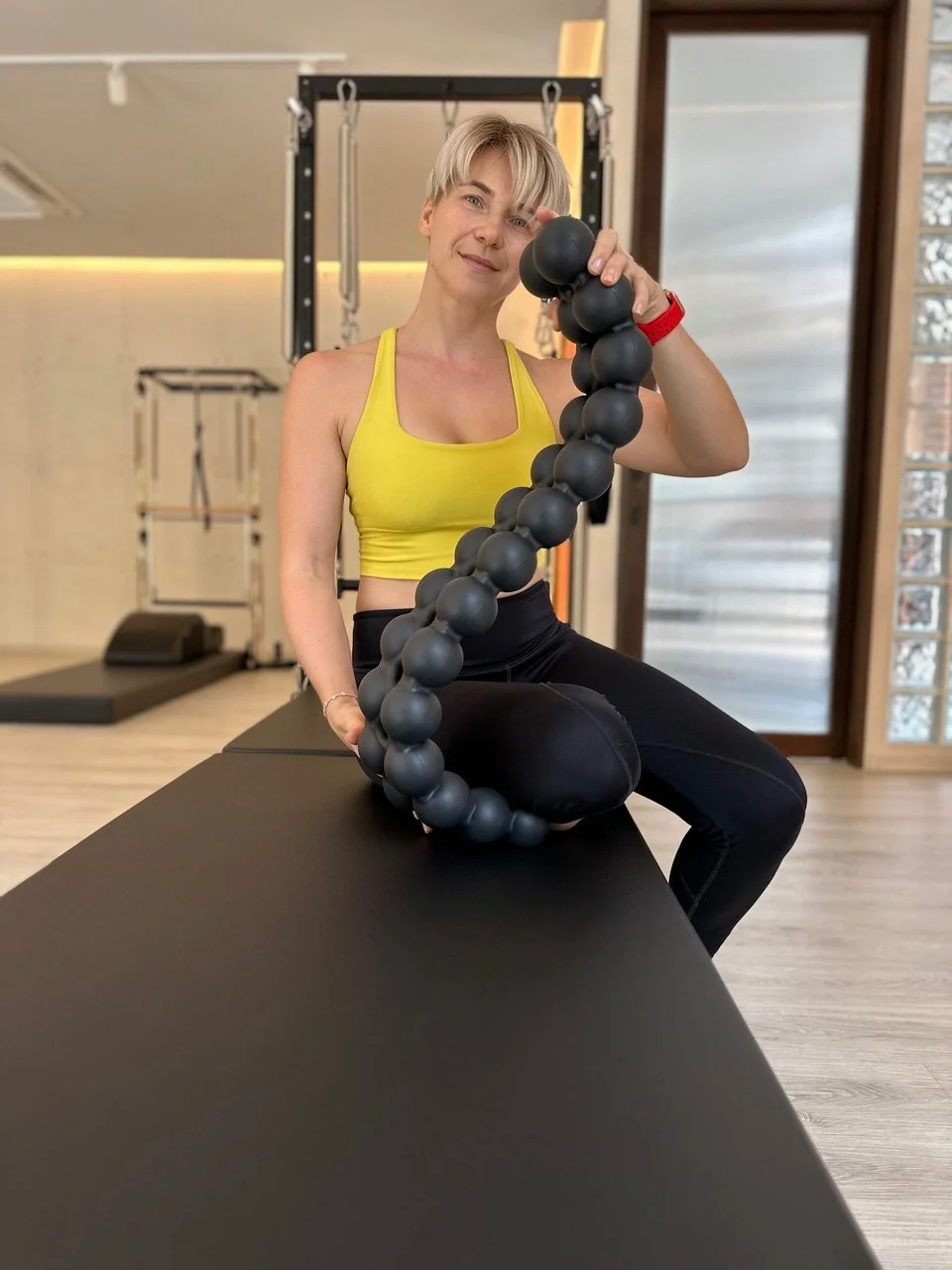
Nicole Biedermann is a STOTT PILATES® Full Certified Instructor and international movement specialist with over 20 years of experience. She completed 299+ training hours with Merrithew/STOTT PILATES® across Matwork, all major equipment, Athletic Conditioning, fascia-focused training, and Functional Anatomy. She is a STOTT PILATES® Dance and Interdisciplinary Specialist, a Certified Callanetics Instructor since 2001, PSM-trained, and Animal Flow trained. Since 2024, she has been a Spinefitter® Master Trainer and Ambassador, specializing in spinal function, fascial integration, and proprioceptive movement, and a member of the German Pilates Association (DPV) since 2015.