
Advanced Body ≠ Advanced Class
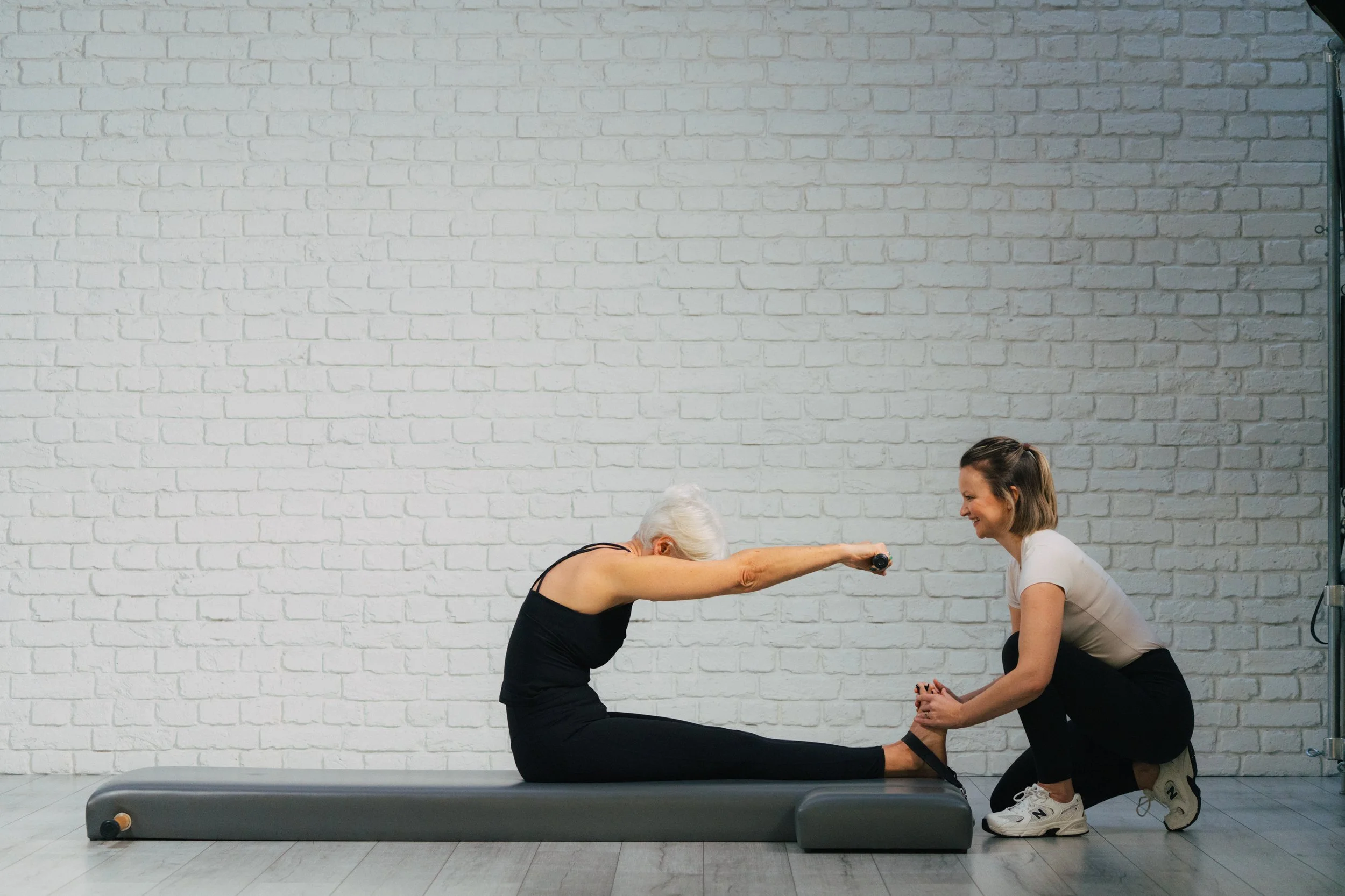
In today’s Pilates culture, the word advanced is used liberally.
Advanced class.
Advanced repertoire.
Advanced body.
Advanced understanding.
Over my years of teaching clients and mentoring student Pilates teachers, I’ve come to recognise that two distinct ideas are often unintentionally blended. An advanced Pilates body and an advanced Pilates class. These are not the same thing. Understanding the distinction changes how we programme, how we progress clients, and how we define mastery within the Pilates system.
An advanced Pilates body is not defined by performing acrobatic Pilates repertoire. An advanced body is someone who:
Uses breath to facilitate movement
Moves with balance and control
Transitions seamlessly, with almost invisible adaptability
Understands when to push and when to modify
Takes accountability for their own movement
These qualities are developed through consistent, intelligent practice - not through chasing choreography.
Some of the most advanced bodies in my studio will never attend an advanced class. Senior clients with age-related contraindications. High-powered professionals who train once a week, year on year, to maintain physical health amidst a demanding career. Those navigating pregnancy, post-natal recovery, or a recurring injury that makes certain exercises inappropriate.
Their movement is deeply embodied. Their breath is guiding and supporting their movement. They flow with control. They are advanced.
An advanced class, however, carries specific demands. It typically includes:
Advanced repertoire taught at tempo
Swift transitions with minimal breakdown
Large ranges of motion
Significant strength and flexibility requirements
Complex coordination
Advanced Pilates classes require full-body integration and stamina. They should be reserved for bodies that have genuinely built the prerequisite skills, and even then there can be some element of being naturally able to do the exercises.
I always emphasise a principle that will protect both teachers and clients: Advanced exercises are built at Intermediate level. If someone is not ready for an advanced exercise, the solution is not to practise the advanced exercise repeatedly. There’s no benefit to that. Instead, get more Pilates into the body that can be done well, that will benefit the body now.
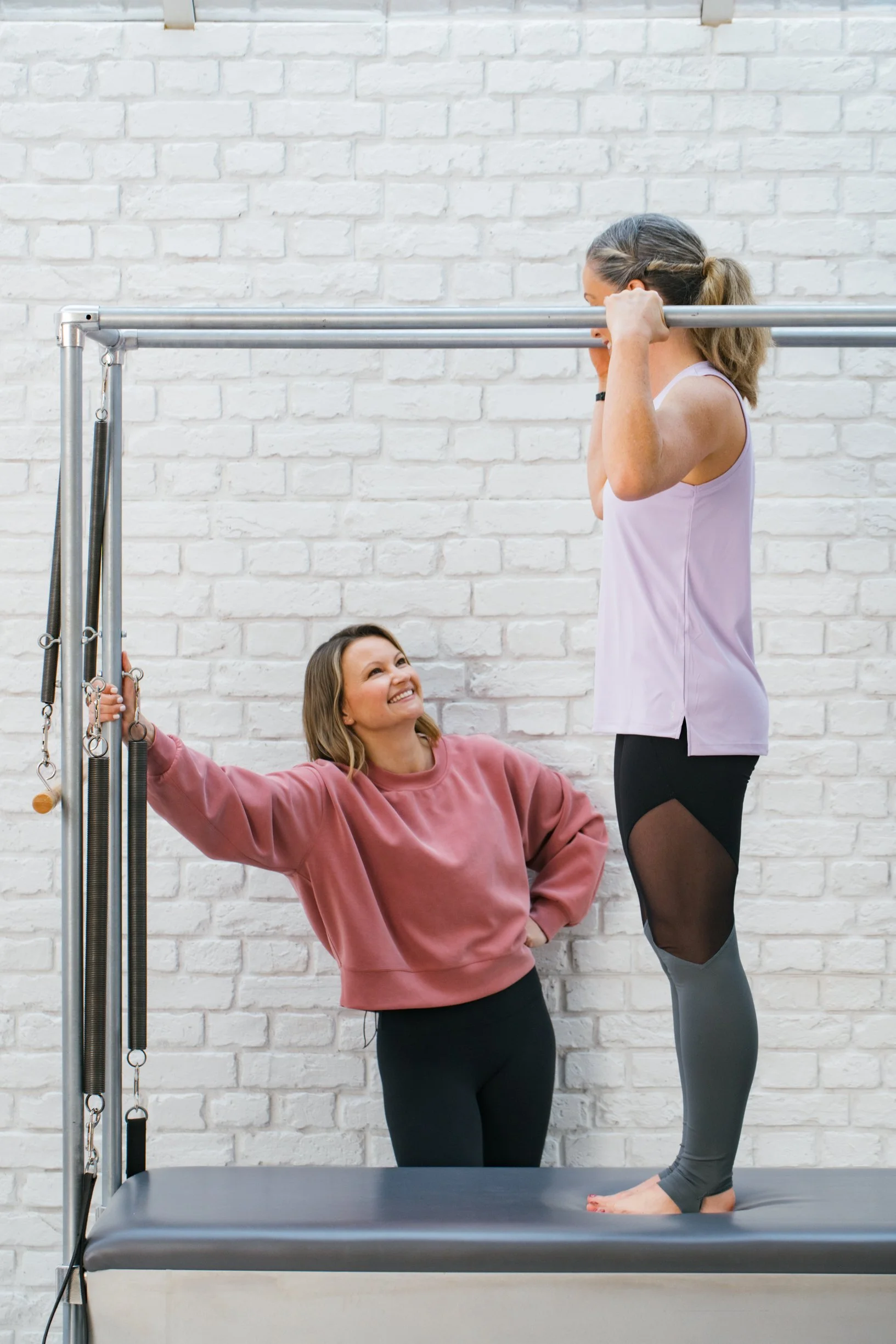
The Pilates system is beautifully intelligent in this way. It provides so many exercises on so many different pieces of apparatus that will challenge bodies appropriately and prepare them for harder things to come. If you find yourself continually breaking down an advanced movement, heavily modifying it, or excessively partnering to guide someone through it, it is usually an indicator that the body is not ready for it. We can use the Pilates system better. The different pieces of apparatus make the purpose or goal of advanced exercises available to the body sooner. ‘Rowings’ on the Reformer, for example, demands a lot of strength, flexibility and co-ordination. There’s a lot of moving parts, therefore they’re considered Advanced. As an alternative, we can get the benefits of Rowings on the Baby Chair – and with less load from the springs, and more support for the body. If this is done with control, balance, precision, if it’s giving the body what it needs - Pilates is doing its job!
Our responsibility as Pilates teachers is not to put a hierarchy on advanced choreography. It is to apply the system appropriately and with the safety and longevity of every body we teach at the forefront of our teaching decisions. Our job is to teach Pilates, not to satisfy ego. This idea is increasingly relevant in a social media culture where many come to Pilates studios wanting to do the most impressive looking Pilates they’ve seen online. Too often those exercises aren’t appropriate for someone new to the Pilates Method, definitely not to try in a group setting.
As I understand, Joseph Pilates himself did not formally “level” his exercises in the way we often present them today. The structuring of Beginner, Intermediate, and Advanced evolved largely through teacher training programmes, to make teaching this system easier for new teachers to learn. Joseph designed exercises for the body in front of him. If something didn’t suit you, you skipped it. Simply challenge each body as needed and as appropriate.
When we return to that thinking, something shifts. We stop chasing choreography. We start observing quality. Not every body will need every exercise. Not every body will benefit from every exercise.
We recognise that:
An 80-year-old moving with breath-led flow is more ‘advanced’ than someone muscling through advanced exercises.
A post-natal client who modifies for their recovering body demonstrates greater mastery than someone forcing range.
A client flowing through the Basic work with understanding and integration may be advancing in their Pilates practice more than one rushing through bigger movements.
Instead of asking:
“Can they do the advanced exercises?”
Ask:
“Do they embody Pilates?”
When we separate the idea of an advanced Pilates body from an advanced Pilates class, we protect the integrity of the system.
We also protect our clients.
Anna Abubakar
Anna Abubakar is the founder of Pilates Centre, a classical Pilates studio in Dublin, Ireland. Originally finding Pilates during here dance studies as a teenager, she has been teaching Pilates since 2009 and training and mentoring teachers for over a decade.