
How Mexico City Is Redefining the Future of Pilates
Over the past few years, Mexico City has undergone a visible shift. What was once a destination defined by its history and culture is now emerging as a global center for art, fashion, film, and lifestyle. The city feels different – not replaced but evolving. A new rhythm runs through its neighborhoods, shaped by both local evolution and international attention.
This transformation is the result of converging forces. Mexico City Art Week has drawn the global art world. Netflix has expanded local production. And an influx of international residents, remote workers, and creatives, many choosing to stay, has reshaped the cultural landscape. With that comes a shift in lifestyle: spaces are more curated, experiences more intentional, and expectations higher.
The fitness industry, and Pilates in particular, is evolving alongside it.
For years, fitness in Mexico City existed somewhat outside the global conversation - functional, traditional, and largely local. But as the city’s identity expands, so do expectations. Clients arrive with references from New York, Los Angeles, and London, bringing a demand for both quality and experience.
Pilates, already in the midst of a global resurgence, sits at the center of this shift.
Growth - and a Question of Quality
The rapid rise of Pilates across the city has created both opportunity and inconsistency.
Many instructors have been recently trained, often through short-format or fragmented certifications rather than comprehensive programs. As a result, reformer Pilates is sometimes treated as a standalone discipline, rather than part of a broader method. The outcome is a diluted experience in some spaces but also a wider awareness of Pilates than ever before.
At the same time, a smaller group of studios and educators are pushing in the opposite direction - toward depth, lineage, and international standards.
“This tension between accessibility and integrity is defining the current moment.A City of Contrasts”
The Pilates landscape varies sharply by neighborhood.
In Lomas, Karla Garza opened Reform Studio three years ago after a decade of personal practice and a desire to raise the standard of teaching. Her approach is steady and focused:
“Cleanliness, great instructors and equipment. Our priority is our clients and we are trying to give the best.”
With a background in design, Garza created a minimalist space that includes a mirrored ceiling so clients can “see a 360 view…you can be in the middle of the room and see your whole body.” Her clientele has remained consistent, reflecting a neighborhood that has changed less dramatically.
Her perspective on the boom is simple:
“People are realizing how good Pilates is for you; how good you can feel.”
Garza is now preparing to open a second location.
In contrast, Roma Norte and Condesa have transformed rapidly since the pandemic. An influx of digital nomads and international residents has reshaped both the culture and the wellness market. Here, Pilates studios are expanding quicklyand redefining what a class can be.
The Rise of Experience
The Good Studio, founded in 2021 by Antonio Rendon Arenas, anticipated this shift early. A former criminal lawyer who discovered Pilates “to keep his sanity,” Maxete first approached the method as a client:
“I realized the reformer had a huge possibility.”
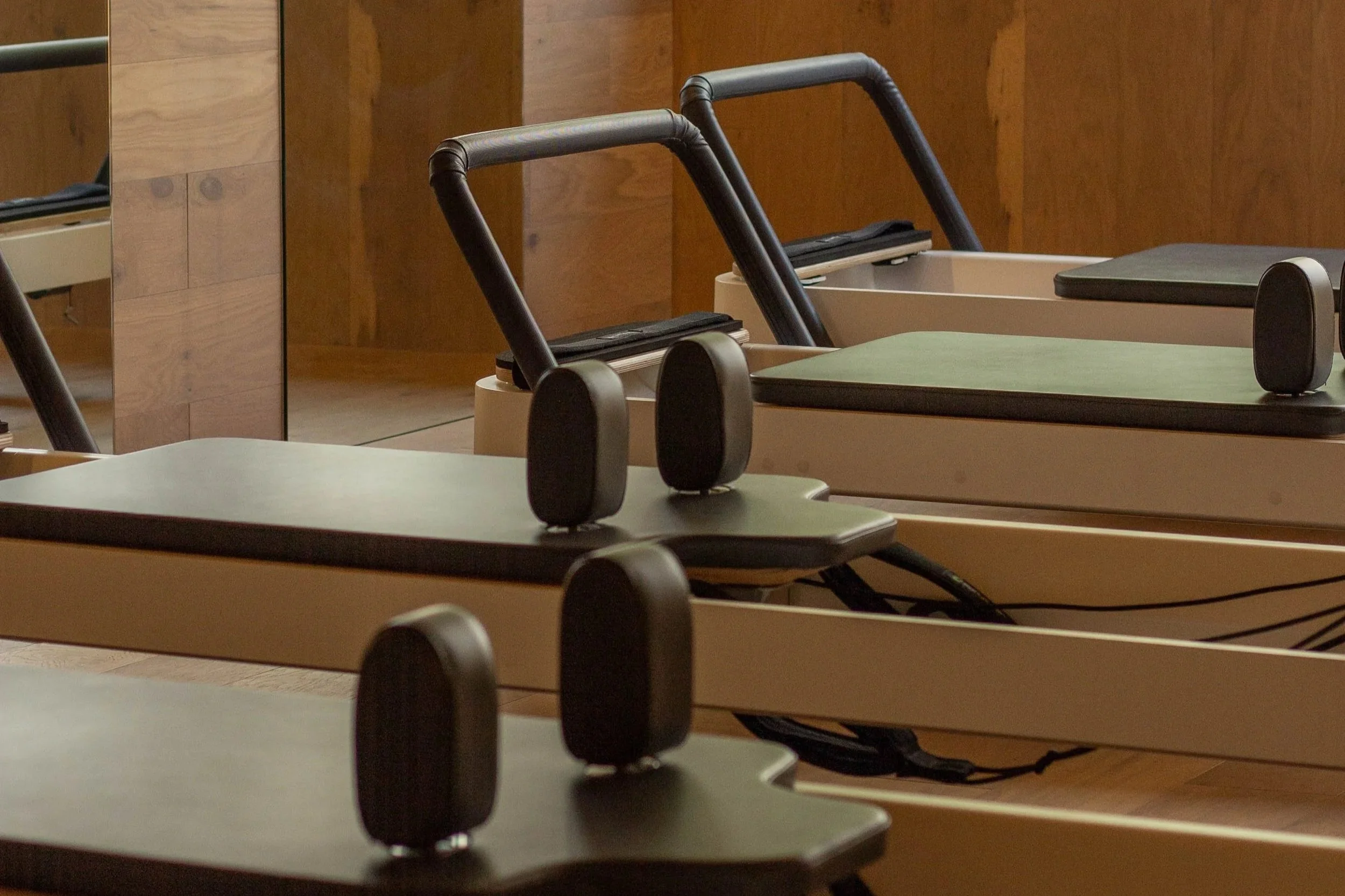
His concept of “sensorial Pilates” extends beyond technique into atmosphere - thinklight, sound, and rhythm. Sculptural ceiling installations shift color throughout class, while DJ sets and curated playlists replace traditional silence.
“At the beginning, these elements were innovative,” he says, and now we are seeing it happening in other studios…Rather than feeling annoyed by that, we feel motivated.”
Since opening, The Good Studio has grown to four locations, helping define a more experiential model of Pilates.
But with that evolution comes complexity:
“Pilates has evolved from a much more rehabilitation approach in Mexico City to an ‘it girl’ experience,” he describes. “There is more diversity now; men are feeling much more integrated.”
He sees perception as the core challenge:
“The biggest challenge is to break the preconception about what Pilates is. What is it for? Who is it for?”
Precision, Personalization, and Context
Alongside this experiential wave, another model is emerging - one that prioritizes depth of teaching within a more intimate setting.
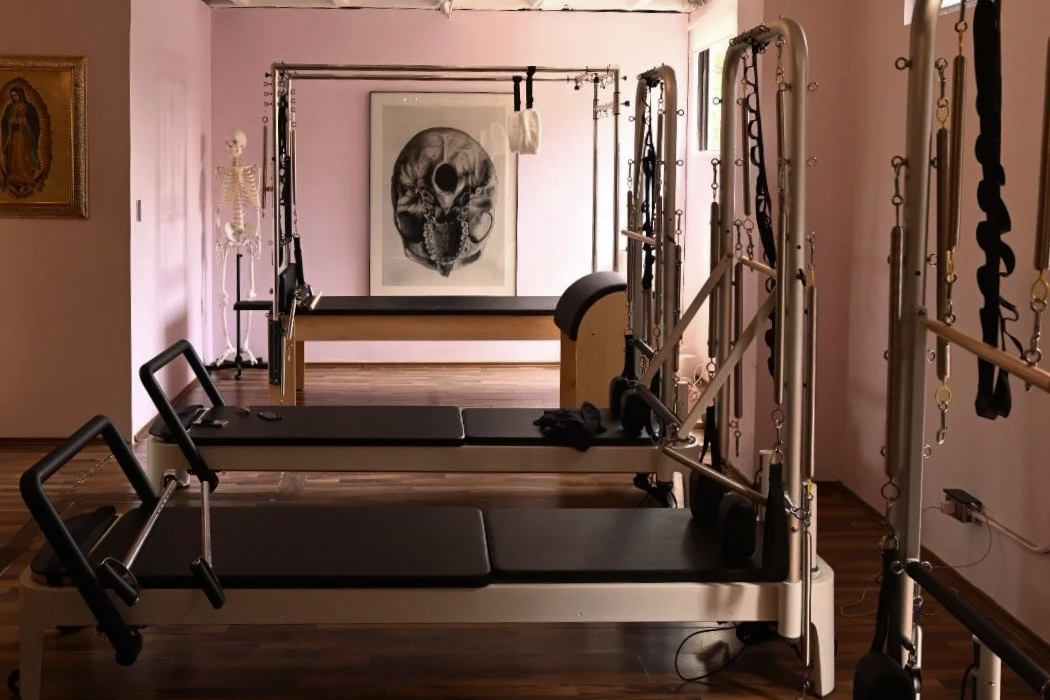
Pinche Pilates, located in Roma Norte, reflects this approach through a highly focused, personalized experience. With only four tower-reformer units, each class is designed to feel individual. This 4 clients only model allows teachers to give detailed, hands-on attention in a way that is often not possible in larger class formats.
The studio serves both local and international clients through bilingual classes, while maintaining a strong sense of cultural identity through its design - incorporating traditional Mexican elements alongside a warm, inviting aesthetic.
Programming is diverse but rooted in the method, including postnatal classes, rehabilitative work with osteopaths in training, and strength-based formats like Loaded Pilates. Clients are also exposed to the full system - Cadillac, Wunda chair, barrel, and reformer - offering a more comprehensive understanding of the practice.
In a city where private Pilates sessions are still less common, this semi-private model bridges the gap between accessibility and individualized instruction.
Defining a Movement Culture
What unites studios like Reform, The Good Studio, and Pinche Pilates is not a shared aesthetic, but a shared awareness. Each is responding to the same question:
What does it mean to build a movement practice in a city that is actively redefining itself?
The answer extends beyond programming. It touches pricing, accessibility, language, and inclusivity. It challenges outdated perceptions of who Pilates is forand what it should look like.
Commercially, the shift is significant. Studios are now competing not only on workouts, but on experience, design, and teacher quality. Pricing is rising in parallel with global markets, and client expectations are following.
And yet, unlike other major cities, there is still a sense of collective growth.
“Studio owners are not only building businesses, but shaping the identity of Pilates in Mexico City in real time.”
Looking Ahead
Over the next few years, growth will continue - more studios, more variation, more global influence.
But the studios that will endure will not be those that simply replicate trends. They will be the ones that
“translate them- through culture, community, and a deeper understanding of the method.”
Because Mexico City does not absorb culture passively. It transforms it.
And in that transformation, Pilates here is becoming something distinct: not a copy, but a reflection of a city in motion- layered, evolving, and increasingly impossible to ignore.
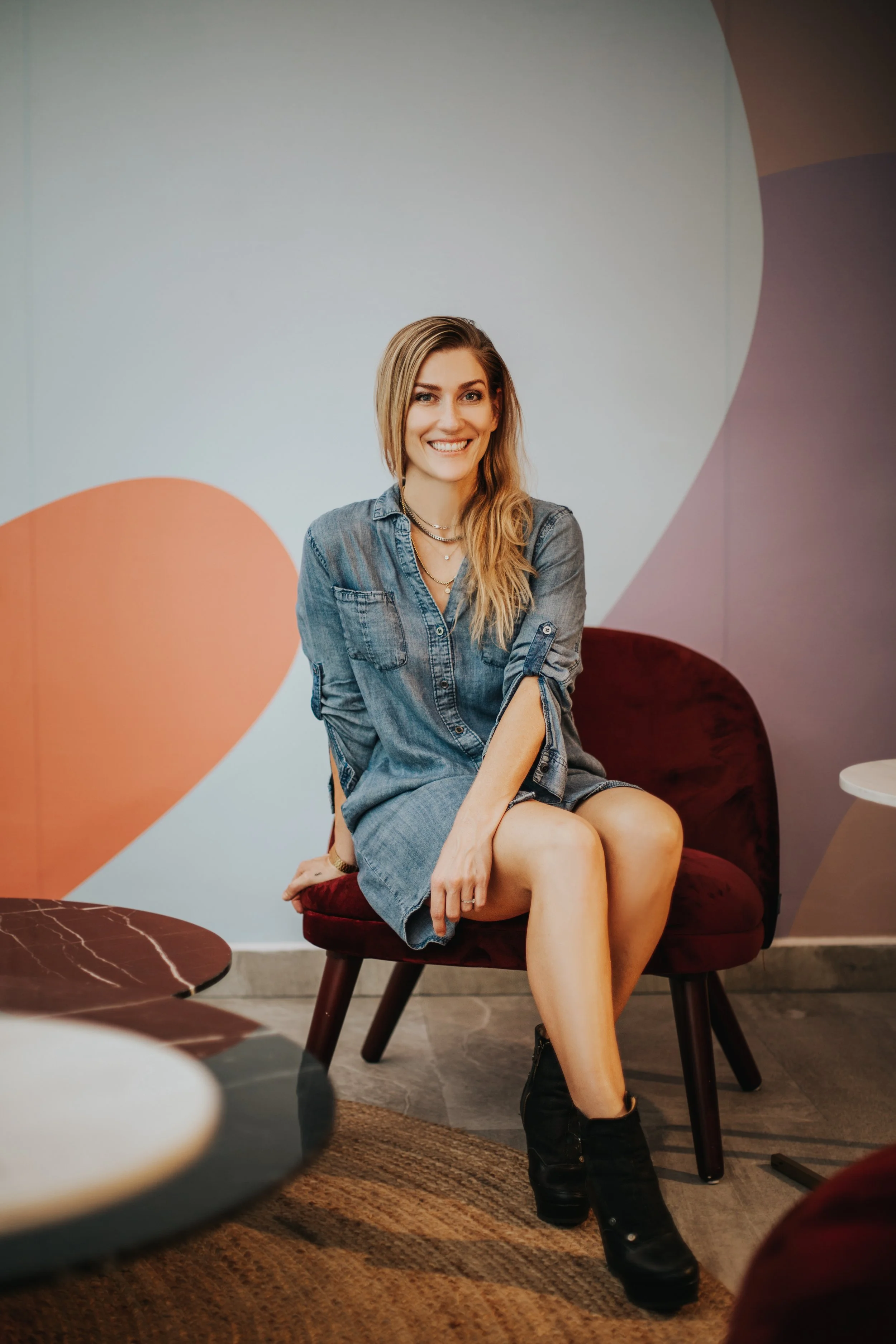
Whitney Tucker is a Midwest-born, NY-grown Pilates educator with over 20 years of experience and background as a former professional dancer and fitness entrepreneur who founded Pinche Pilates Te Amo, a boutique Pilates hub in Mexico City in 2025. Her approach integrates her experience in social justice, public school education, precision training of elite athletes, and motherhood, focusing on sustainable movement and longevity for her clients.