Years ago, Pilates occupied a very different place within the fitness landscape.
Studios were fewer, classes were harder to access, and for many consumers Pilates was still viewed primarily as rehabilitation or flexibility training rather than a regular part of their fitness routine. Today, that picture looks remarkably different.
Few companies have experienced that shift as dramatically as JETSET Pilates. Alex Lyons joined as Vice President of Product and Talent 18 months ago, and in just that time the brand has grown from 14 open studios with around 80 signed franchise territories to more than 70 open locations and 400 territories awarded across the United States and internationally.
But Alex believes the numbers are simply a reflection of something much bigger happening across the industry.
"I do think Pilates has moved beyond being a trend," she says. "The practice has always been there. It has stood the test of time. JETSET has been open for 16 years. It’s not just a trend!"
The evolution of modern Pilates
Alex entered the Pilates industry after spending a decade in New York's boutique fitness scene, where she worked across barre and cycling before diving into Pilates.
"I was craving the flow and the contemporary style, but also the intensity," she says.
That balance between traditional Pilates principles and higher-intensity programming has become one of the defining characteristics of modern boutique Pilates.
"People are seeking more of a challenge," Alex explains. "They want strength. They want intensity. They want Pilates that can complement their strength training while still giving them everything they love about the practice."
Rather than replacing traditional Pilates, she believes today's consumers are simply choosing from a broader range of experiences.
"The different styles of Pilates allow the consumer to have the power to decide how Pilates fits into their routine."
Accessibility has changed everything
For Lyons, perhaps the biggest difference compared with five years ago is accessibility.
"Five years ago it was hard to even get into studios," she says. "Pilates often felt more clinical or something you did when you were injured."
Today, consumers increasingly view Pilates as part of their weekly training schedule rather than an occasional activity.
"It's more accessible. It's easier to fit into people's routines."
That accessibility and availability have also changed who is walking through the studio doors.
"Millennials and Gen Z want fitness to be part of their daily life and community," Lyons says. "They're looking for experiences they can return to consistently, not just workouts."
Rather than replacing strength training, Pilates has increasingly become a complementary practice.
"People are doing more strength training, but they still want something on the other days that doesn't completely throw off their routine."
That shift has broadened the audience even further, with members arriving from boutique cycling, barre, HIIT, traditional gyms and strength-based training programs.
Growth requires discipline
Awarding 400 franchise territories naturally attracts attention, but Alex is quick to point out that rapid expansion only works when the foundations are already in place.
"Responsible franchising is really important to us," she says. "We do very intense vetting because we treat franchisees as business partners."
She believes many fitness brands confuse expansion with strategy.
"We'll see Pilates brands fail," she says. "Sometimes people mistake expansion for strategy."
Instead, Alex credits much of JETSET's growth to investing heavily in infrastructure before accelerating franchise sales.
"We front-loaded our resources at headquarters so we had enough support to give back to our franchisees."
That philosophy extends well beyond site selection.
"Our entire C-suite is invested in every studio's performance," she says. "We're looking at revenue, operational metrics and even knowing how many instructors each studio has. That's inspiring."
Experience matters more than equipment
While equipment remains important, Alex believes today's members increasingly judge studios on consistency.
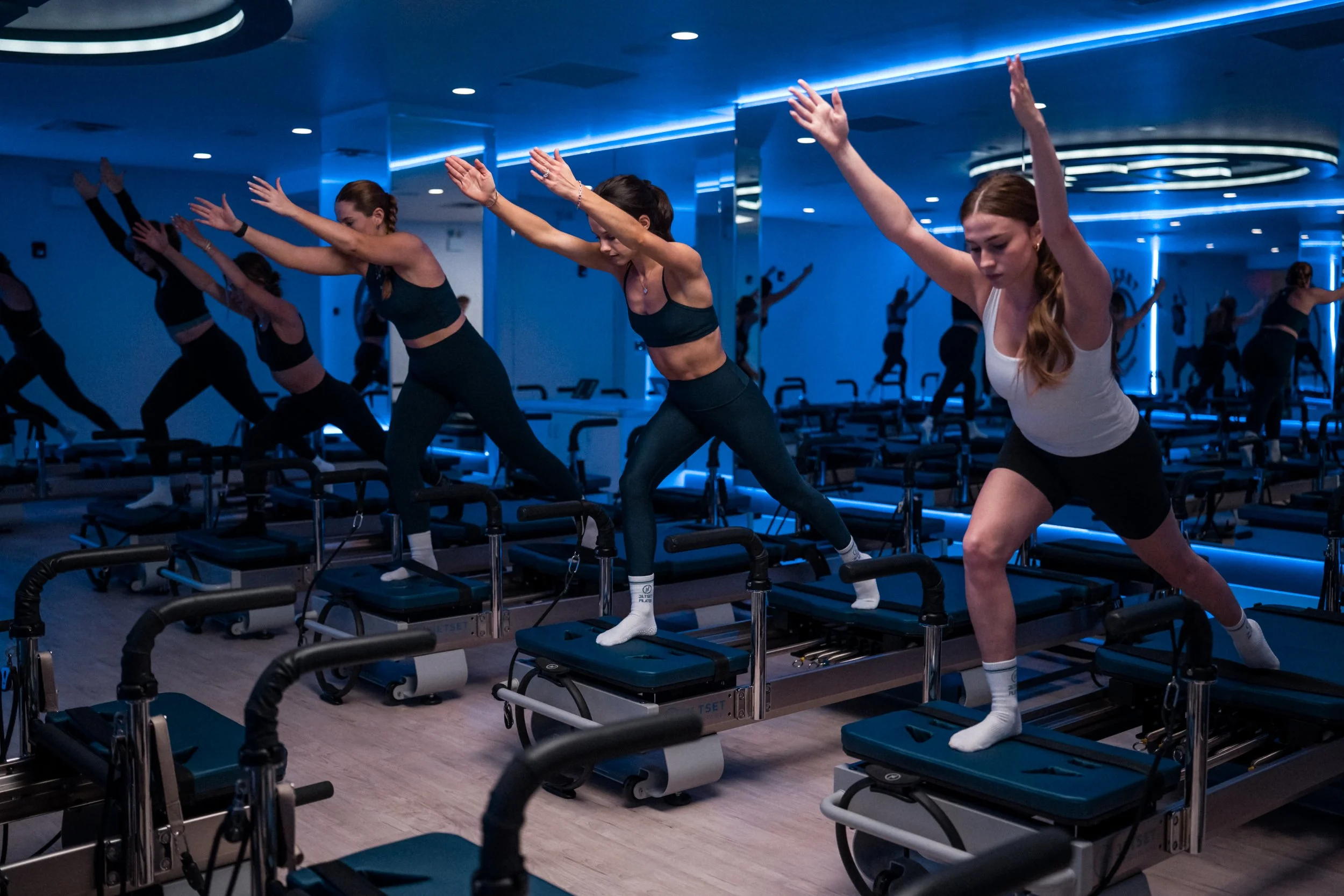
"They're looking for an immersive environment," she says. "The music, the lighting, the flow. They want the same experience every time.”
The next challenge: instructors
If there is one issue Alex believes will define the next chapter of the industry, it is instructor development.
"The war for instructor talent is real," she says.
Rather than waiting for teachers to apply, JETSET actively trains franchise owners to identify and recruit potential instructors from surrounding studios and communities.
"We teach owners how to scout talent early."
Its education pathway combines digital learning with intensive in-person training and structured teaching progressions designed to build instructor confidence before they begin leading classes independently.
For Alex investing in instructors is ultimately an investment in member retention.
"It's not just about selling memberships," she says. "It's about keeping members for as long as possible."
Is Pilates becoming saturated?
Despite frequent discussion about market saturation, Alex isn't convinced the industry has reached its ceiling.
"I think it's a mix," she says.
Brands that understand exactly who they serve still have room to grow, while those chasing popularity without a clear strategy may struggle.
"Every style has a place, as long as it's clear what it is and the customer stays at the centre."
She points to growing consumer awareness, increased participation and the emergence of distinct Pilates niches as evidence that the category still has significant room to mature.
"The rising tide lifts everyone," she says. "It simply requires all of us to be better."