
“Y’all just shadow boxing”
Photography Pilates Anytime
I recently read an article saying that Pilates was not effective in training riders. (Yes, it was click bait and I clicked!)
On one hand I totally agree with the author that the best way to improve your riding is by riding or “bottom in the saddle time” as my childhood instructor used to say, because nothing replaces the feel, rhythm and control you develop in the saddle and the sheer unpredictability of a horse.
Horse riding is no different to any sport, Surfers must surf, footballers must play football. The sport itself is the real teacher. My husband told me about an old golf pro he met who would walk the driving range shaking his head at amateurs hitting ball after ball. They’d beam with satisfaction, but the old pro would just shake his head. “This isn’t golf,” he’d mutter “Y’all just shadow boxing".
He was right. Hitting balls on the range isn’t golf, but it still matters. Just as shadowboxing and bag time isn’t boxing, and skateboarding isn’t surfing, these practices build the foundation, stability and adaptability that transfer into real performance when it counts. At the top level, success is often about those elusive 1% gains. Specialised Pilates exercises don’t replace horse riding, football or golf, but like the driving range, they multiply the benefits of practice.
The rider performs with more control, less fatigue, and greater clarity. The horse feels the difference.
“Horseback” is one of those Pilates exercises that appears throughout the system, yet not on the mat. Teachers and clients often ask, “What does it have to do with riding a horse?”
At first glance, the “Horseback” seems to have little to do with riding a horse. You’re not holding reins or feeling a living animal move beneath you, so how could it possibly help?
Photography Pilates Anytime
The truth is, it’s nothing like riding a horse, just as hitting golf balls at a driving range isn’t golf, or shadow boxing isn’t a real fight. But all of these practices matter because they build the control, precision and awareness that transform how you perform your sport when it counts.
Horseback trains the qualities every rider needs: lift through the spine, even connection through the seat bones and legs and stability that allows the upper body to stay relaxed while the lower body supports and directs.
Each piece of apparatus offer a slightly different accent to the exercise
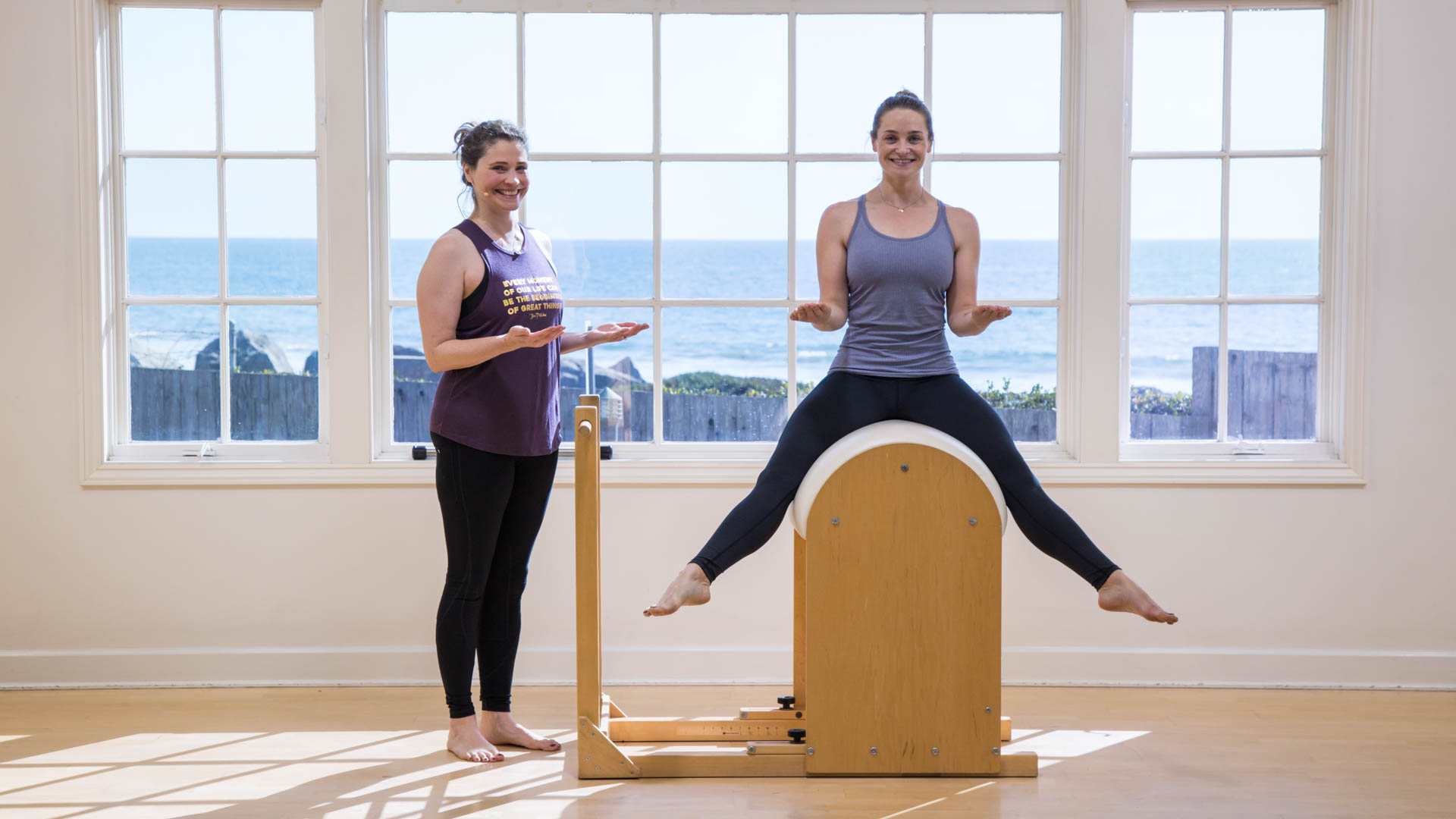
On the Barrel: There are no springs, and it’s perhaps the closest in shape to an actual horse. (I’ll admit, before I owned a saddle horse, I used to pop my saddle on the barrel!)
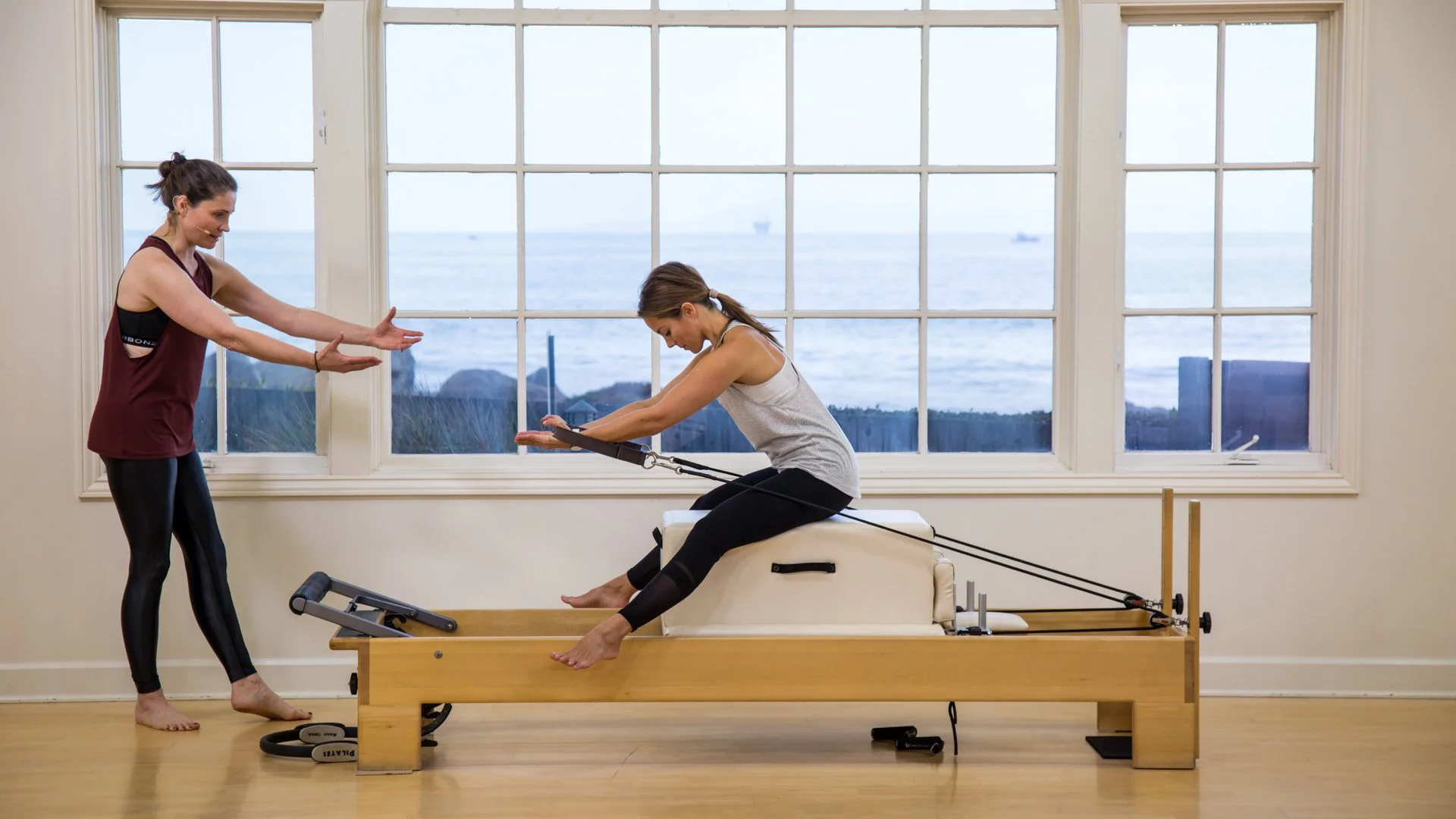
On the Reformer: Your hands hold the straps and as you reach your arms forwards, and the carriage moves it challenges your balance and control and upper body stability
On the Wunda Chair: (my personal favourite) your hands are placed directly on the pedal, with the springs in front and below you. This creates a real balance challenge and incredible feedback through your body
Despite the differences in apparatus, the key themes remain consistent: lift, balance, control, and an even connection through your seat bones and leg at the same time as maintaining your spinal and upper body stability.
So no, Horseback doesn’t look like riding, but it does strengthen the same skills and goals that can be transferable to riding.
I agree, that to improve your riding, you must ride. But to ride at your most effective, and to be the best rider you can be at that moment for you, your horse and your partnership you should also train your mind and body off the saddle. That’s what Pilates offers: not imitation, but preparation.
——————-
Julie Driver is a based in North London and has been teaching for over 26 years both in the UK and internationally. Julie coaches equestrians of all levels from the leisure rider to the elite athlete. Julie founded her own education company in 2016 and is a recognised training provider specialising in developing confident, knowledgeable Pilates teachers through in-depth, face-to-face education. Julie is known for her strong focus on teaching skills, observation, and movement understanding, helping teachers build the depth of knowledge needed to work safely and effectively with a wide range of clients.