
Redefining Instruction: How Anna Sarol Is Expanding Adaptive Pilates
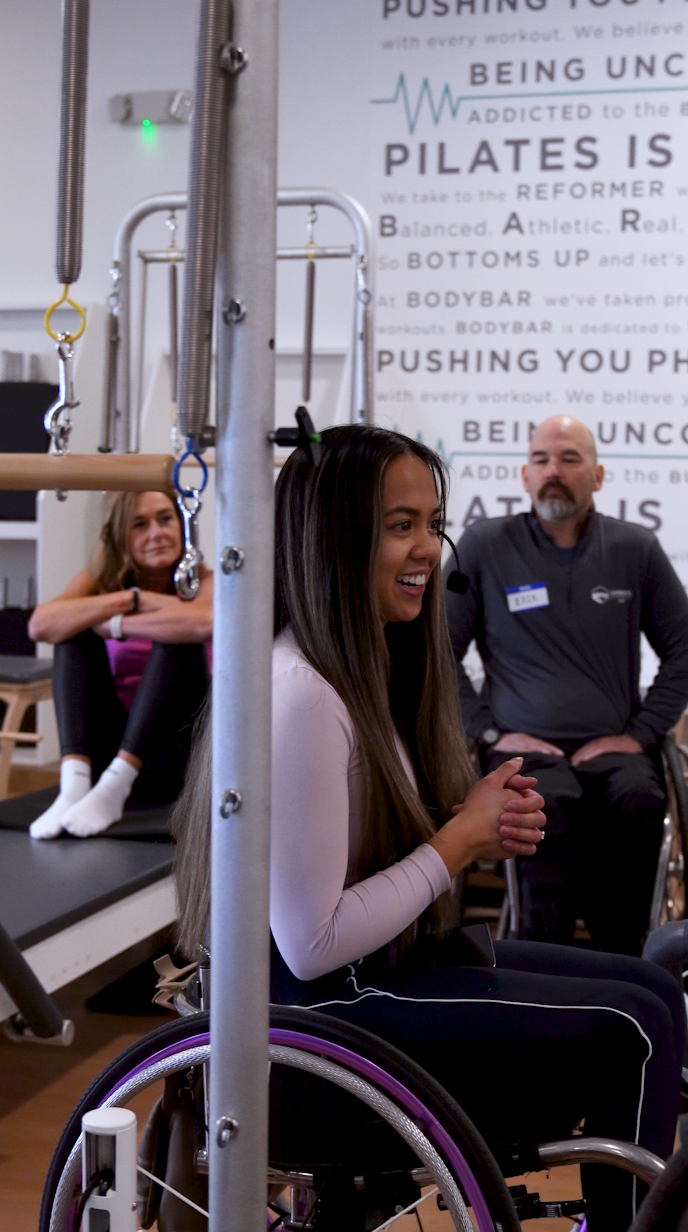
A fully adaptive Pilates class for wheelchair users may still be uncommon in boutique fitness, but instructor Anna Sarol is working to change that.
Before she ever taught a class, Sarol began as a BODYBAR Pilates member searching for a form of movement that felt possible again. A spinal cord injury at age 14 ended her seven years in competitive gymnastics, a sport that shaped her discipline and body awareness. Pilates became the first modality that reconnected her to those instincts. It offered structure, precision, and a familiar sense of challenge, but it also offered something she had not felt in years: a pathway back into her body.
“It reminded me of the discipline I grew up with,” Sarol said. “It felt like I could finally honor that inner gymnast again.”
As she continued practicing, the studio encouraged her to pursue instructor training, recognizing how her lived experience could expand what accessibility looks like inside a Pilates space. Her presence in training sessions and classes naturally raised questions about how studios could better support disabled clients, not only through modifications but through intentional design.
That perspective shaped the fully adaptive class she later led in Kansas City, where she welcomed 14 wheelchair users into the studio for a session designed specifically for people with spinal cord injuries. The highly anticipated event filled within a week, despite no public promotion. For many attendees, it was the first time they had seen a Pilates environment intentionally structured around their needs. The response underscored something Sarol had long suspected:
“disabled clients were not uninterested in Pilates, they were simply waiting for a space that considered them from the start.”
Sarol, who uses a wheelchair herself, built the class format around single arm movements that allow participants with varying levels of trunk stability to support themselves while engaging their core.
“Everyone in that event had some form of spinal cord injury,” Sarol said. “Some people had full trunk stability, some had half and others had zero.”
She also brought physical and occupational therapists into the room to support both safety and comfort, creating an environment where participants could fully engage in the workout.
Her transition from client to instructor also revealed gaps in traditional Pilates training models.
“Most programs do not address how to work with disabled clients, and many studios have never considered how their layout affects wheelchair users.”
These gaps are not unique to BODYBAR; they reflect a larger industry pattern in which accessibility is often treated as optional rather than a foundational element of instruction.
What made Sarol’s path possible, she notes, was a willingness from her local BODYBAR studio to collaborate without pretense. Although they had not hosted an adaptive class before, they were open to learning alongside her, an approach she believes is essential for meaningful inclusion.
“Anna has influenced how we think about accessibility across the entire BODYBAR franchise system,” said Kamille McCollum, president of BODYBAR Pilates. “Her work is commendable and she is helping us build a more inclusive future for our studios and instructors.”
As her teaching expanded, so did her online presence. Through her “Trying Pilates as a Paraplegic” series on social media, she began hearing from people who had never seen a wheelchair user in a Pilates studio, let alone teaching at the front of the room. Many reached out with questions, curiosity or simply relief at seeing someone who looked like them participating in a space they had long assumed was off-limits.
“That absence of visibility, she says, is one of the most persistent barriers in boutique fitness.”
Equipment can be rearranged and exercises can be modified, but people rarely enter spaces where they have never seen themselves reflected.
“The biggest gap is not equipment,” Sarol said. “It is representation.”
Her content now serves as an entry point for people who are curious about Pilates but unsure whether they belong in the space. It also serves as a resource for instructors who want to learn, adapt and better understand how to support disabled clients with confidence and care.
Sarol is exploring ways to bring adaptive Pilates events to studios across the country and hopes to eventually develop a training program for instructors. Her goal is not to create a niche offering but to normalize disabled bodies in Pilates spaces, making inclusion a standard rather than an exception.
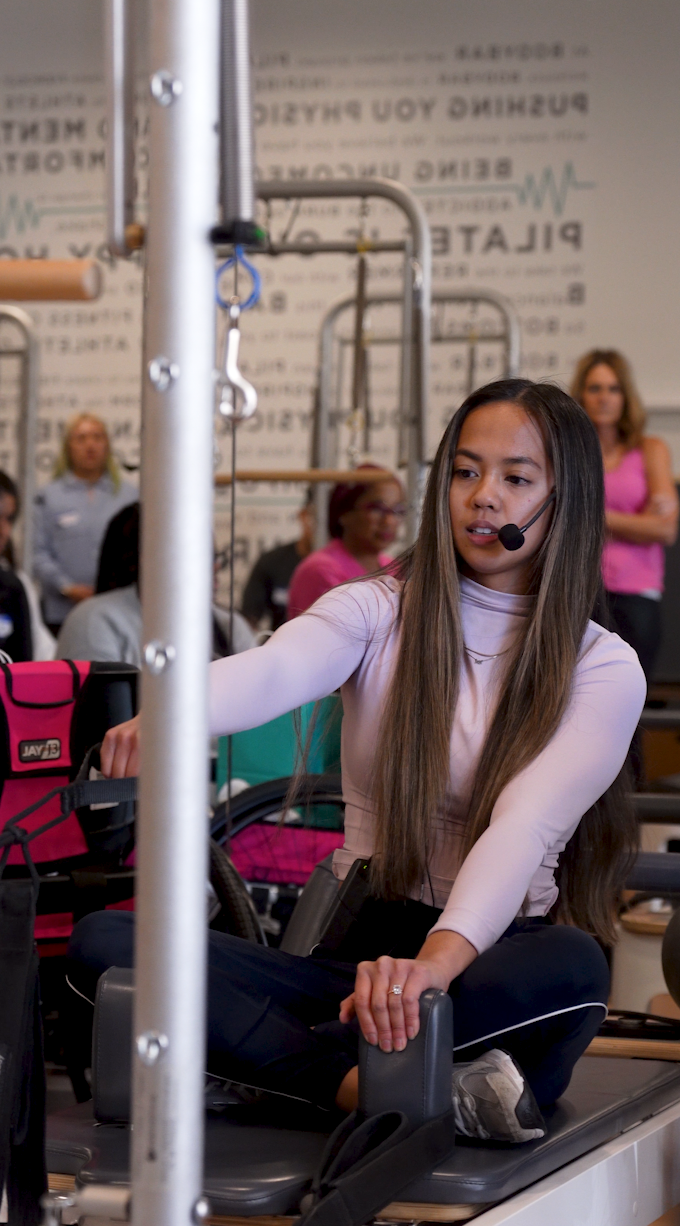
You can find Anna at @annasarol
or learn more about BODYBAR at bodybarpilates.com.
Anna was also New Instructor of the Year for The Pilates Journal Awards in 2025.
————————-