
Spine in Motion: Rethinking Access Before Movement
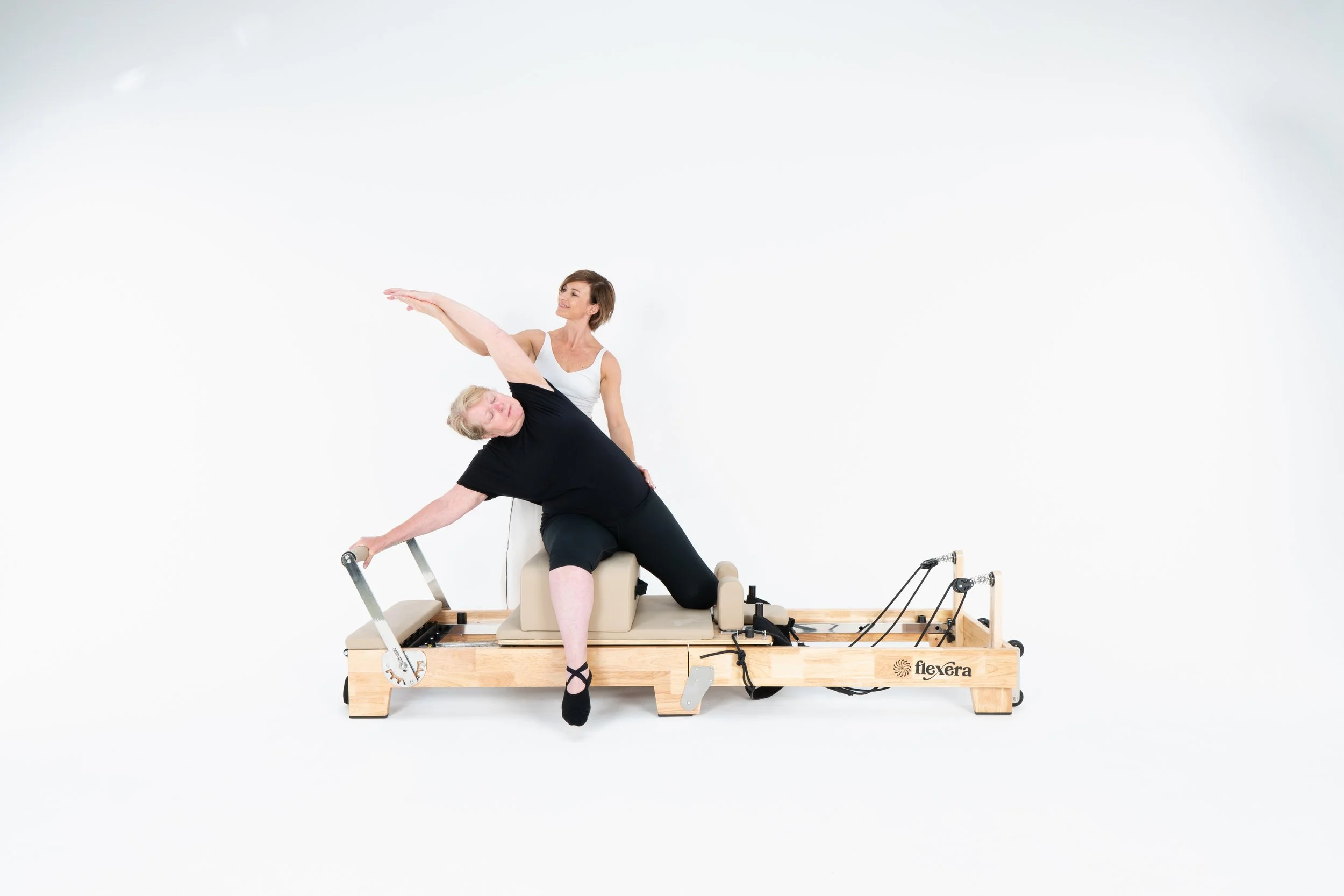
When I first began working on my Spine in Motion – Reformer Pathways for Spinal Health , I didn’t intend to create a project solely focused on the spine.
After all, Pilates already does that beautifully.
We teach flexion, extension, rotation, lateral flexion. We cue articulation. We speak about segmental control and spinal stability in almost every session. The spine sits at the center of our method.
And yet, in real-life teaching, I kept encountering the same challenge:
Many clients simply cannot access their spine.
Not because they don’t understand the movement but because something else in the body is holding it back.
The Missing Entry Point
In theory, the spine is mobile, responsive, and adaptable.
In practice, it is often:
Restricted by sedentary lifestyles
Shaped by postural habits
Limited by injury or discomfort
Compensating for immobility elsewhere
Over time, I realised something fundamental:
We often try to move the spine before we make it accessible.
And that changes everything.
A Connected System, Not an Isolated Column
The spine does not move in isolation.
It is influenced by:
The shoulder girdle
The ribcage
The pelvis and hips
If one part of this system is restricted, the spine will:
Compensate
Move inefficiently
Or stop moving altogether
A stiff ribcage limits expansion and extension. Restricted scapulae affect thoracic mobility.A locked pelvis reduces access to lumbar articulation.
So the question becomes:
Are we truly working the spine or working around its restrictions?
Why I Built “Spine in Motion” Differently
This manual was created from a simple but powerful intention:
To restore access before demanding movement.
Instead of beginning with full spinal exercises, I often start with:
Shoulder girdle awareness
Scapular mobility
Ribcage breathing and expansion
Gentle pelvic organisation
Only then do we layer spinal articulation.
This approach is slower but far more effective.
One Exercise, Many Pathways
A key element of this work is understanding that one exercise does not belong to one position.
In the manual, I share many familiar movements but explored through multiple setups.
Because if one position doesn’t suit the body in front of us, we must have another option.
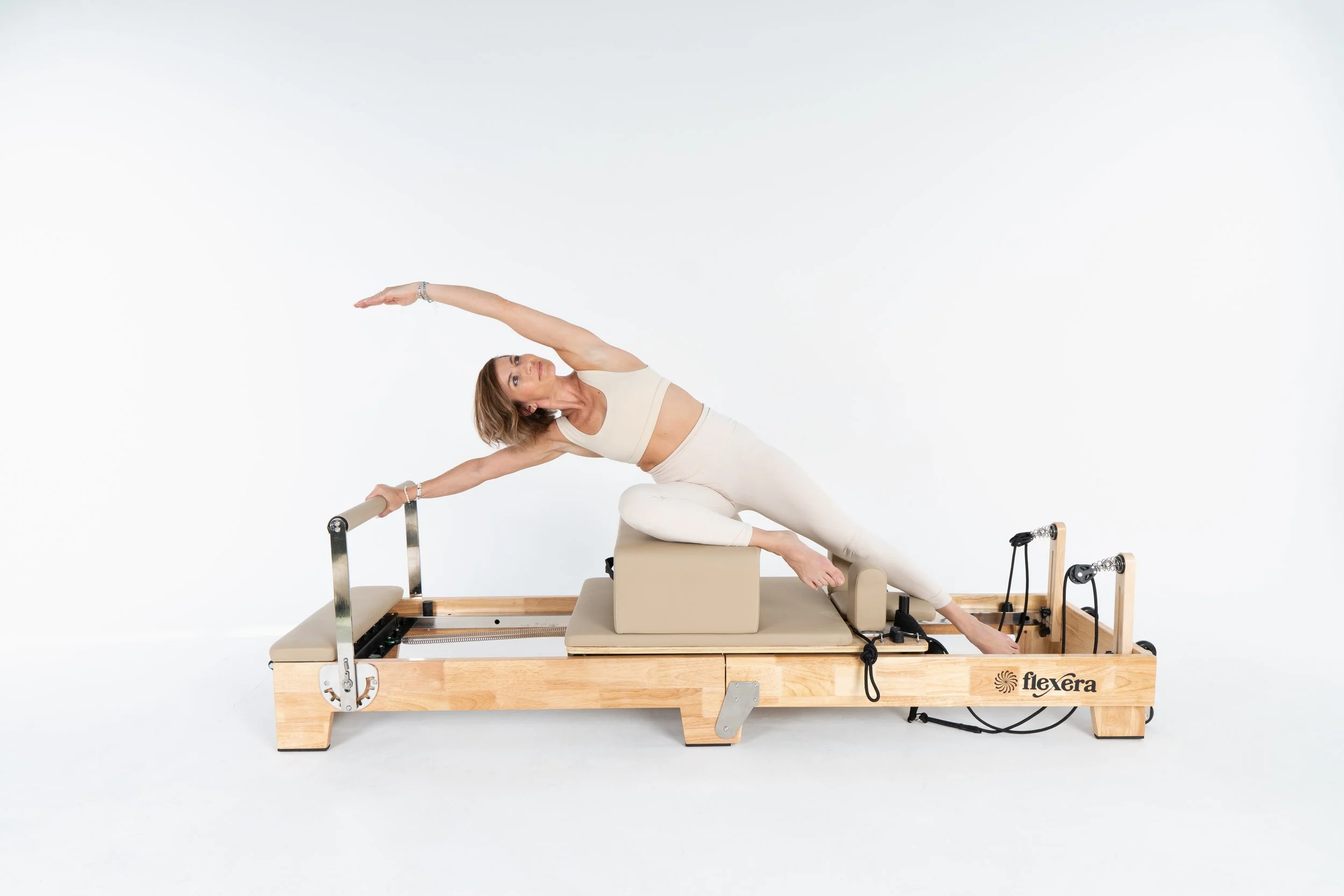
Take the Mermaid.
Traditionally performed seated on the carriage, it can be deeply effective but also inaccessible for many clients due to hip or knee discomfort.
So instead of removing the exercise, we adapt it:
Performing Mermaid on a short box to reduce strain in the hips
Sitting on the standing platform to allow more space and less compression
Supporting the body to “hang” or release the knee rather than forcing rotation
The result is the same intention - spinal movement but through a completely different, more accessible pathway.
The same principle applies throughout the manual.
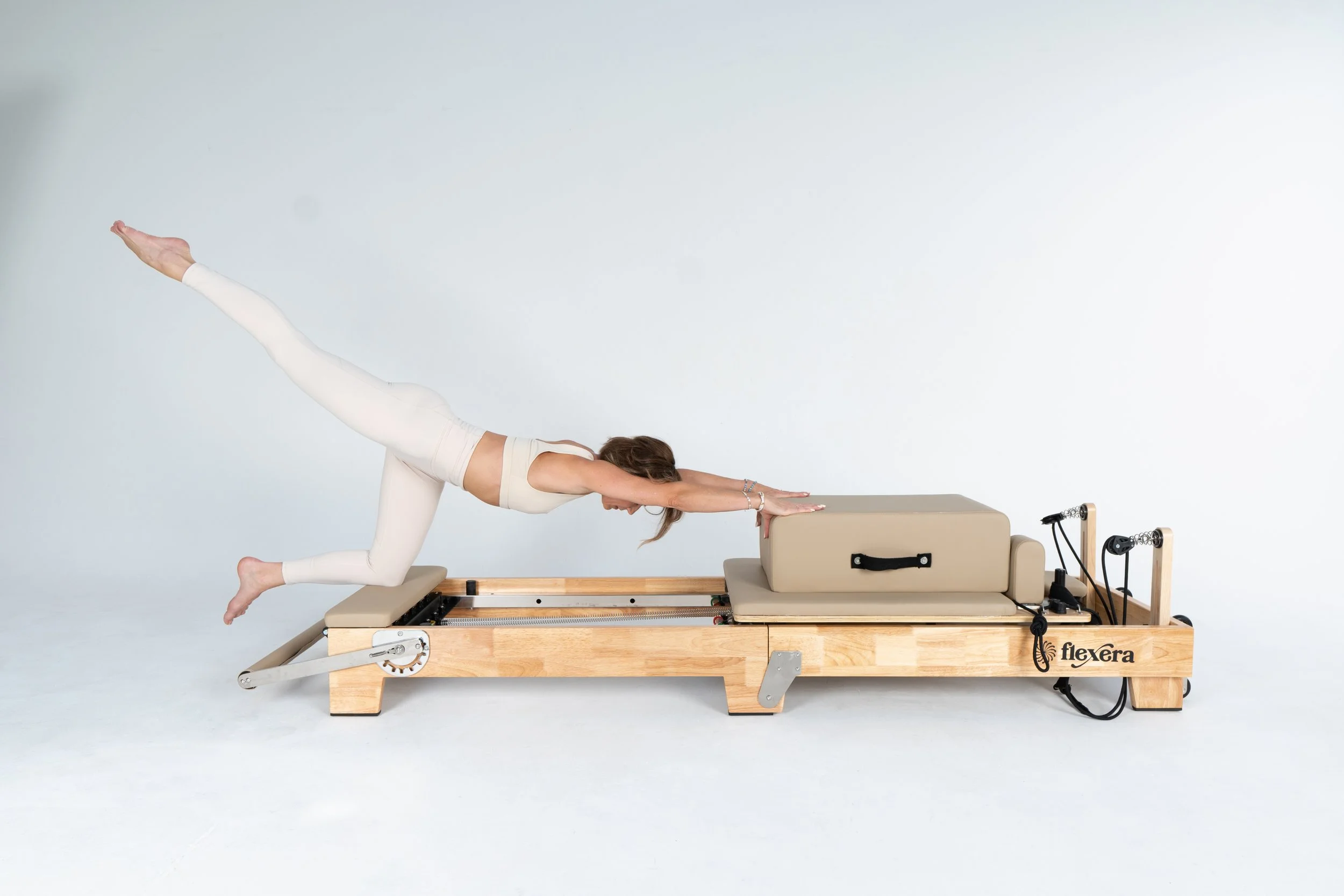
Even a simple movement like Cat–Cow is not limited to one setup. It can be explored:
Standing
Kneeling
Sitting in front of the footbar
Positioned inside the shoulder rests
Each variation offers a different entry point.
Because every body is different and every body needs options.
Working With the Body in Front of You
This layered approach allows teachers to adapt in real time.
If one variation doesn’t work, there is another. If one position creates tension, we change the environment.
It becomes less about delivering the “correct” exercise and more about finding the right access point for that individual.
The Role of Tactile Cueing
What began as a small section in the manual evolved into one of its most significant chapters.
Because touch transforms understanding.
Tactile cueing can:
Enhance awareness
Guide movement patterns
Reduce compensations
Deepen connection to the body
But it is never one-size-fits-all.
Each placement, each direction of touch, must respond to the individual body.
And that requires both knowledge and sensitivity.
Slowing Down to Move Better
One of the most valuable aspects of this approach is the emphasis on slowing down.
Sometimes, the most effective work is:
Breathing into the ribcage
Expanding through the back body
Releasing unnecessary tension
Creating space before movement
Because when we rush into spinal exercises, we often reinforce limitations rather than resolve them.
Beyond the Manual: Building Understanding and Community
While Spine in Motion is a practical resource, it was never intended to be just a book.
I recognise that we all learn differently:
Through images
Through written instruction
Through discussion and experience
That’s why the manual is supported by ongoing monthly masterclasses.
These sessions create space to:
Ask questions
Break down exercises
Explore specific client cases
Share challenges and solutions
It becomes not just a manual, but a guided learning process and a growing community of teachers supporting each other.
Final Thought
The spine is often described as column , the center of the body.
But perhaps more importantly- it is the center of connection.
And before we ask it to move, we must first create the conditions that allow it to be accessed.
Agi Wolan Falenta is an international Pilates educator and creator of Functional Pilates, specialising in hip, knee and spinal health. Following her own hip replacement, she developed a practical approach to rehabilitation and movement, helping instructors and clients restore function and move with confidence.
Agi’s New Book!
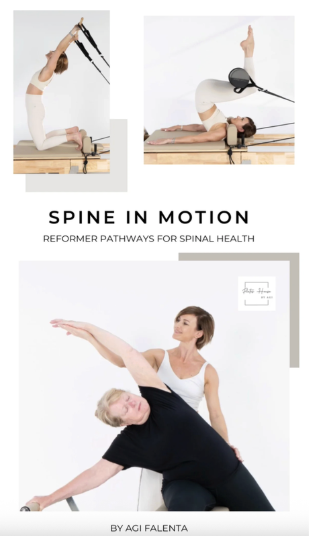
Discover more in Agi's latest bookSpine in Motion: Reformer Pathways for Spinal Health - a comprehensive manual for Pilates professionals looking to deepen their understanding of spinal health and movement. The book is available in English and Spanish.