
The Missing Link in Parkinson’s Exercise
The Problem with Fragmented Training
In many exercise and rehabilitation settings, Parkinson’s disease is approached through a fragmented lens.
Posture is addressed in one set of exercises, balance in another, and gait in isolation—often reduced to step length or speed drills. While each element is important, training them separately overlooks a critical truth:
Human movement is an integrated system.
In individuals living with Parkinson’s disease (PD), changes in the spine, posture, and gait are not independent impairments, but interconnected expressions of the same neurological condition.
When trained in isolation, carryover into real-life function is limited. When trained together—intentionally and systematically—we begin to restore efficient, coordinated, and sustainable movement.
Understanding the Parkinson’s Movement Pattern
Parkinson’s disease is characterized by rigidity, bradykinesia (slowness of movement), and postural instability, presenting as global changes in how the body organizes itself in space.
A common presentation includes:
Forward head posture
Increased thoracic flexion (kyphosis)
Reduced spinal rotation
Diminished arm swing
Shortened stride length
These changes reflect flexion dominance, reduced variability, and decreased automaticity.
As the spine becomes more rigid—particularly through the thoracic region—the body loses its ability to rotate and counter-rotate, directly impacting gait, where reciprocal movement between the upper and lower body is essential.
"When the spine stops moving well, gait cannot function well."
Why Spinal Mobility Is Foundational
The spine is the central axis of movement, allowing rotation (essential for walking), extension (necessary for upright posture), and adaptability.
In Parkinson’s, rigidity limits spinal mobility, particularly rotation and extension. Without addressing this, efforts to improve gait mechanics are often superficial and short-lived.
For example, asking a client to "take bigger steps" without restoring spinal rotation may temporarily increase stride length, but it does not address the coordination required for sustainable walking.
Pilates offers a unique advantage. Through controlled, precise movement, it reintroduces segmental spinal motion—helping the individual reconnect with areas that have become less accessible.
Programming Framework
Upright → Mobilize → Integrate → Walk
Build the system before training the task.
Within the Pilates 4 Parkinson’s Method, spinal mobility is addressed prior to gait training, and sessions follow a consistent sequence:
Uprighting posture
Enhancing spinal mobility
Integrating into ambulation and gait
This sequence establishes the foundation for functional movement.
Individualization Within Structure
While the framework remains consistent, application is individualized. The emphasis shifts based on the individual’s primary motor presentation.
For example, a client whose primary symptom is rigidity will benefit from a stronger emphasis on mobility and opening work, particularly through the thoracic spine and anterior chain. This may include:
Supine positioning over a soft roller to encourage thoracic extension
Coordinated arm and shoulder movements to restore upper-body mobility
Targeted opening of the hip flexors to counteract flexion dominance
Improving available range of motion is essential before expecting meaningful changes in gait or functional movement.
Key Programming Considerations
Stage alone does not dictate programming. Intensity and progression should be based on:
Age
Overall fitness level
Movement history
Current physical capacity
Fatigue levels and medication cycles
External feedforward cueing, breath work, and attentional focus can enhance motor output, particularly as automatic movement becomes impaired.
The goal is not simply to perform exercises, but to restore movement relationships within the body.

Posture: More Than Alignment
Posture is often treated as a static position to correct. In reality, it is dynamic—it reflects how the body organizes itself in preparation for movement.
In Parkinson’s disease, a flexed posture shifts the center of mass forward, resulting in:
Reduced ability to generate efficient forward propulsion
Increased reliance on compensatory strategies
Greater risk of instability and falls
Posture is not something we "fix" through cueing. It must be earned through movement.
When spinal extension is restored and integrated with breath and control, posture changes as a natural outcome—not a forced correction.
"I don’t ask clients to hold posture—I help them find it."
"I shift the focus from 'fixing posture' to improving sensory input—encouraging awareness through the feet, visual focus, and breath. When the brain receives clearer information, the body reorganizes more efficiently."
"When they feel the connection from their feet through their spine, upright alignment becomes something they can access and return to—not something they have to force."
A Neurosensory Perspective
Posture reflects how the brain perceives the body in relation to gravity and the ground, shaped by input from:
The visual system
The vestibular system
The somatosensory system
In Parkinson’s disease, disruption across these systems contributes to a less adaptable posture.
Structural factors such as scoliosis must also be addressed early. Without this, compensatory patterns may be reinforced rather than improved.
By restoring sensory awareness and spinal organization, posture becomes a functional base for movement.
Gait: A Whole-Body Expression
Walking is a coordinated, full-body process involving:
Spinal rotation and counter-rotation
Arm swing
Weight transfer
Timing and rhythm
In Parkinson’s, these elements often diminish.
Traditional gait training may rely on external cues such as stepping over lines or using auditory rhythms. While helpful, these do not address underlying mechanical limitations.
When spinal mobility and posture improve, gait reorganizes naturally. Arm swing returns. Stride length improves. Movement becomes more efficient—not because it is forced, but because the system is functioning cohesively.
"Gait is not something we train in isolation—it is something that emerges from integrated movement."
Building from the Ground Up
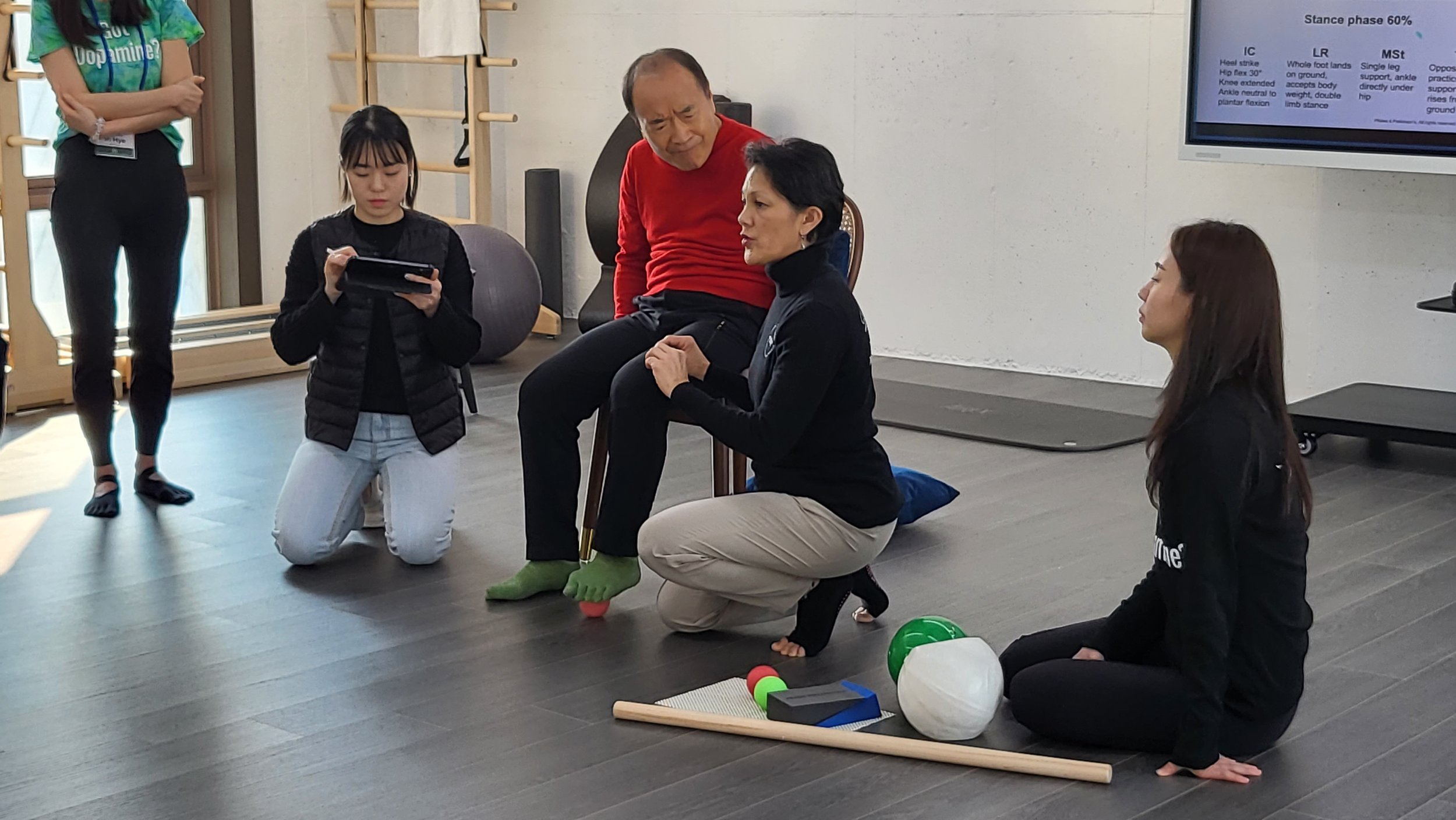
Fluid gait does not begin at the hips—it begins at the foot.
The ability to articulate from heel to forefoot to toes supports effective weight transfer and propulsion.
Training progresses upward through the kinetic chain:
Foot articulation and activation
Ankle mobility and stability
Knee and hip alignment
Pelvic and spinal coordination
As these elements integrate, gait becomes less forced and more coordinated.
Integration: Where Real Change Happens
The strength of Pilates lies in its ability to integrate movement.
Rather than separating spinal mobility, posture, and gait, it connects them through:
Sequenced movement patterns
Repetition with variation
Focused attention
This supports both physical and neurological change. The individual is not simply exercising—they are actively reorganizing their movement system.
Over time, this leads to more efficient walking, greater ease in daily activities, and increased confidence.
Conclusion: Reconnecting the System
Parkinson’s disease disrupts coordinated movement—but also presents an opportunity.
By integrating spinal mobility, posture, and gait, we move beyond isolated interventions toward a more effective approach.
This work helps individuals recognize they are not passive in their condition—fostering a sense of control, confidence, and long-term movement independence.
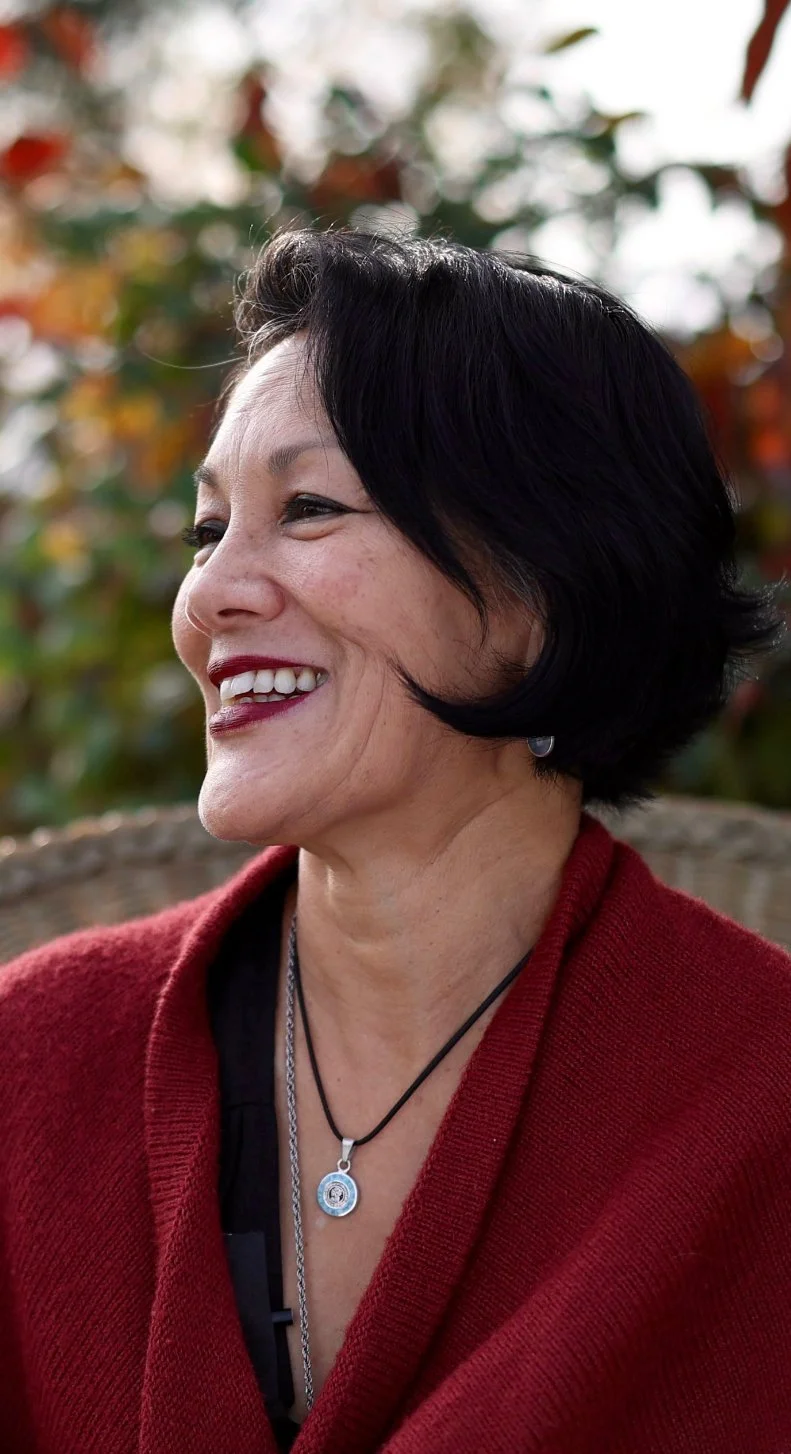
Cecilia Pulido
Cecilia Pulido, MS, PMMP, 2nd Generation Pilates Master, has over 20 years of experience working with individuals living with Parkinson’s disease and is the founder of the Pilates4Parkinson’s Method, a structured, research-informed approach to preserving movement independence. Trained under Pilates Elder Lolita San Miguel, she specializes in integrating Pilates, neuroscience, and functional movement to educate professionals and support individuals at all stages of Parkinson’s.
Explore the full Pilates 4 Parkinson’s Method
and programming applications: