
What’s More Important: More Movement or Better Form?
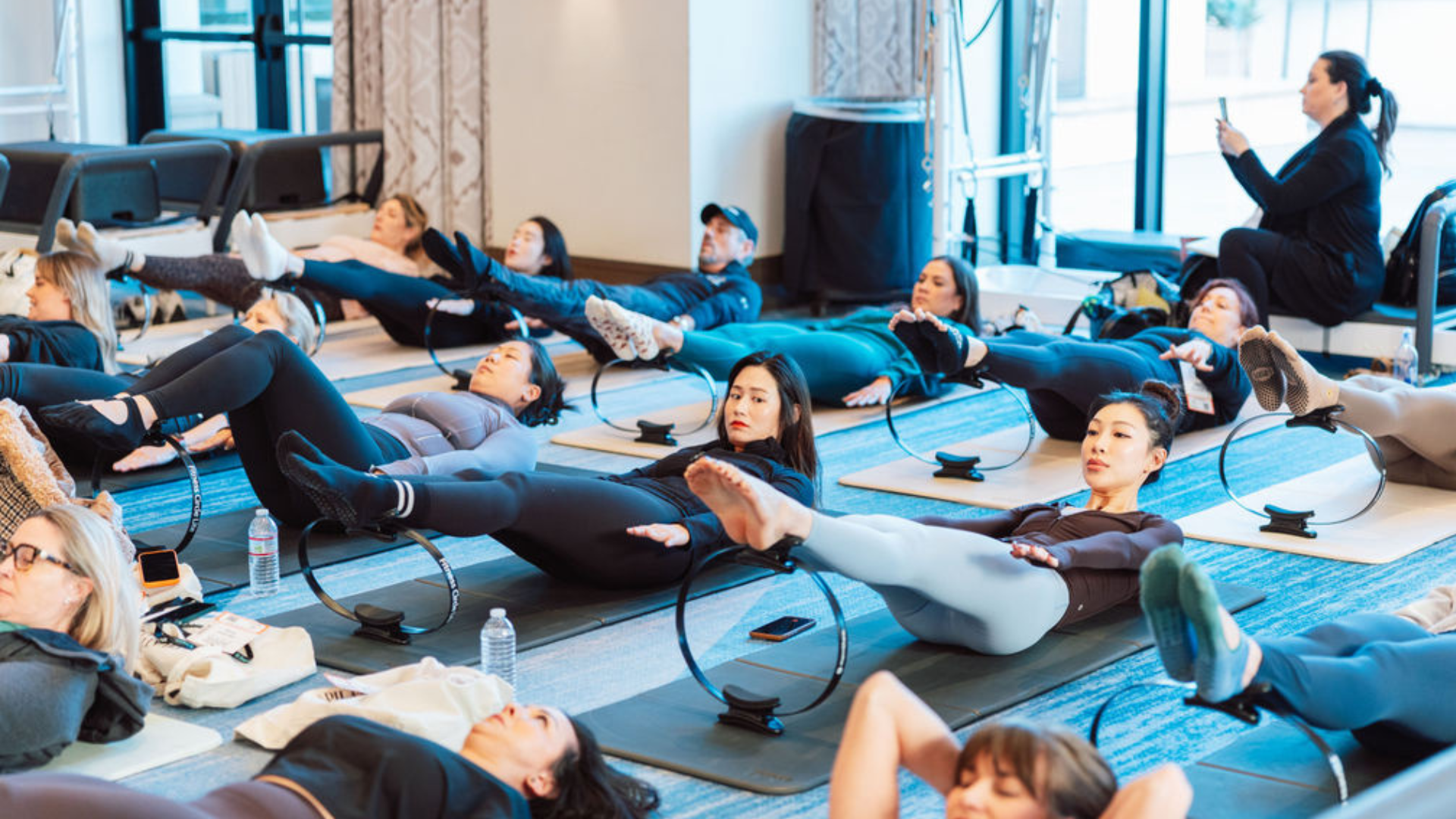
If you’ve been around the Pilates world for any length of time, you’ve probably heard both sides of the “how much detail is too much?” debate.
On one hand: People just need to move more. Stop micromanaging. Stop over-cueing. Let them move.
On the other: Nuance matters. The details matter. Pilates is all about moving BETTER, not just MORE.
As Joseph Pilates himself put it:
“Contrology is not a fatiguing system of dull, boring, abhorred exercises repeated daily 'ad-nauseam.” and
“Concentrate on the correct movement each time you exercise, lest you do them improperly and lose all vital benefits.”
Pilates a method rooted in intentional movement — not mindless repetition. If we want to help someone truly improve the way they move, we have to guide them purposefully.
I’ve seen this firsthand.
My back has been cranky lately, and I’ve learned that my hypermobile lumbar spine needs stability.
But if I do the entire stomach series on a day when my lower back feels weak, it only makes things worse. Because now I’m asking it to do too much of a good thing.
Dosage matters!
The same goes for knee pain. Strengthening your leg and hip muscles can absolutely create stability around your joints. But random jumping, running, or even long walks might make things worse.
When you lay it out like that, it sounds obvious. Of course the answer is: it depends.
And yet we still contradict ourselves all the time.
We say “just move more” . . . but also obsess over every cue.
We say “move with control” . . . but also “don’t overthink it”.
We preach precision . . . and then remind people to “just keep going”.
Here’s the paradox: Both sides are valid.
Yes, most people benefit from simply moving more. Just getting out of the chair or off the couch is already a huge win.
But HOW you move matters, too.
It’s not either/or.
It’s Yes, And.
Yes, move more . . .
And pay attention to how you move when you can. Train to build muscle memory, so precision becomes automatic.
Because the goal is to build toward more movement AND better movement.
This “yes, and” principle doesn’t just apply to Pilates — it shows up everywhere.
In fact, it’s actually a core rule in improv comedy, where performers are taught to accept what their fellow actors throw out there (“yes”) and then build on it (“and”). It’s how skits keep moving, ideas evolve, and possibilities stay open.
And, honestly, that mindset has helped me way beyond the studio.
I believe in it so deeply that I recently got a vanity license plate that says YES AND. Not kidding.
Because any time I try to force one thing to be true and dismiss the other, I get stuck.
Mentally.
Emotionally.
Physically.
I feel frustrated and rigid because I’m trying to fight a paradox that isn’t meant to be SOLVED. It’s meant to be LIVED.
That’s what the ancient Chinese philosophy of Yin and Yang captures so well — the idea that opposing forces in life (like light and dark, hard and soft) aren’t static or in conflict. They’re always interacting, shifting, and working together to stay balanced.
They’re not enemies — they complete each other.
So let’s stop acting like we have to pick a side.
“Instead of fighting over whether it’s better to get people moving or better to refine the details, let’s do both.”
Some days, we just need to move more. To shake off the stiffness and get our blood flowing.
Other days, we need one very specific exercise to feel better.
Some people, at one stage in their life, benefit from general movement.
But then, at another stage (after a joint replacement or an injury, for example), they need highly specific, targeted support.
“Let’s teach in a way that honors nuance — without trying to cancel out its counterpart.”
We don’t need to erase intensity to value precision. Simple intense movements (think pulses, isometrics, and slow motion) can be the pathway to precision — especially when we strip away distractions and focus on what matters.
And we don’t need to demand perfection to care about doing things well. Because excellence doesn’t have to come from pressure. It can come from presence.
“Let’s help people move — by choosing the right (amount of) exercise for the right person at the right time.”
That’s how we meet people where they are instead of where we (or they) wish they were. Because Pilates isn’t about doing the most . . . it’s about doing what’s most helpful.
And remember:
You don’t have to have all the answers. You just need to stay curious.
To listen.
To meet the body in front you with both structure and softness. Clarity and compassion.
When you do, you’re not just teaching Pilates. You’re guiding someone back to their body — and back to their life.
Mara Sievers, NCPT, is the creator of PILATES ENCYCLOPEDIA, the largest and most organized Pilates library on the internet. If your goal is to teach safe and effective Pilates classes that your students will love, this is the right membership for you. After owning a boutique studio in New Hampshire for eight years, Mara now focuses on helping Pilates teachers confidently teach clients with various pathologies and movement goals. The Pilates method has been defining Mara’s movement experience since 1998 and has been a lifesaver more than once for her personally. Her body of work is her dedication to this awesome and powerful practice.