
From Osteoporosis to Buffed Bones
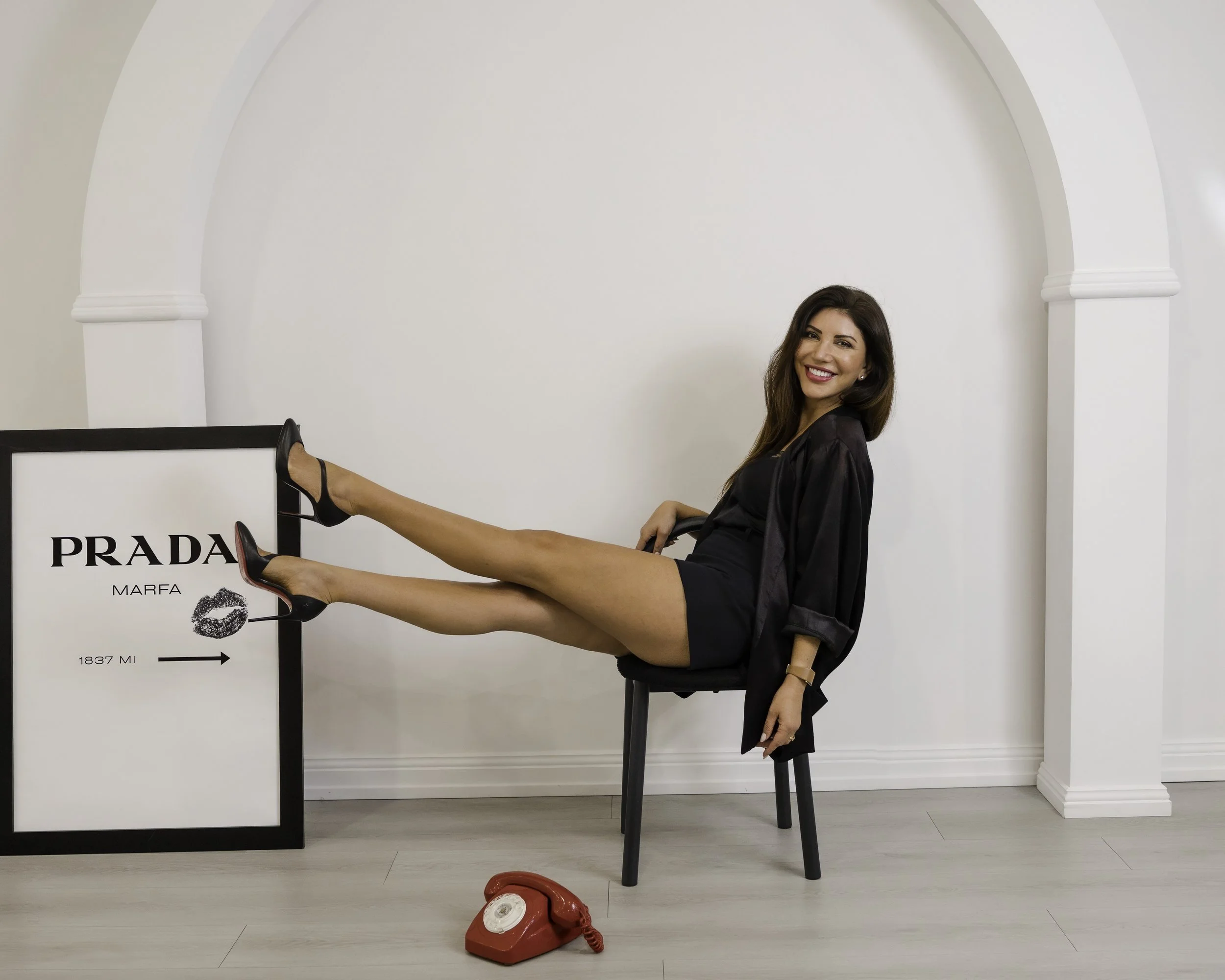
Most of you know me as the joint whisperer, the girl who challenged the status quo and introduced joint strengthening through the globally accredited M.F.A certification.
But this story is about the fear around a silent disease that the WHO reports has affected 200 million women worldwide. Take that in for a second. Now is a good time to grab a cup of tea and sit down in your favourite warm chair to read.
I remember vividly doing my first DEXA scan at the age of 40. It was a sunny day, the breeze in the air was stroking my cheeks as I obliviously walked into my first scan. If you’ve never had one, you should know it’s an extrapolation, a snapshot, a comparison against a young, healthy reference. The more you do them, the more meaningful the data becomes.
But that first one, that one hit hard. My scores came back just shy of osteoporosis, hovering around -2.4 at the femoral neck, close enough that the line felt blurred. My heart sank. I remember sitting there as my GP explained it to me, but I wasn’t really listening. Her voice faded into the background, muffled and distant. All I could hear was my own thinking.
How could this happen? How could this happen to me?
I didn’t have the usual story. I wasn’t sedentary, I sure as shit wasn’t unaware.
I had spent years learning, qualifying, and teaching. I was a strength and conditioning coach, qualified to train professional athletes. I was a manual therapist, a movement screening specialist, and I had just become a joint specialist. So I couldn’t blame Pilates, and I couldn’t hide behind not knowing. The truth was much harder to swallow, because that’s when I realised I had been doing what I loved instead of what I needed. And that’s the part that matters, because that blind spot wasn’t just mine. It’s the same blind spot I now see across the industry.
When I created the M.F.A certification and introduced it to the Pilates industry, I didn’t fully consider one important factor. Resistance.
Pilates has a strong culture. When you’ve spent years, sometimes decades, building your confidence, your career, and your sense of self around it, you don’t just teach Pilates, you become it. So when something new walks in, something that doesn’t fit neatly into that framework, the first instinct isn’t curiosity, it’s protection. You feel it in your body before you even have a thought about it, a tightening, a resistance, and a quiet urge to defend.
And this is where it gets tricky. When your identity is tied to an ideology, anything that sits outside of it doesn’t feel like information, it feels like a threat, not to your knowledge, but to who you believe you are. So instead of asking how new information could add value, how it could expand what we already do, we default to defending what we know. Not because we’re closed minded, but because it feels personal. The cost of that protection is subtle. It creates blind spots. It keeps us circling the same conversations, the same debates, the same need to prove. Slowly, without realising it, we stop evolving.
I didn’t see it coming because I was too close to it. And that’s exactly how it plays out for most of us..
When I see posts on social media asking things like “gym or Pilates”, I can’t help shaking my head. The truth is, if you understand exercise science, biomechanics, and joint neurology, you will never ask that question. We need diversity in our training like we do in any other aspect of our lives.
Choosing to specialise in teaching one method is absolutely fine, in fact that’s how you become an expert, but that doesn’t mean you tell your clients they don’t need anything else, because integrity
matters. Pilates cannot replace joint work or strength training, and they cannot replace Pilates. They are not competitors, they never were. That was a turning point which forced me to change.
So I made a plan. I programmed it like I used to write programs for pro athletes. I put myself on a slight surplus and did not compromise on showing up.
At this stage, most of us are not messing around. We are not training for our beach bodies, we are training for our old bodies. So the cute six pack isn’t going to cut it when you need to escape your nursing home to drop it like it’s hot with your girls for old time sake. Because not having the option means we deprived ourselves from thriving.
By the time I turned 43, I twisted my GP’s arm to put me on MHT, and it changed everything. I was raised by a straight shooter mum who parented in a culture that wasn’t her own, which meant discipline wasn’t optional, it was just the deal. I’m grateful for it now, because consistency is what yields results. Showing up even when you’d rather not. If you’re relying on motivation, ask yourself this. Who in their right mind chooses to push outside of their comfort zone every other day to build something meaningful, instead of lying on the beach blowing bubbles? Not me, I’ll tell you that much.
Rebuilding bone takes time. It’s not a quick turnaround. Not all resistance protocols are equal. Bone responds to the magnitude, rate, and direction of load, and evidence shows that combined high-load and impact-based training is what drives meaningful changes in both the spine and femoral neck, whereas resistance training alone has limited effect. So I trained accordingly.
Slowly and surely, within two years my DEXA showed -1.9. I was lifting heavy four days a week, integrating M.F.A sessions, because if your joints are angry, your lifting career will plateau before you have had the chance to build properly. I also added plyometrics, ten minutes twice a week. Let the record show, mamacita hates jumping, but I was in my we have to do what we need era, so nothing was going to get in my way. Fast forward eight years, and I’m proud to say I have a T score of +1.1, and I worked my bum cheeks for it.
As an educator and keynote speaker travelling across the Middle East, Asia, the U.S., Europe, and Africa, what brings me more joy is seeing the Pilates community becoming more welcoming of diversity. M.F.A is now represented in 29 countries, and that tells me something is shifting.
We’re starting to understand that every system has a language, and until you take the time to understand it, to turn information into usable knowledge, you cannot truly integrate it into your teaching. Evolving a method takes understanding it first, respecting its foundation, and then knowing exactly where and how to expand it.
I’ll leave you with a lesson my anatomy professor taught me in our first year of training.
Leave 20 percent on the table, because science is constantly evolving and not everything has been studied. That’s how we maintain humility and curiosity to explore.
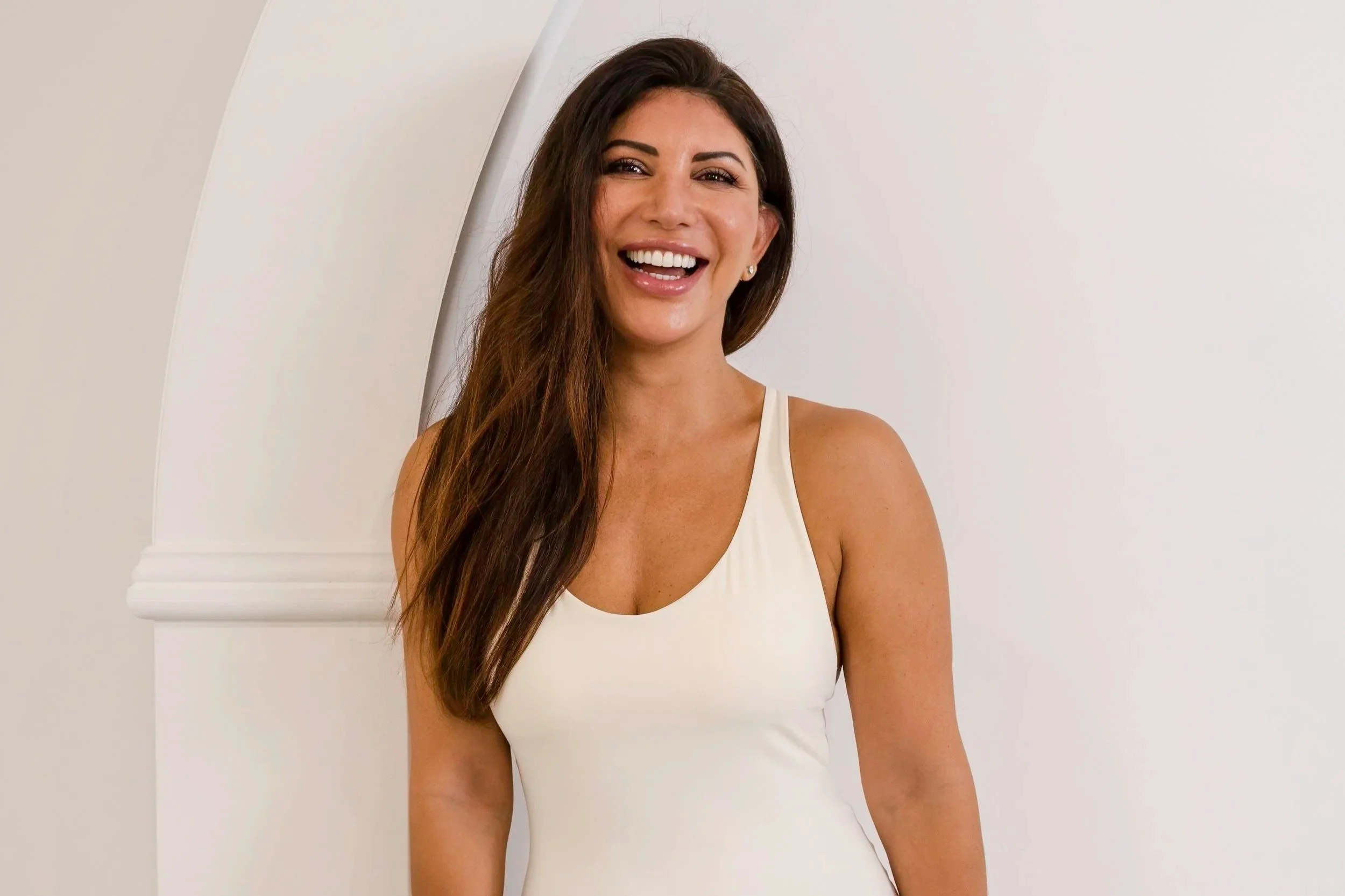
Founder of Movement Function Academy
The missing link between limitation and performance
—————————
Kitsuda et al., 2021
Journal of Bone and Mineral Metabolism
DOI: 10.1007/s00774-021-01218-1
PMID: 33851269
Watson et al., 2017
LIFTMOR Trial
Journal of Bone and Mineral Research
PMID: 28975661
DOI: 10.1002/jbmr.3284
Hettchen M, von Stengel S, Kohl M, Murphy MH, Shojaa M, Ghasemikaram M, et al. (2021).
PMID: 33469276
DOI: 10.2147/CIA.S283177