
In Our Lane: Why Pilates Doesn't Need to Compete with Fitness
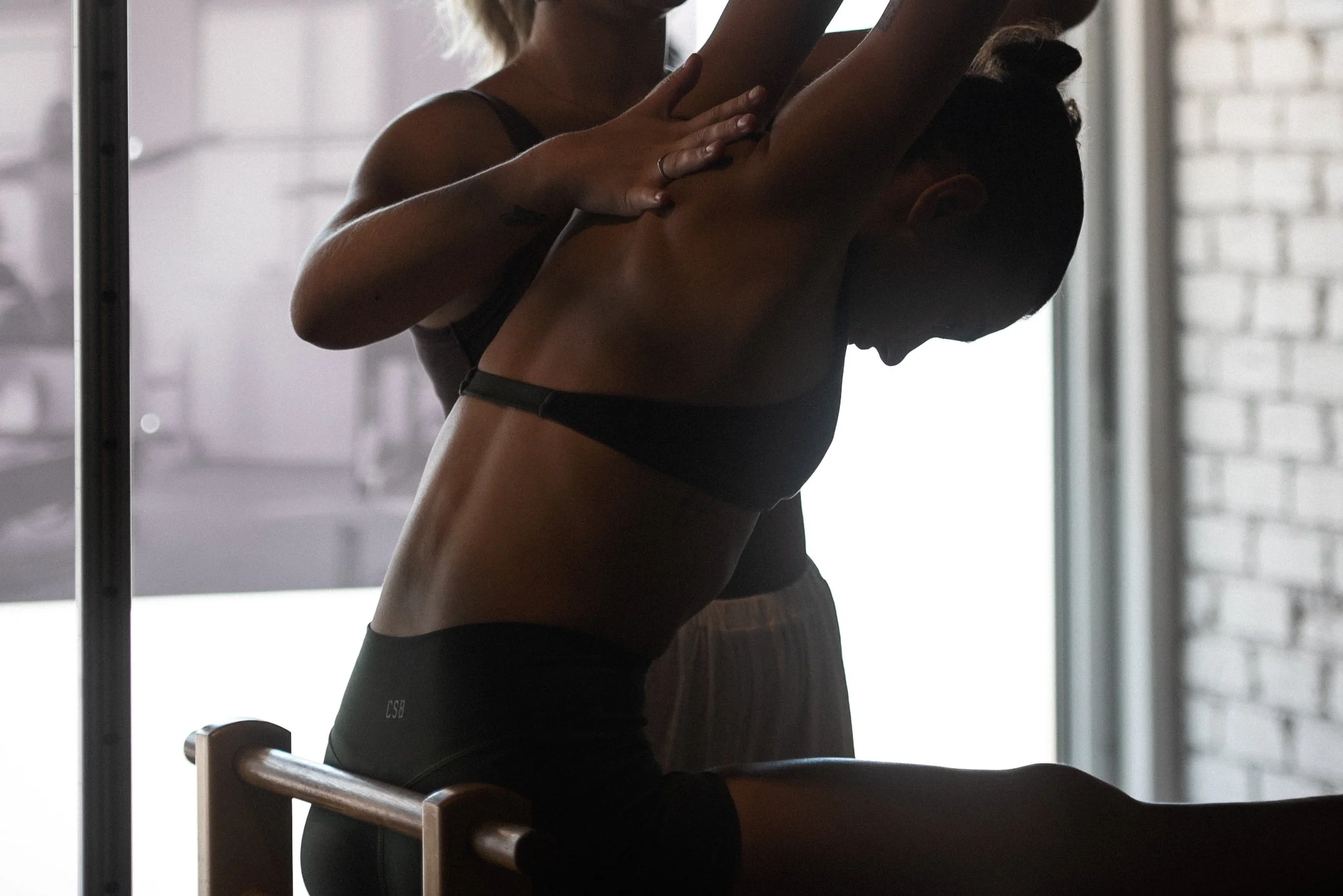
Photography @seasewell
I am often asked what keeps me motivated after decades of working in Pilates.
The answer is surprisingly simple: I stay in my lane.
Not because I am narrow-minded about movement, but because I am deeply aware of the unique contribution Pilates offers. Every day I witness clients moving with greater ease, confidence, and capability. I see people returning to activities they love, maintaining independence as they age, and navigating life with less pain and more freedom. When that happens, they become less likely to burden an already stretched healthcare system and more likely to contribute positively to their families, communities, workplaces, and the world around them.
That is meaningful work.
As Pilates practitioners, we occupy a unique space in the movement profession. We are not personal trainers. We are not physiotherapists. We are not strength and conditioning coaches. We are certainly not in competition with them. Rather,
“we contribute something different: an educational movement system that teaches people how to better inhabit their bodies.”
Joseph Pilates called his method Contrology - the complete coordination of body, mind, and spirit. Long before movement science became fashionable, he recognised that human movement was about more than muscles and joints. He understood that efficient movement required awareness, control, precision, breath, and whole-body integration.
The Pilates elders carried these teachings forward, preserving the principles and practices that form the foundation of our profession today. Yet Pilates has never been a static discipline. While we honour its roots, we continue to evolve alongside contemporary science.
From Joseph Pilates' concept of the "powerhouse" to the research of researchers such as Hodges in the 1990s exploring deep trunk function and motor control, through to the work of Stuart McGill on spinal stability and contemporary discussions surrounding fascia, biotensegrity, and integrated movement systems, our understanding of the body continues to grow. Historical observations dating back to Ancient Egypt, the anatomical investigations of Leonardo da Vinci, and more recent contributions from Thomas Myers, Carol Davis, and many others all contribute to an increasingly sophisticated understanding of human movement.
Pilates sits comfortably within this evolving conversation because it has always been concerned with how the body functions as an integrated system.
“When we observe a client, we are not simply looking at muscles. We are observing a dynamic, adaptive human system.”
We consider physiology, biomechanics, movement behaviour, breathing patterns, coordination, balance, load distribution, and movement strategies.
“We observe how one part influences another and how the body continually reorganises itself in response to life's demands.”
“Perhaps one of the most important things to understand about the human body is that it is designed to adapt in order to survive.”
Survival, however, is not always the same as thriving.
The body is remarkably clever at finding alternative pathways when faced with injury, stress, pain, fatigue, fear, or repetitive habits. Compensation strategies emerge because they allow us to keep functioning. The problem is that over time these adaptations can become our default operating system.
What once served us can eventually limit us.
This is where Pilates offers something profound.
“Pilates allows us to sift through the layers of adaptation and compensation to uncover more efficient movement options.”
It helps restore access to movement pathways that may have become unavailable through habit, injury, or disuse. The goal is not perfection. The goal is adaptability.
A resilient body is not one that performs a movement perfectly every time. A resilient body is one that has options.
The beauty of Pilates is that it helps clients develop those options.
This is why I believe Pilates should not feel pressured to become another version of fitness.
Fitness traditionally asks questions such as: How much weight can you lift? How fast can you run? How many repetitions can you perform?
Pilates asks different questions.
How are you organising yourself?
What strategy is your nervous system using?
Where is the effort being generated?
Can the movement be distributed more efficiently?
Can awareness improve the outcome?
These questions matter because movement quality influences movement capacity.
In our studio, the heaviest weight we own is two kilograms.
For some, that might seem insignificant.
Yet our focus has never been on how much load a client can lift. Our focus is on understanding what load is required, when it is required, and where it is required to facilitate a desired movement outcome.
The spring system exemplifies this beautifully.
A spring is not simply resistance. It is information.
Unlike fixed weights that rely on constant gravitational load, springs provide variable resistance that changes throughout the movement. The body must continually adapt and organise itself in response. The nervous system receives constant feedback. Proprioception sharpens. Coordination improves. Awareness deepens.
We are not merely strengthening tissue.
We are refining communication within a living system.
This perspective aligns closely with contemporary discussions around fascial networks and biotensegrity models, which view the body less as a collection of isolated parts and more as an interconnected tensional network. Movement emerges through relationships between structures rather than through individual muscles acting alone.
Pilates practitioners witness these relationships every day.
“A subtle change in foot placement influences pelvic organisation. A shift in breathing alters trunk support. A change in eye focus affects balance. The body is constantly communicating.”
“Our job is to listen.”
Perhaps this is why Pilates clients do not necessarily need to love Pilates itself.
They need to appreciate where it can take them.
Some clients, like many of us, practise Pilates multiple times each week because it has become their preferred form of movement. Others attend once a week while spending the rest of their time running, swimming, cycling, playing golf, lifting weights, dancing, hiking, or pursuing countless other activities.
Both approaches are equally valid.
For some people, Pilates is the main course.
For others, it is the oil change and wheel alignment that allows the vehicle to perform optimally elsewhere.
The outcome is what matters.
Our role is not to convince clients that Pilates is the only answer. Our role is to help them continue doing the things they love with greater confidence, efficiency, and longevity.
This is why I remain motivated.
Not because I believe Pilates should replace fitness.
Not because I believe Pilates is superior to other forms of movement.
But because I believe Pilates offers something uniquely valuable.
In a world increasingly focused on performance metrics, Pilates reminds us that embodiment matters.
Awareness matters.
Adaptability matters.
Human movement is not simply about producing force.
It is about navigating life.
And when we remain confident in that contribution, we no longer need to compete with fitness.
We simply need to continue being exceptionally good at Pilates.
To finish…. I love Pilates and I also love being challenged at the gym, on a hike and on a mountain bike or even a horse. BUT as a professional, "I am only passionately curious.” (Einstein) and happy to be in my Pilates lane. And please remember just because you are right doesn’t mean I am wrong.
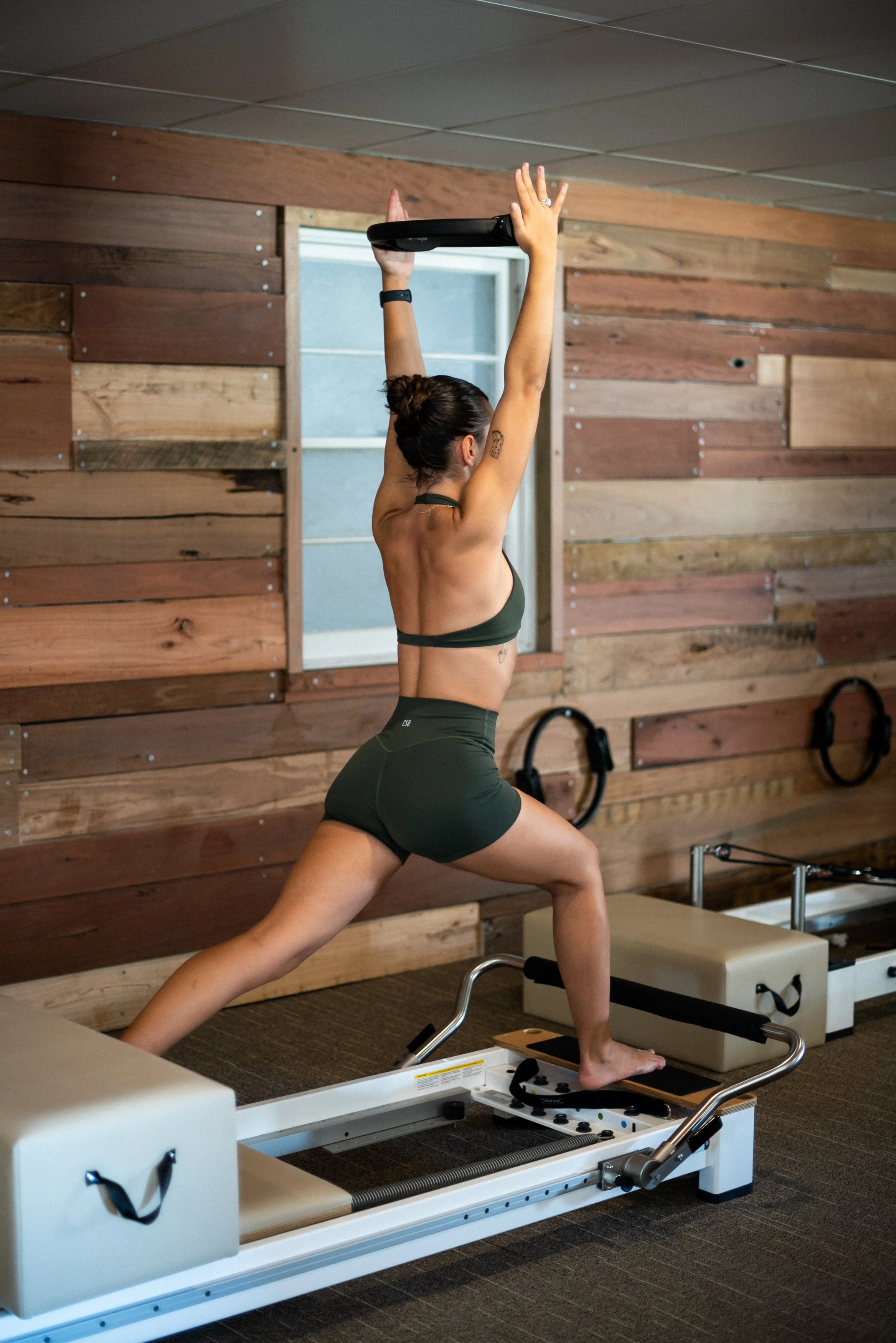
Kimberley Garlick is current President of the PAA and the Director of Northern Rivers Pilates in Lismore, Australia. She is also a Certified Polestar Studio/Rehab Practitioner and Educator/Mentor for Polestar International since 2003.
@officialnorthernrierspilates