
When Progress Stalls: Looking Beyond Programming
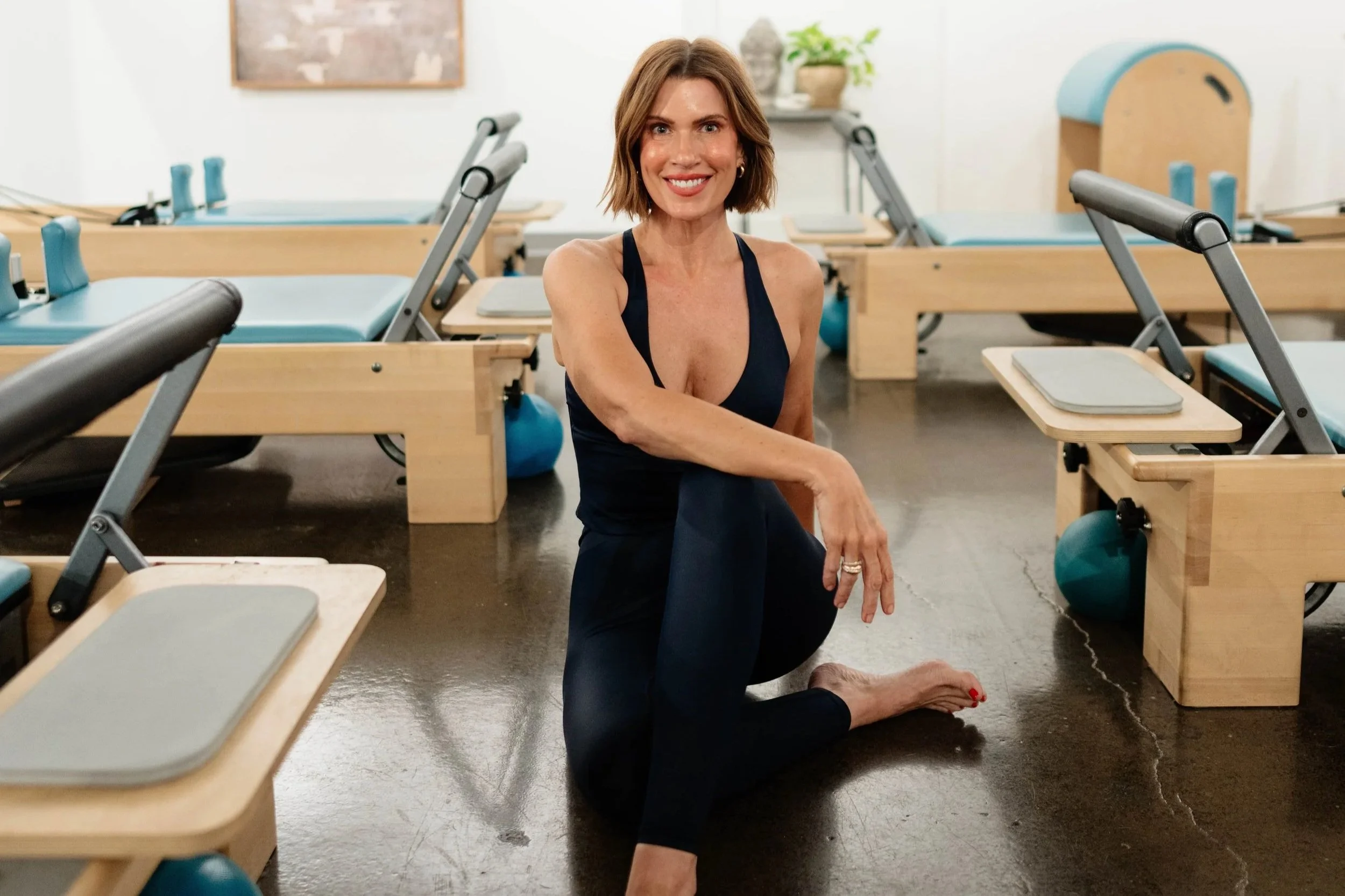
Why Does Progress Stall Even When Everything Looks Right?
The clients who challenge us most are often the ones doing everything right. Most instructors will recognize this client. They’ve undergone imaging, medical evaluation, and received clearance to move. Programming is appropriate, and cueing is precise.
And yet, the pain lingers. It shifts, comes and goes, and never fully resolves. Movement remains restricted, and breath stays shallow.
At a certain point, the question begins to change. Not what are we missing, but why is the body still holding on?
Why the Nervous System Matters in Pain and Movement
For years, I experienced recurring back pain and restriction despite normal imaging and a strong understanding of movement. At times, my back would return to a guarded state without a clear structural cause. As I began looking more closely at the nervous system and subconscious patterns held within the body, I recognized many of the same patterns in the clients I was working with.
As a Physical Therapist and Pilates studio owner, I have worked with many clients who present this way. Over time, a consistent pattern has emerged. These clients are not lacking effort or body awareness. They are often strong and highly attuned, yet something continues to limit their ability to fully progress.
Pain that persists or returns, even after appropriate treatment, is not always structural. Often, it reflects a system that has not fully shifted out of protection.
When the nervous system continues to perceive threat, whether from past injury, chronic stress, or learned patterns, the body prioritizes stability over mobility and tension over release.
How Protective Patterns Show Up in Pilates
Within a Pilates setting, this often presents in recognizable ways: chronic gripping, shallow breathing, limited range of motion, and excessive effort in familiar movements.
From the outside, these presentations may appear mechanical. More often, they reflect adaptive strategies.
This is where the foundational principles of Pilates take on deeper relevance. Breath is often the first to become restricted when the body does not feel safe. Control can shift from fluid coordination into rigidity, while flow is interrupted by subtle bracing. Precision may become effort rather than efficiency.
In this context, what appears to be a lack of strength may instead reflect a lack of safety.
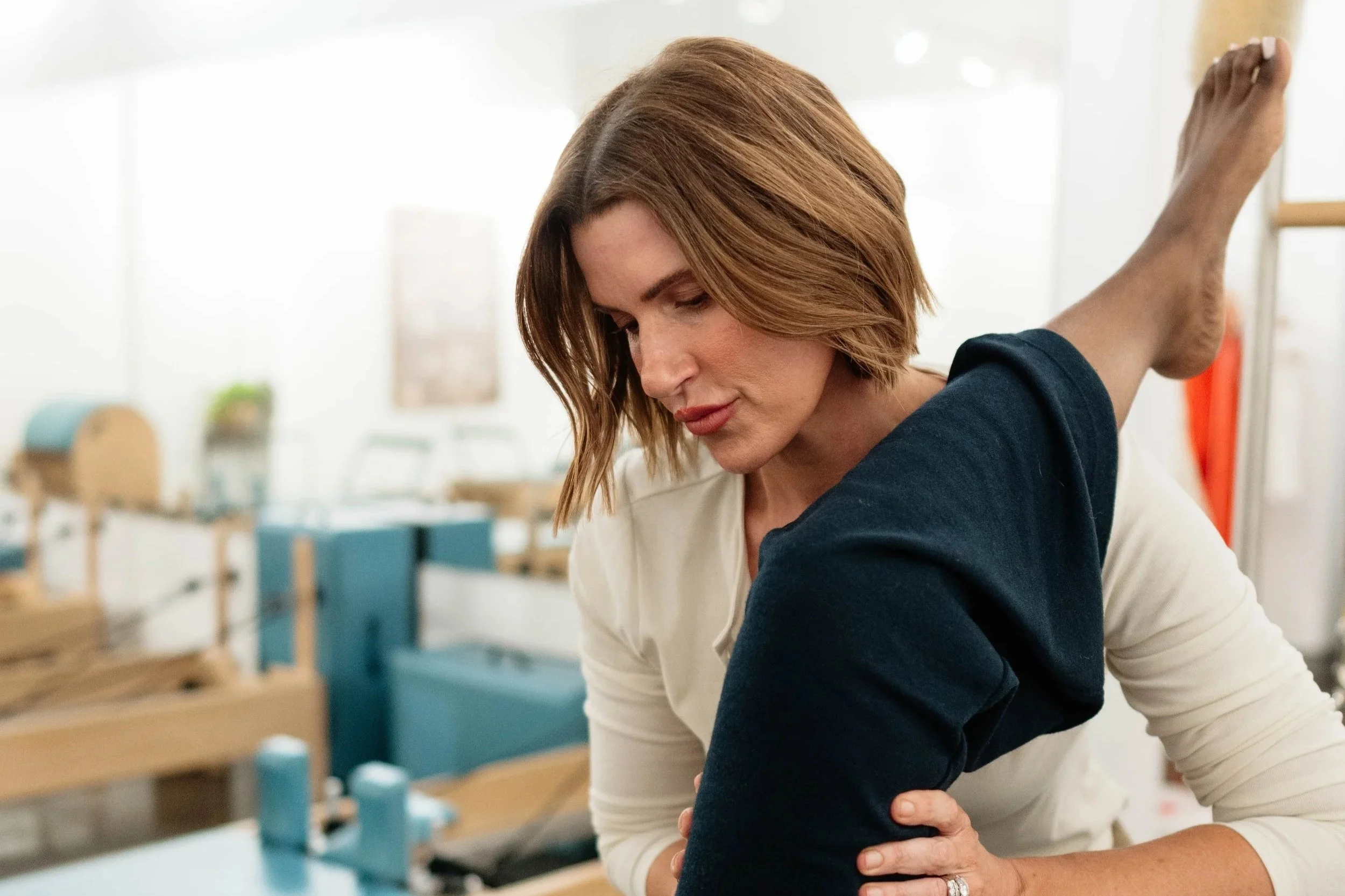
The Role of Fascia in Chronic Tension
Alongside the nervous system, the fascial system plays an important role in how these patterns are maintained. As a continuous web of connective tissue, fascia adapts to repeated stress. Over time, chronic tension can increase density and reduce elasticity, contributing to restricted movement and limited breath capacity.
Muscle groups such as the psoas are closely linked to the body’s stress response. When the body remains in a prolonged state of protection, these areas often maintain increased tone, reinforcing patterns of tension and limiting ease of movement.
In this way, the nervous system and fascia reinforce one another. When one remains guarded, the other often follows.
Why Doing More Isn’t Always the Answer
Traditional approaches alone may not always create lasting change. Strengthening, stretching, and precise cueing remain essential, but when the body does not feel safe, it will continue to hold.
“The body does not release what it does not feel safe enough to let go of.”
A Nervous System First Approach
This has led me to make a subtle shift in how I work with clients.
Rather than asking the body to do more, the focus becomes creating the conditions that allow it to do less.
This may include longer exhale breathing, slowing transitions, incorporating brief pauses, and cueing a sense of support from the ground.
These adjustments are simple, yet their impact can be significant. I have seen them change how the body receives movement and how clients respond over time.
How Subconscious Patterns Influence the Body
Even as the nervous system begins to settle, another layer often remains: subconscious patterning. A belief is simply a thought repeated enough times to feel true.
Statements such as “I’m tight,” “My back is bad,” or “This always hurts” can become embedded, influencing both perception and movement.
These patterns are not fixed. Through repetition, they can be changed. This is supported by neuroplasticity, the brain’s ability to reorganize in response to repeated input.
Can Affirmations Support Physical Change?
Repetition shapes both physical and internal patterns. The brain organizes around what is practiced most.
When the nervous system is more regulated, the body becomes more receptive to new input. This creates an opportunity to introduce simple statements that reinforce safety and trust.
Over time, affirmations such as “My body is safe and supported” and “I trust my body to move with ease” can begin to shift how the body responds.
In my experience, when this work is paired with a more regulated nervous system, the changes are not only noticeable, they are sustainable. We are working not only with muscles and movement, but with patterns the body has learned to hold.
A New Way to Think About Progress
When skilled programming is combined with an understanding of the nervous system and subconscious patterning, a different environment for change begins to emerge, one in which the body no longer needs to maintain the same level of protection.
Progress is not always the result of doing more. At times, it is the result of creating the conditions in which the body finally feels safe enough to change.
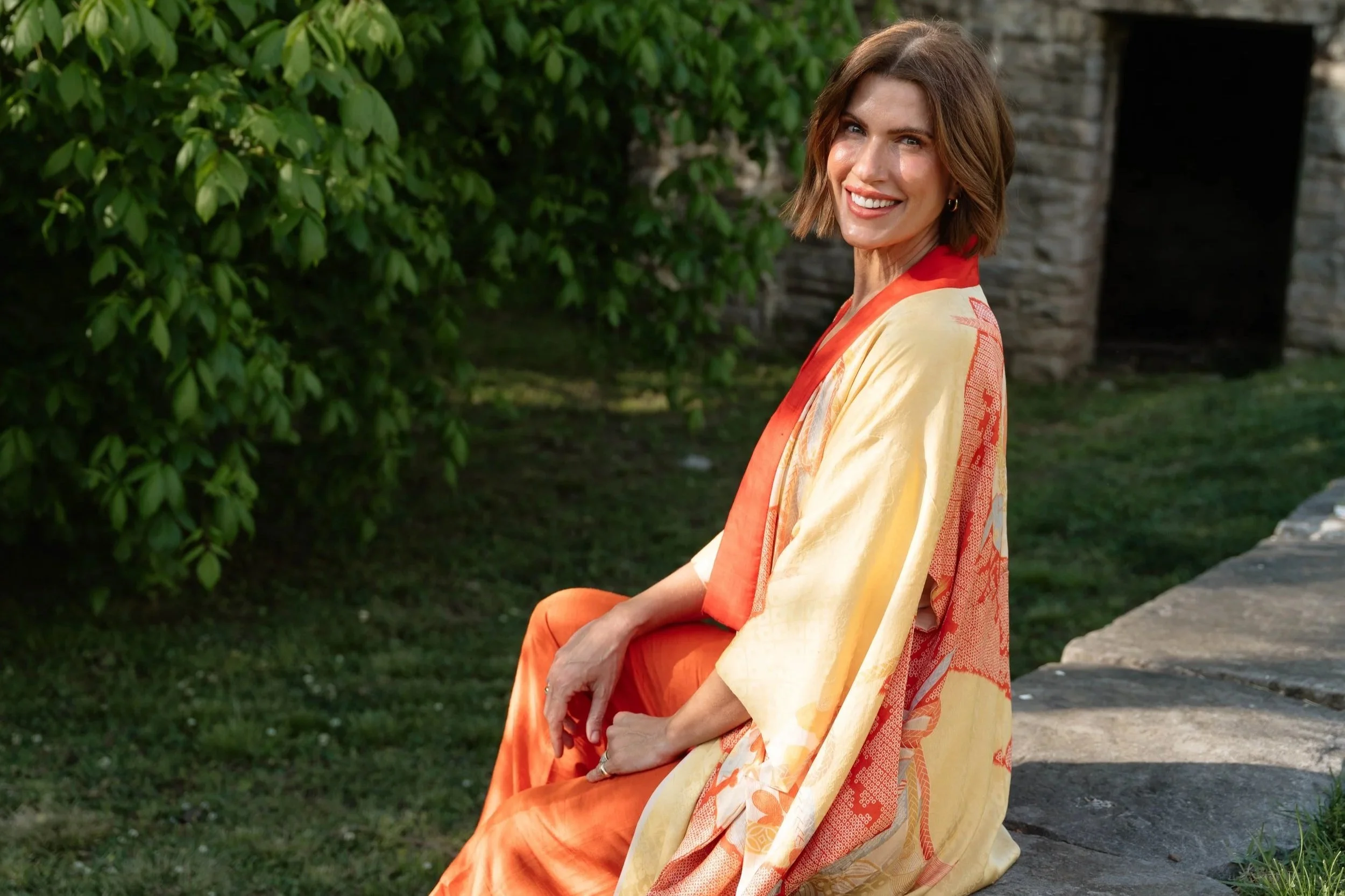
Allyn Hinton, PT, is a Nashville-based Physical Therapist, Pilates instructor, and founder of Swell Pilates, a movement studio integrating Pilates and Physical Therapy. With over 20 years of experience in movement and rehabilitation, she integrates Physical Therapy, Pilates, fascia-focused work, and nervous system regulation into her approach to client care. She is the creator of Swell Fusion, a movement-based rehabilitation approach, and Rewrite, a workshop exploring the connection between the nervous system, subconscious patterning, and physical healing.