
Interest in becoming a Pilates teacher has surged in recent years. With participation in Pilates classes and private sessions climbing dramatically since 2019, studios across the country are expanding —and with that growth comes a new wave of Pilates teacher training certification programs.
But here’s the catch: the Pilates industry is unregulated. There isn’t an “Official Pilates Certification” that will guarantee you a teaching position.
“Pilates studios don’t hire based on a piece of paper that says you’re certified to teach,” says Ernie Fossa, Founder, Owner and Program Director at the Gramercy Pilates NYC Certification School. “That only gets you the interview. They hire by watching you teach, —hence your audition when you interview.”
Without universal agreement on competency and regulatory standards, the path to becoming a Pilates teacher can feel surprisingly opaque. Credentials vary widely, expectations differ, and students can end up disappointed and frustrated with their lack of knowledge or skill level.
“The impact falls squarely on the students to find a Pilates certification program that fits their needs,” says Fossa. “And the only way to find the right studio is to deeply vet your options.”
So how can prospective teachers separate programs that simply check boxes from those that truly prepare them for a sustainable career? According to Fossa, it starts by looking beyond marketing language and focusing on what actually happens inside the studio.
Supervision is the Key
On paper, many programs may appear similar. They list anatomy hours, apparatus training, and required practice time. But what ultimately shapes a prospective teacher isn’t the curriculum outline, —it’s the number of quality hours. That is, the number of hours that are supervised and mentored by expert teacher trainers.
“Live supervision and mentorship by expert teacher trainers is the single most important part of a Pilates certification program,” Fossa explains.
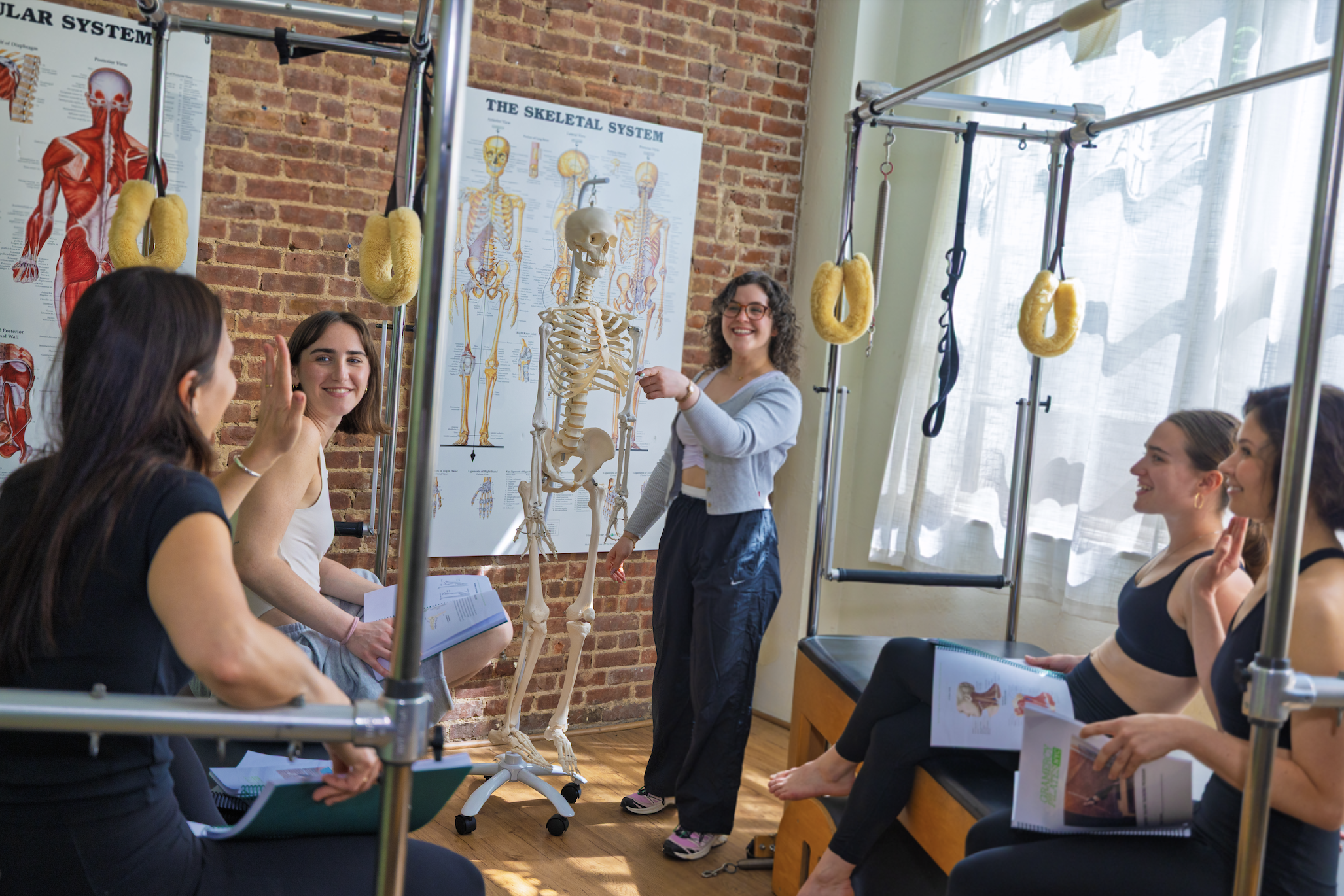
In Fossa’s experience, programs taught live, with consistent observation and hands-on supervision , tend to produce instructors who are much more skilled and employable. Watching students teach, correcting their cueing in real time, and guiding their problem solving builds teaching instincts that can’t be developed through independent study alone.
Studios that also allow approved students to apprentice with real clients offer another huge advantage. Teaching under supervision bridges the gap between theory and reality, helping trainees build confidence before they ever audition for a job.
Meet the Program Director Face to Face
Websites can only reveal so much. Philosophy, culture, and expectations are often harder to assess digitally.
Fossa’s advice is refreshingly simple: Schedule a meeting.
“Call the studio and set up an appointment to meet the program director,” he says. “A lot of studios don’t provide their most important information online, like prerequisites, cancellation policies, or who the teacher trainers are. You need to sit down in person and make sure you fully understand what the program includes before you commit.”
That conversation should go deeper than logistics. Prospective students should ask:
Does the program teach classical, contemporary, or a blend?
How much anatomy and biomechanics is included?
How much time is spent on how to teach clients with medical conditions?
Will there be hours of my practice teaching time supervised by the studio’s teacher trainer?
Who exactly will be teaching the program? Can I meet them before registering?
Perhaps most importantly: ask to see the program manuals. “That’s the proof of exactly what education they’re offering,” says Fossa.
Watch How Students Actually Learn
A program’s philosophy should be visible on the floor, not just in its mission statement.
“If students aren’t practicing what they learned in lecture —and being supervised while they do it,—they are not getting the best possible teaching education and that’s a problem,” Fossa notes.
Observing a training session can reveal a lot. Are teacher trainers actively supervising the students? Is feedback specific and constructive? Or are students largely left to figure things out alone?
Effective feedback, delivered consistently and in real time, is what helps a new teacher refine their voice, presence, and overall teaching skills.
Look for Breadth, Not Intensity
With the rise of fast-paced, fitness-forward Pilates formats, some programs only emphasize speed and sweat over depth and control. In other words, getting just a “good workout”. This type of learning will only appeal to a younger fit group of individuals which does not prepare a student for the full spectrum of clients they may encounter.
Fossa advocates for comprehensive education that covers teaching any type of client on all apparatus and multiple formats.
“Students who are seeking a comprehensive education should be supervised on how to teach one-on-one sessions and all kinds of classes including but not limited to —mat, reformer, tower, chair, not to mention—plus, how to work with clients with medical conditions,” he says.
This versatility gives graduates a major advantage when they are seeking job opportunities.
Talk to Graduates
Perhaps the most honest insights come from former students. Ask them:
Did the program meet or go beyond your expectations?
Did you gain confidence in your teaching throughout the program?
Did the studio support you in finding a teaching position?
Their answers give you important insight beyond what the Program Director might be telling you.
The Long View
Ultimately, no program can guarantee mastery. Taking and completing a Pilates Teacher Training Program is only the beginning.
“The best graduates are the ones who keep learning,” Fossa says. “Pilates is a lifelong practice.”
Choosing the right program, then, isn’t about finding the fastest or flashiest path. It’s about finding a studio that treats teaching as a craft; one built through mentorship, repetition, and thoughtful guidance.
For aspiring instructors, the process may take more time and research than expected. But in a field where quality varies widely, that diligence can make all the difference between feeling merely certified and feeling truly prepared.
Fossa adds. “It’s not about getting a piece of paper that says you’re certified as a Pilates teacher. What’s important is that you find and complete a comprehensive Pilates Teacher Training Program with quality hours of supervision that will provide you with the tools to become a skilled teacher.”
Ernie Fossa is the Founder and Director of Gramercy Pilates NYC and a leading Pilates educator known for blending classical foundations with science-based innovation. He created the studio’s comprehensive certification school and has mentored studio owners and worked with professional athletes and high-profile clients globally. Gramercy Pilates NYC was named Boutique Studio of the Year at The Pilates Journal Awards.
Elizabeth Kirkhorn is a New York–based writer with a Master’s in Creative Writing from The New School. She lives in New York City where she uses her creative and strategic mind to shape content strategy at People Inc.