
The Psychotherapy in Pilates
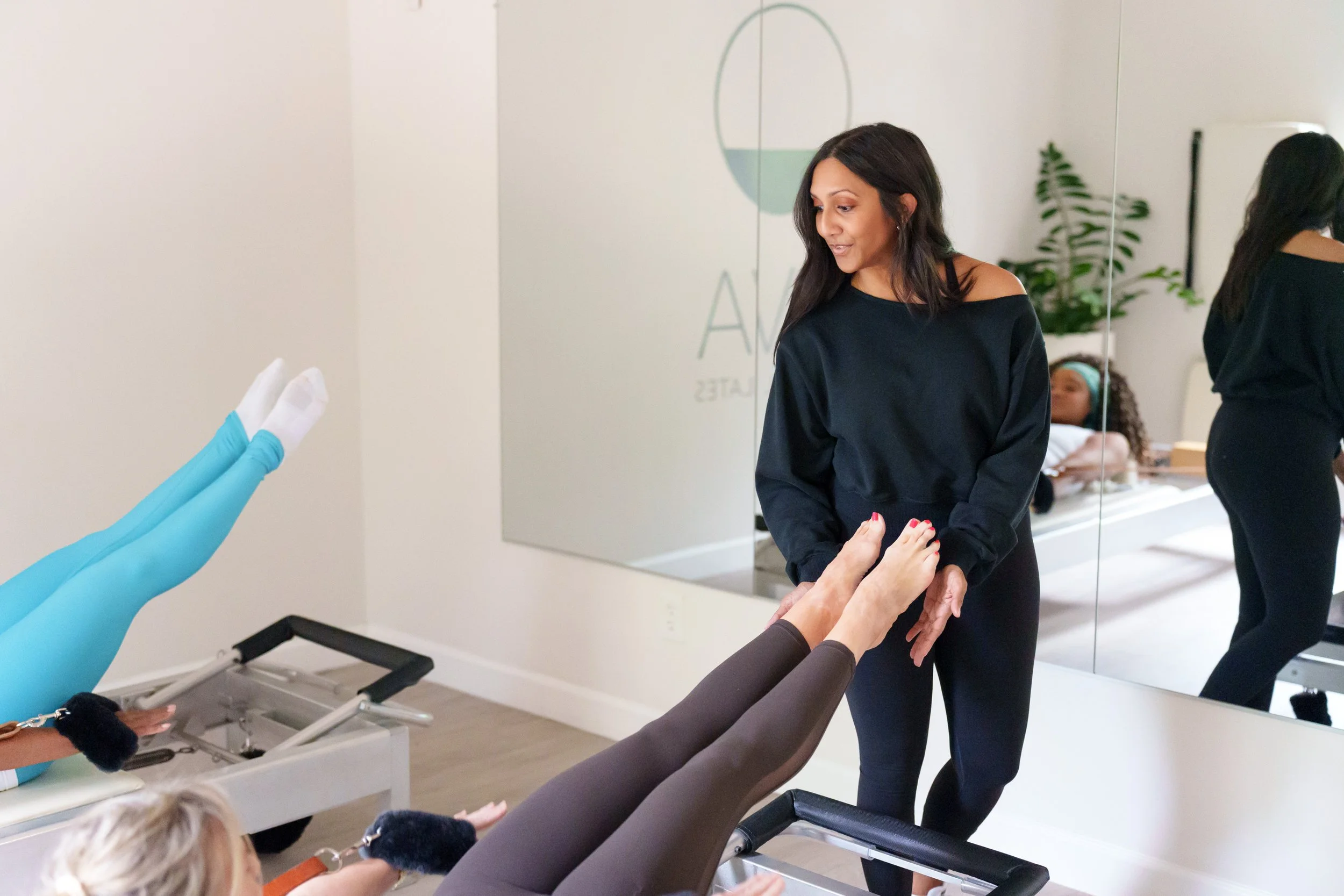
As a licensed psychotherapist, I’m always curious to learn new ways to improve mental health, both for my therapy clients and myself. When a dear friend opened a classical Pilates studio, I wanted to test out what it could do for me mentally after hearing it was a full mind and body exercise. Additionally, I was intrigued with Joseph Pilates’ proclamation that in ten sessions I’d feel the difference, in twenty I’d see the difference, and in thirty, I’d have a whole new body. Thirty sessions later, I wished I could tell Joe that not only did I have a new body, I had a new brain, more specifically, new neural pathways of thinking, happier moods, and a sense of resiliency. In my years of trying different wellness habits, Pilates improved my mental health more than any other type of exercise, hobby, or habit I’d tried.
Having worked in research-driven teaching hospitals for the majority of my mental health career, I tend to analyze why wellness habits are so effective and link them to evidence-based psychology models. Turns out, there’s not just one explanation for Pilates’ impact on mental health, it taps into multiple wellness models. Thus, the spark was ignited: I scoured psychology models I learned throughout my career to uncover the mental mechanics of Pilates. With this information, I wanted to create a pathway to practice Pilates to improve anxiety, depression, ADHD, OCD and eating disorders – the diagnoses I treat the most. Before I knew it, I added certified Pilates instructor to my resume and got to work. I started teaching Pilates on all apparatuses in classical studios and large fitness clubs while seeing therapy clients and leading psychology clinics. It wasn’t until I had my hand in both worlds and started merging my two specialties that I began to understand why Pilates was so effective for mental health: therapy skills exist – and, more importantly, thrive – in Pilates.
Research on Pilates + Mental Health
A small body of research shows that Pilates improves mental health, from specific age groups to clinical populations. For example, Pilates is linked to lower levels of depression, improvements in anxiety, and better sleep in women over 60 (Aibar-Almazan et al., 2019; Ravari et al., 2021). Additionally, Pilates has shown to reduce anxiety and depression in individuals with multiple sclerosis, addiction disorders, and, when paired with medical treatments, lower anxiety in patients with fibromyalgia (Eseoğlu et al., 2024; Fleming et al., 2021; Ji et al., 2025). While these studies are promising and confirm what many of us know, there wasn’t much explanation describing how Pilates was improving depression, anxiety, and sleep. My investigative mindset, fueled by years of clinical work and research, identified a few psychology models that better explained this phenomenon.
The Integral Role of Pilates Principles
Classical Pilates’ six core principles – breath, flow, precision, control, centering, and concentration – play a significant role in the mental health benefits of Pilates. In Pilates practice, they create the mindset that pays attention to the details, remembers exercises, and finds alignment. I started to notice that the Pilates mindset is the perfect avenue to learn therapy skills, specifically skills rooted in dialectical behavior therapy (DBT). DBT is an evidence-based therapy model for the treatment of eating disorders, personality disorders and self-harm, among others, developed by psychologist Dr. Marsha Linehan (Avila‑Parcet et al., 2025; de Andrade et al., 2024; Linehan, 2014). DBT skills can be difficult to learn in concept, but Pilates creates the opportunity and accessibility to learn, practice and adopt them in real time.
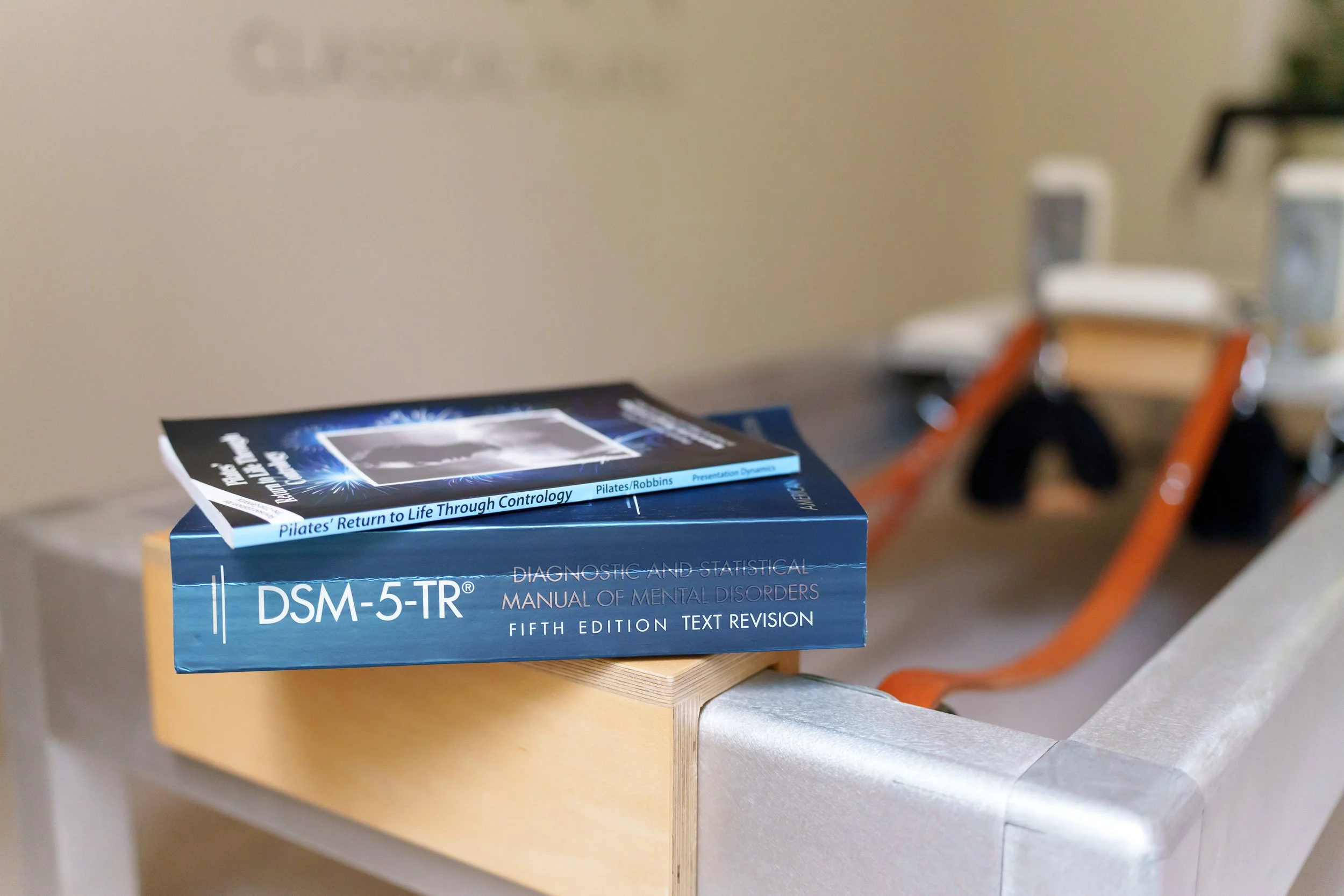
Therapy Skills in Pilates
Three core skills from DBT that I see practiced in Pilates often are mindfulness, emotion regulation, and distress tolerance. Mindfulness – awareness of the present moment, free of judgment or attachment – is the skill we recognize most often in practice. It also happens to be foundational in treating anxiety and depression, as it grounds us protectively against the thought spirals that lead to worry and sadness. It creates the brain space to learn more challenging skills like emotion regulation, the skill of refocusing, self-soothing, and staying on track when strong feelings attempt to derail us. It also sharpens distress tolerance, the skill of sitting in discomfort without attempting to change or escape it.
In practice, these skills show up on and off the Pilates mat. On the mat, mindfulness peaks when we pair our breath with our movement in each breathing exercise. Emotion regulation shines while we’re pumping through the hundred when all we want to do is collapse. Distress tolerance activates when we’re fighting for our lives holding teaser three. Off the mat, the mind holds the muscle memory of these skills, so we can more easily practice mindfulness when multitasking, emotionally regulate in necessary tasks that trigger a trauma, and tolerate distress in disagreements with others.
Pilates materializes therapy skills by transforming them from an invisible, theoretical concept in a therapy session to a visible practice on the mat. And, instead of practicing these skills alone in therapy or in the challenges of life, we practice them in community with others with a shared challenge. Community, one of the strongest, most well-researched factors in overall happiness, provides the accountability and support to practice these skills consistently. While muscle memory physically strengthens with time in Pilates, mental strength silently strengthens as well.
In Conclusion
Integrating Pilates and psychology has been a crucial shift in my work as a therapist, Pilates instructor, and consultant for wellness professionals. In a therapy session, I can’t always illustrate what these skills look like in theory, but in a Pilates class, I can illustrate mindfulness, emotion regulation, and distress tolerance, along with many other skills, in real time on any apparatus, at any fitness level. Growing the integration, I now teach fellow Pilates and fitness instructors how to incorporate psychology into teaching, and guide fellow therapists in integrating different wellness models into their practice. As a result, this integration not only impacts Pilates and psychology, but inspires new avenues for mental healthcare.
While we’re not all therapists, there’s no doubt every Pilates instructor has felt like one, acted as one, or has been called one. Pilates instructors know the delicate dance of creating safe spaces, interpreting body language, and meeting clients where they are, all while using their expertise to challenge clients in achieving their goals. Being a therapist, conceptually, is no different. Each time we cue the six Pilates principles for our clients, we activate the mindset that learns and practices the skills that improve mental health over time.
References:
Aibar-Almazán, A., Hita-Contreras, F., Cruz-Díaz, D., de la Torre-Cruz, M., Jiménez-García, J. D., & Martínez-Amat, A. (2019). Effects of Pilates training on sleep quality, anxiety, depression and fatigue in postmenopausal women: A randomized controlled trial. Maturitas, 124, 62–67. https://doi.org/10.1016/j.maturitas.2019.03.019
Avila‑Parcet, A., Martín‑Blanco, A., Gawron, L., Cano, M., De la Peña‑Arteaga, V., Carceller‑Sindreu, M., … & Carmona i Farrés, C. (2025). Evaluating the efficacy of radically open dialectical behavior therapy (RO‑DBT) in patients with anorexia nervosa:
Study protocol for a randomized controlled clinical trial. BMC Psychiatry, 25, 403. https://doi.org/10.1186/s12888‑025‑06854‑9
de Andrade, D., Davidson, L., Robertson, C., Williams, P., Leung, J., Walter, Z., Allan, J., & Hides, L. (2024). Randomized effectiveness–implementation trial of dialectical behavior therapy interventions for young people with borderline personality disorder symptoms. Journal of Clinical Psychology, 80(10), 2117–2133. https://doi.org/10.1002/jclp.23725 https://pubmed.ncbi.nlm.nih.gov/38874116/
Eseoğlu, İ., Korkmaz, E., Akdemir, E., Kehribar, L., Aydın, N. G., Ermiş, E., Yoldaş, B., &
İmamoğlu, O. (2024). Effects of electro-muscle stimulation exercise combined with mat Pilates on pain, anxiety, and strength in sedentary females with fibromyalgia: A
single-blind randomized controlled trial. Journal of Personalized Medicine, 14(??), Article
39063951. https://doi.org/10.3390/jpm??39063951
Fleming, K. M., Coote, S. B., & Herring, M. P. (2021). Home-based Pilates for symptoms of anxiety, depression and fatigue among persons with multiple sclerosis: An 8-week randomized controlled trial. Multiple Sclerosis Journal, 27(14), 2267–2279. https://doi.org/10.1177/13524585211009216
Ji, F., Zhou, E., Zhao, P., Chen, X., Wang, H., Zhong, J., Zhang, Y., Lu, Y., & Zhang, Q. (2025). Effect of Pilates on the physical and mental health of drug-dependent individuals: A
randomized controlled trial. BMC Psychiatry, 25, 559.
https://doi.org/10.1186/s12888-025-07008-7
Linehan, M. M. (2014). DBT skills training manual (2nd ed.). Guilford Press. ISBN-13: 9781462516998 (Paperback)
Ravari, A., Mirzaei, T., Bahremand, R., Raeisi, M., & Kamiab, Z. (2021). The effect of Pilates exercise on the happiness and depression of elderly women: A clinical trial study. The Journal of Sports Medicine and Physical Fitness, 61(1), 131–139.https://pubmed.ncbi.nlm.nih.gov/32734750/
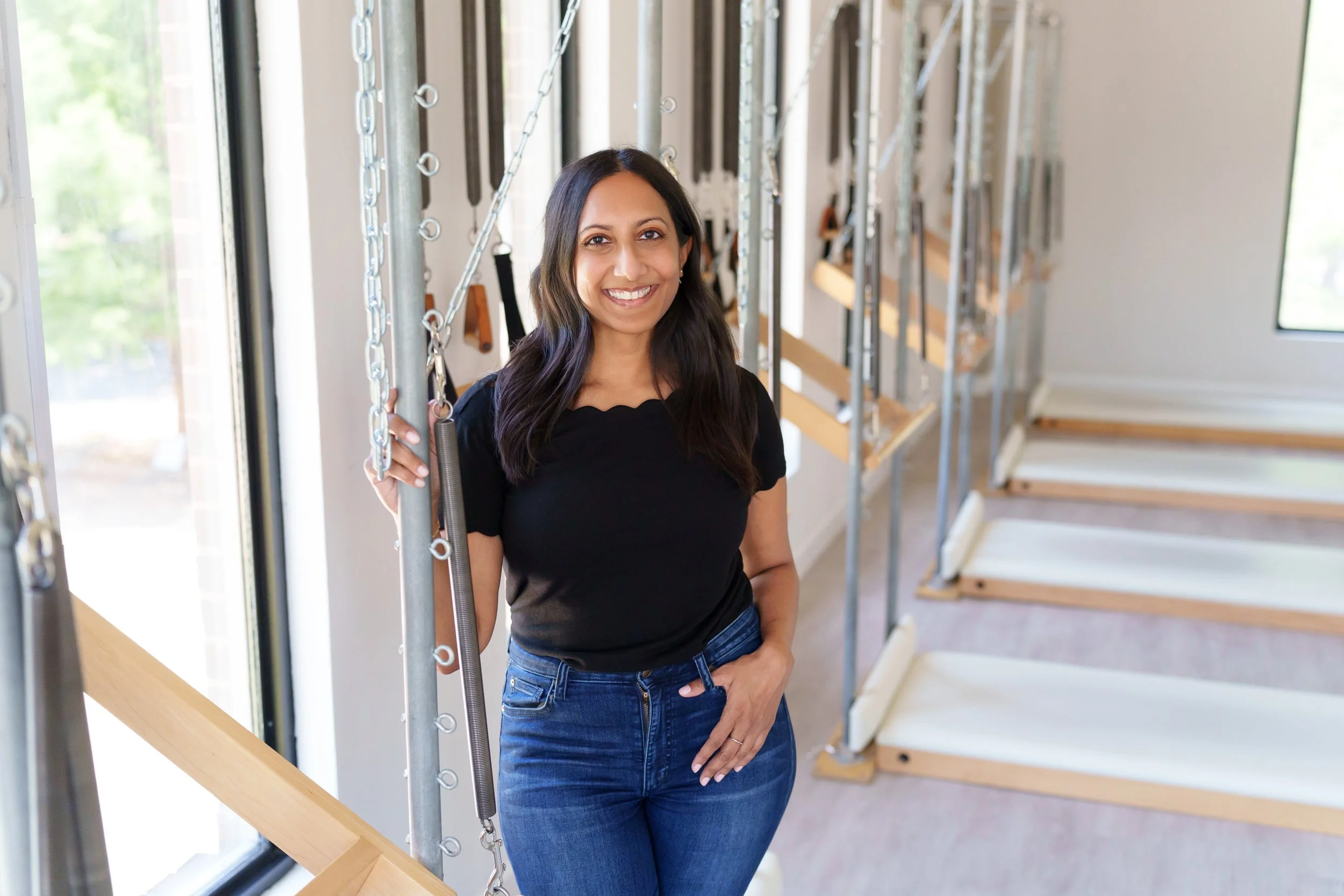
Roshini Kumar is a licensed professional clinical counselor, certified Pilates instructor and founder of The Pilates Psychology, a wellness practice built on a fusion of her specialties. She is a practitioner, educator, and writer who is passionate about creating greater access to mental healthcare through integration and innovation. Roshini offers psychotherapy, Pilates, trainings and consultations to fellow practitioners seeking to combine specialties.